The History of China Companies in Niles, Ohio
Click on any photograph to view a larger image.
To
purchase a high-resolution print of any listed photograph on this page
without the visible watermark, E-Mail
Us
Use the image ID Example: PO1.1023
| E-Mail Us | Phone: 330.544.2143 | Mail: PO Box 368 Niles, Ohio 44446 |
News
Tours
Individual Membership: $20.00
Family Membership: $30.00
Patron Membership: $50.00
Business Membership: $100.00
Lifetime Membership: $500.00
Corporate Membership:
Call 330.544.2143
Do you love the history of Niles, Ohio and want to preserve that history and memories of events for future generations?
As a 501(c)3 non-profit organization, your donation is tax deductible. When you click on the Donate Button, you will be taken to a secure Website where your donation will entered and a receipt generated.
|
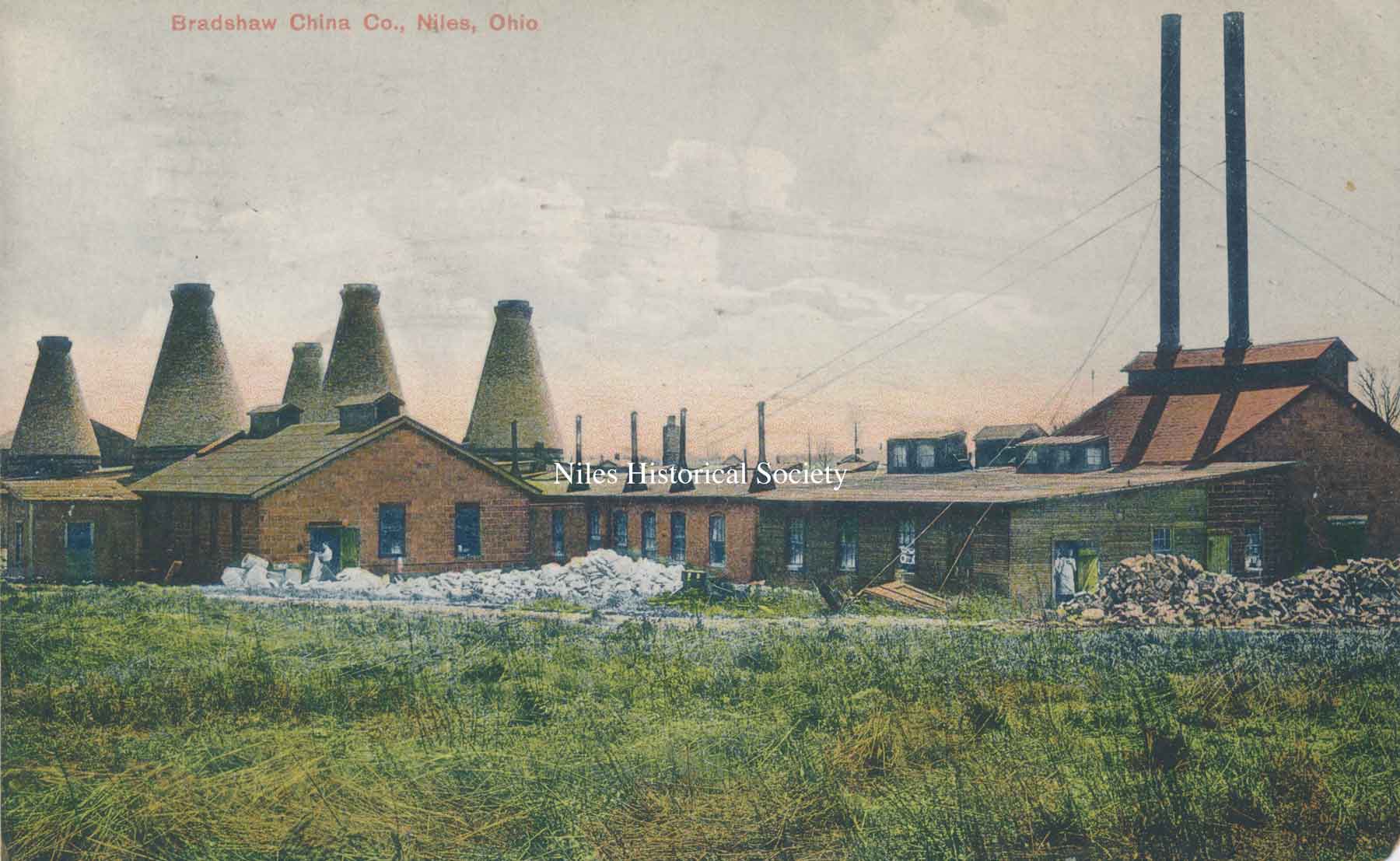
The Bradshaw China Company was located on Hunter Street in Niles.
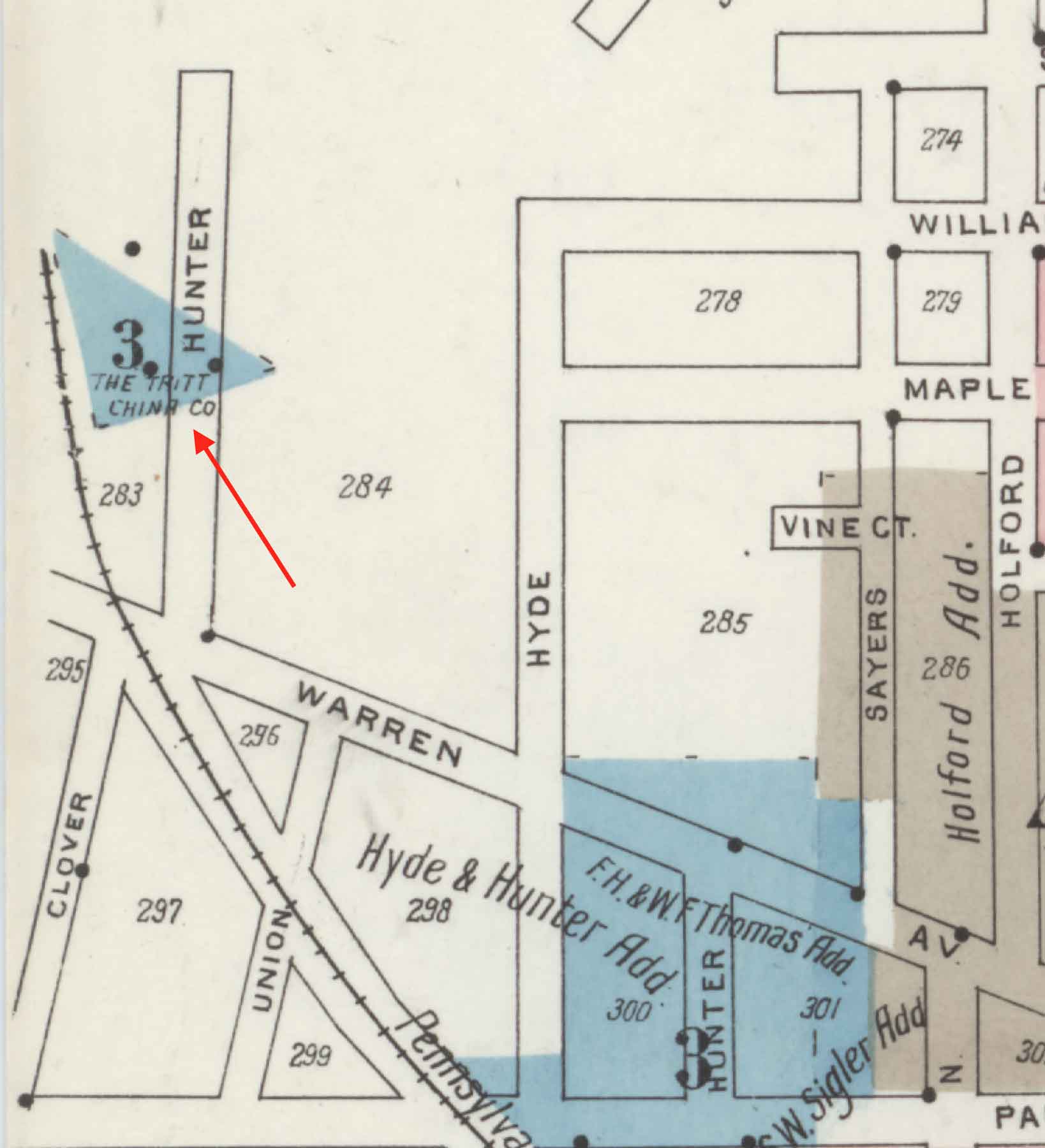
1915 Sanborn Fire Map location of the Tritt China Company.
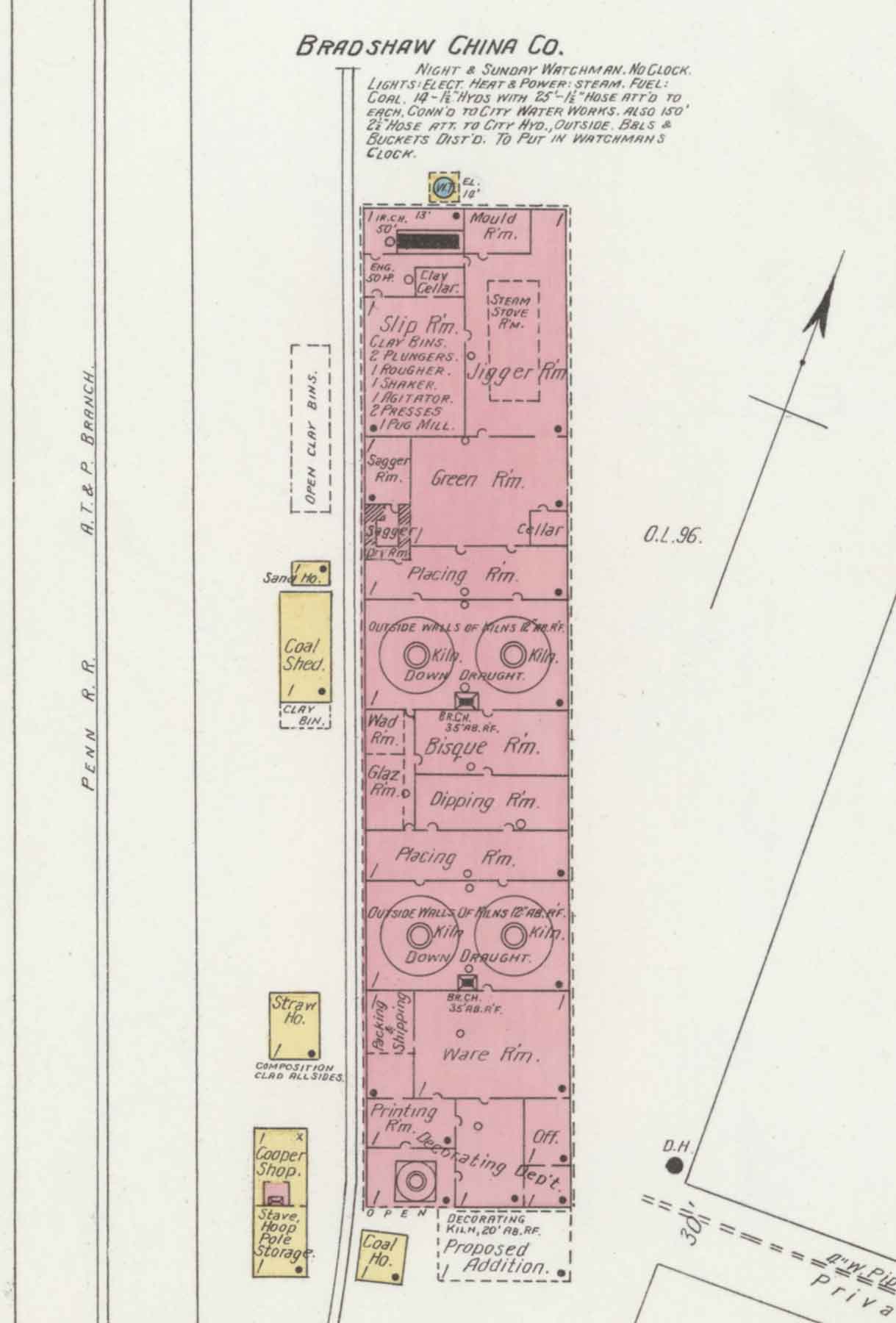
Floor plan of the Bradshaw China Company.
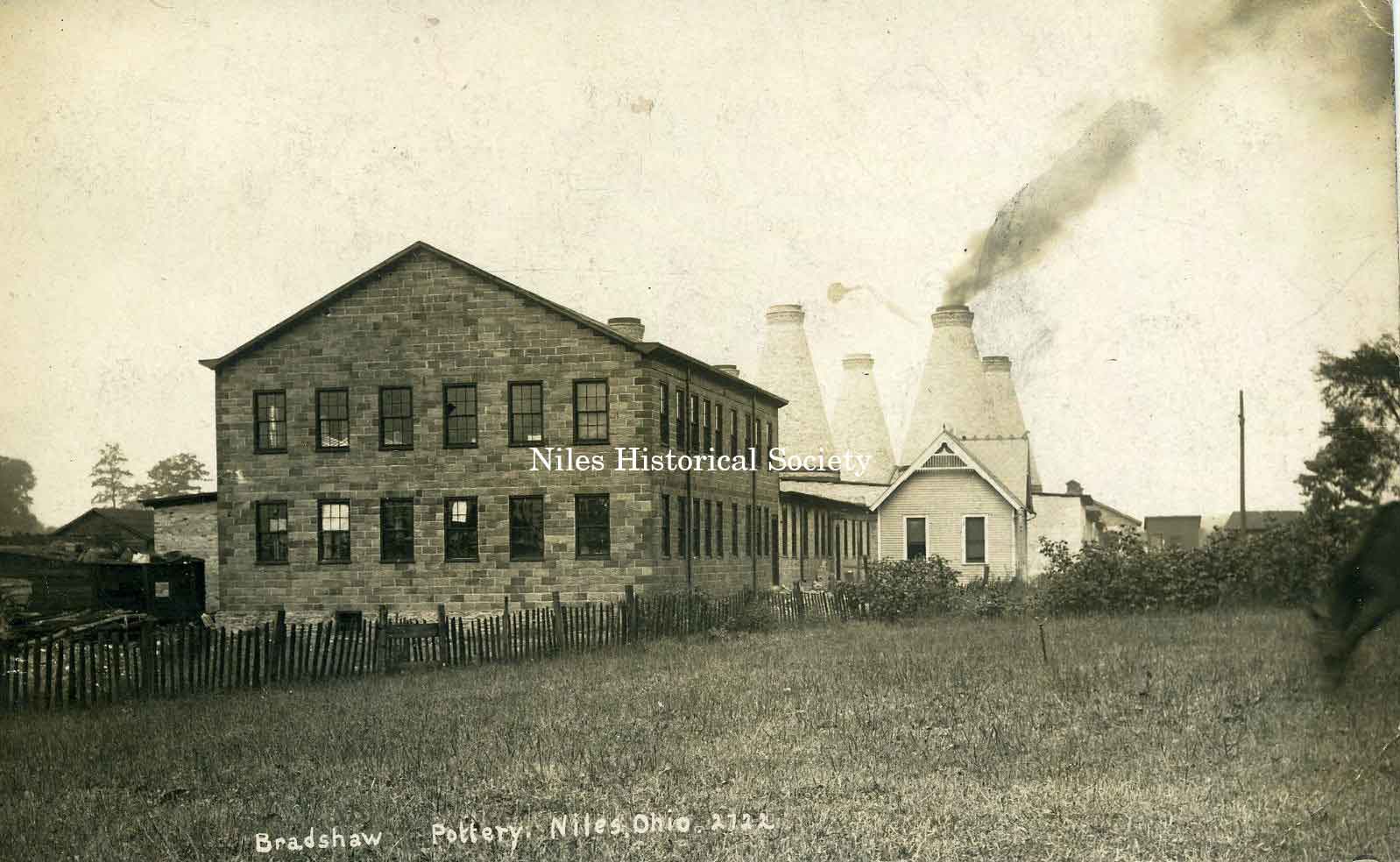
A photo of the Bradshaw Pottery in Niles in Roundstown, it was built on the P.Y. & A right of way and Hunter Street. Construction began in April 1901. In digging the foundation for the new pottery a big bed of clay of the kind used in making red building brick was discovered. PO1.509 |
China
Companies in Niles, Ohio 1901-1930
Bradshaw China Early in 1901, an announcement was made regarding the construction of a pottery which was to be built on Hunter Street on eleven acres of land in the Roundstown area on the west side of town between the P. Y. & A. Railroad right-of-way and Hunter Street. Ironically, when ground was broken for the foundations of this new pottery in late April, a large bed of clay of the type used in making red building bricks was discovered. There are no records as to how that clay was disposed of, but the main building was constructed on that spot and it was built of brick and tile, 72 feet by 400 feet. Only the latest and most improved machinery was used and the highest skilled laborers were employed in producing good quality earthenware. By late October of that year, the Bradshaw Pottery was in full operation, producing tableware with decal styled decorations. By December, the company had a large domestic trade established and were shipping their chinaware as far as Honolulu. The 190 edition of Jervis’ “Encyclopedia of Ceramics” lists the following as officers when this pottery went into operation: T.R.Bradshaw, manager and president; A.C. Bradshaw, assistant manager; and J.A. Watkins, secretary, with W. Silverman in charge of the decorating department. Watkins was from Pennsylvania and, prior to joining Bradshaw, he had been in the pottery business in Pennsylvania for 12 years. The Bradshaws were from East Liverpool, and had been connected with the Bradshaw Pottery in that town. A fire in October 1904 caused by a faulty kiln in the decorating room, caused $10,000 damage. But by early November, some 50 employees in the decorating department were back to work and full operations resumed shortly afterwards. By 1906, this pottery had expanded its facilities to include a large one-story modeling shop and a two-story building to house the decorating department. There are apparently no records as to the number of kilns, but photographs indicate there were probably at least six. Only the latest and most improved machinery was used and the highest skilled labor employed in producing good quality earthenware. Most of the raw materials used by Bradshaw were imported and only the best that could be purchased was used on their production line. The company was progressing remarkably well and was recognized widely as a valuable asset to the town of Niles. However, by 1910, the Bradshaw China Company was in receivership. Frank A. Sebring purchased the company and renamed it ‘The Tritt China Company” a subsidiary of the Sebring Pottery Company in 1912.
PO2.117 Workers at the Atlas China Company. |
|
| |
||
|
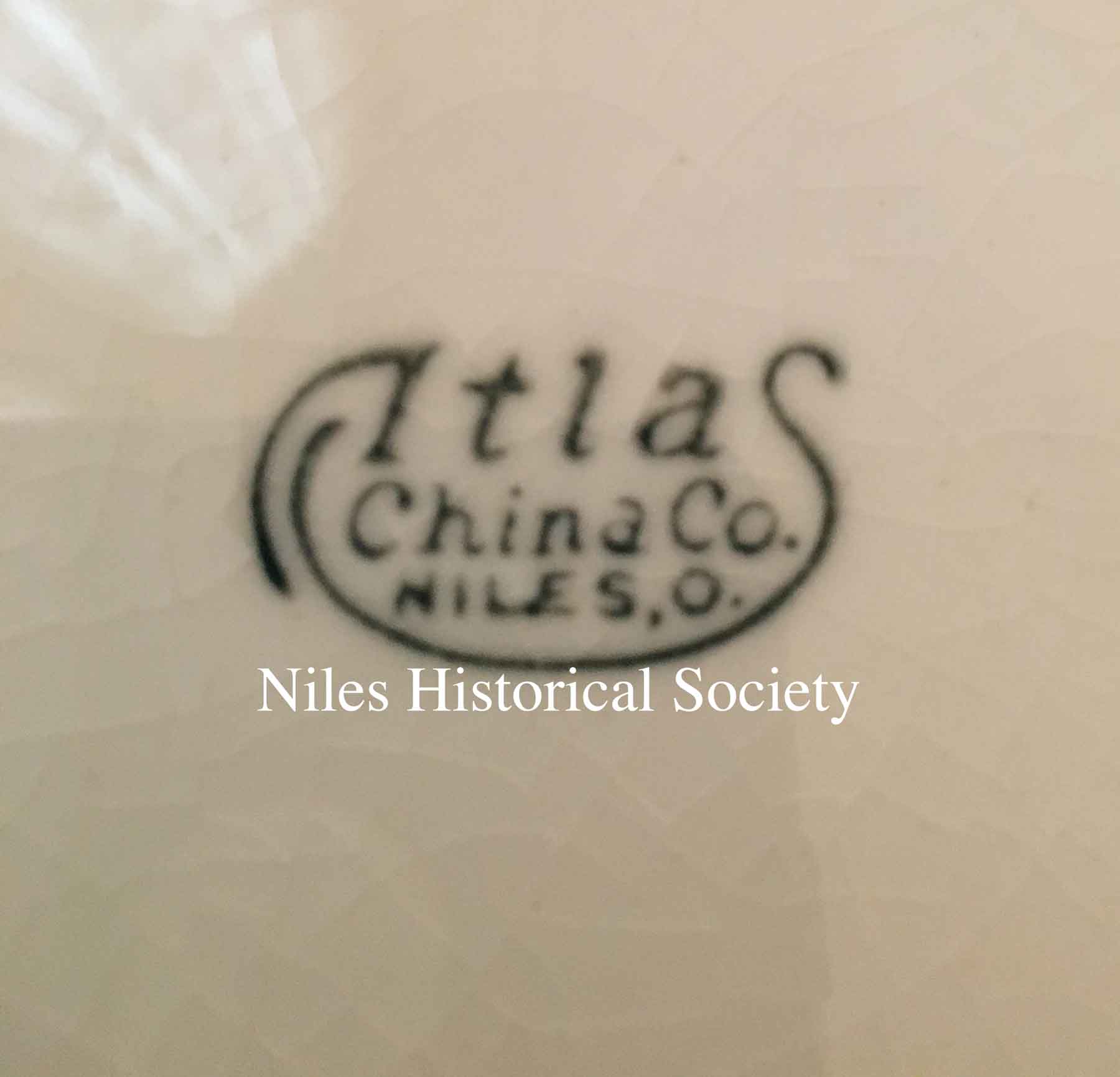
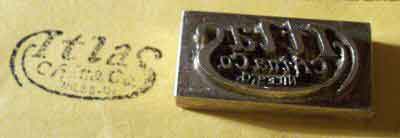
The trademark of Atlas China Company.
Form used to shape the small bowls at the Atlas China Factory on Hunter Street. |
Tritt
China After the Tritt Pottery had been in operation for a period of time, it didn’t do well enough to satisfy the officers of the company, so Frank Sebring sold the company. A new company bought it and named it Atlas China in 1923. The business began to grow, employing 345 people. During the next year $250,000 was spent on improvements in the various departments of the plant. But a fire, which started in the boiler room, swept through the Atlas China on March 30, 1925, leaving the firm with a devastating loss. Fortunately there was enough stock on hand to fill orders for the next thirty days. In the meantime, the chief stockholders located a site in Cambridge, Ohio which had facilities for the manufacture of dinnerware. The property was acquired and a new company, The Globe China Company was organized. In 1926, Atlas China and the Globe China Company of Cambridge were consolidated, resulting in the Atlas-Globe China Company of Cambridge, Ohio. During late 1927 and early 1928, all operations of the Niles plant were phased out and sometime during the 1930s were sold for salvage purposes. A small sample of Bradshaw China, a complete 110 piece set of Atlas China, several pieces of Tritt China and Globe China are on display at the Ward-Thomas Museum at 501 Brown Street. Atlas China can still be found at flea markets and antique stores.
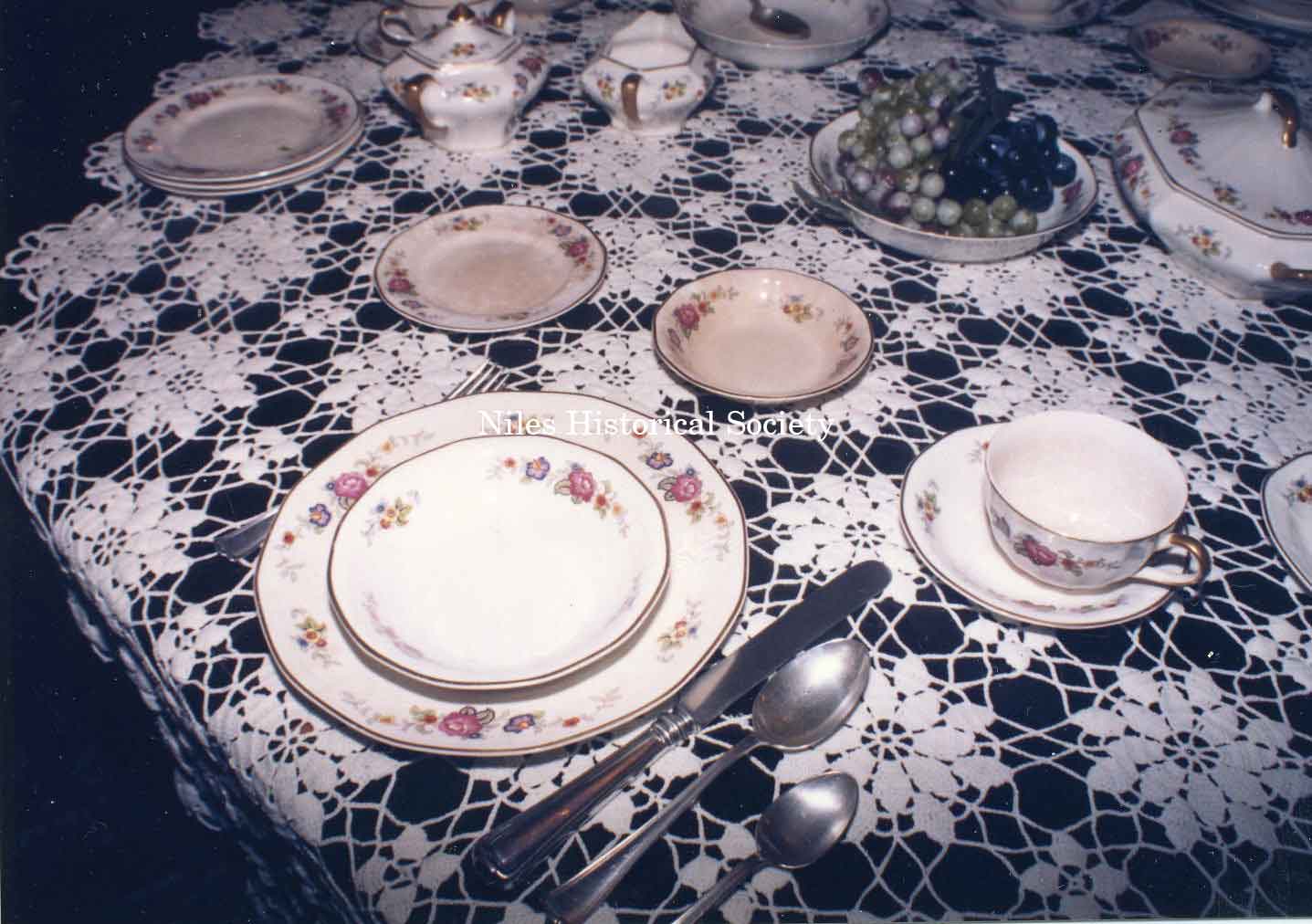
Left: PO1.508 and Right: PO1.507 Photo taken in the Thomas House
dining room of a table set with Atlas China. |
|
| |
||
|
|
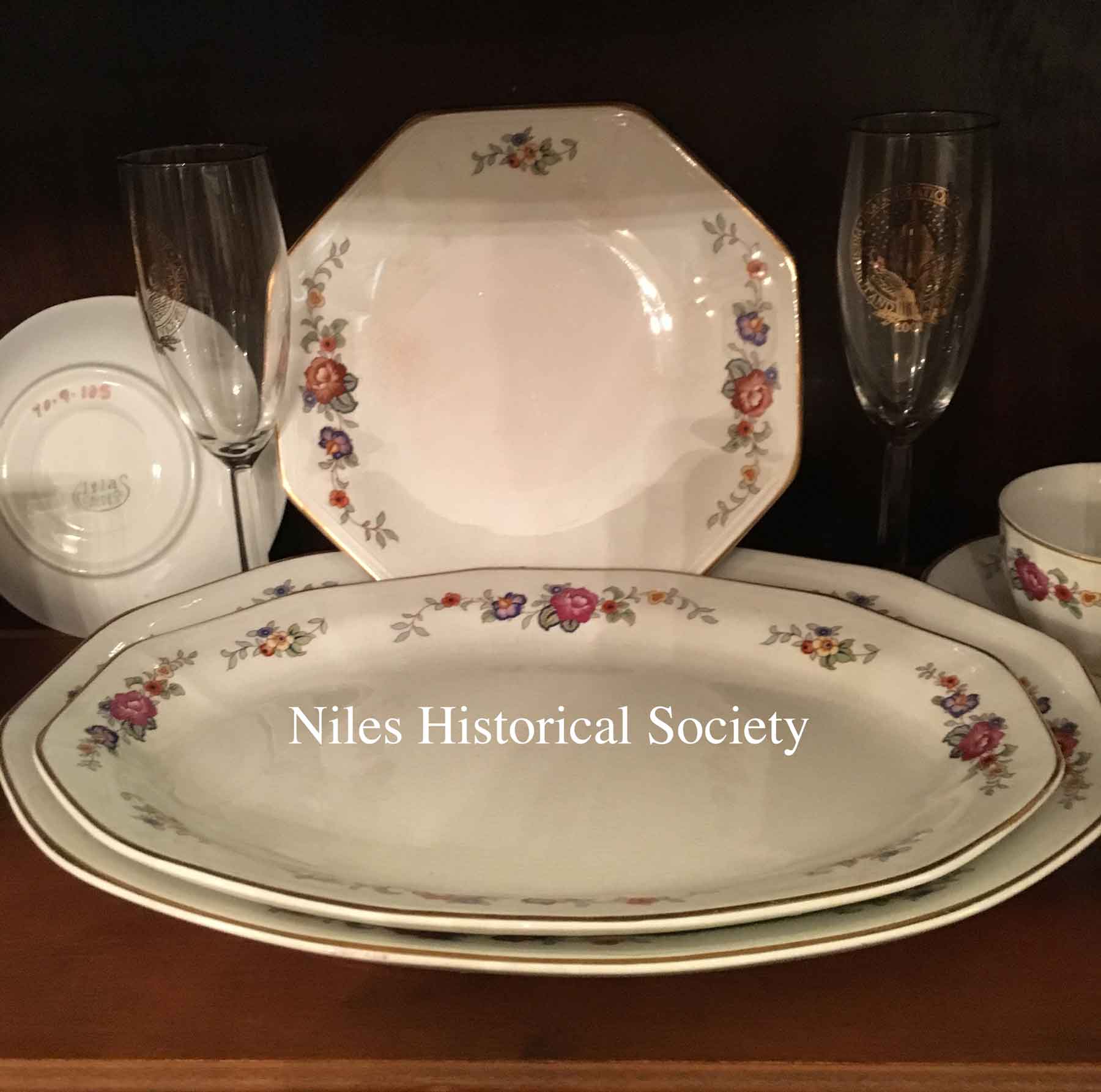
Samples of Atlas China. |
 |
| |
||
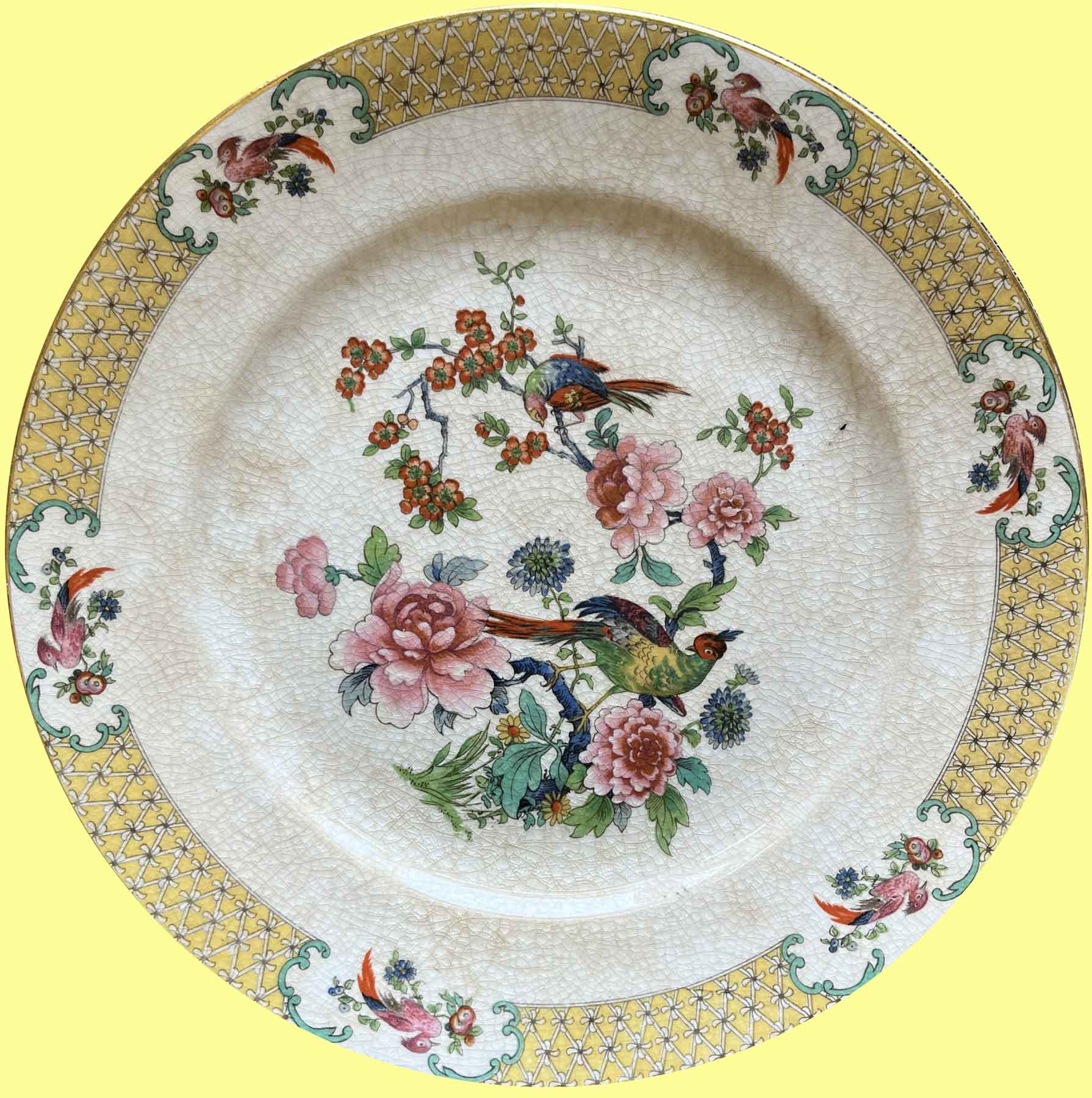
Picture of a plate of hand-painted Atlas China. |
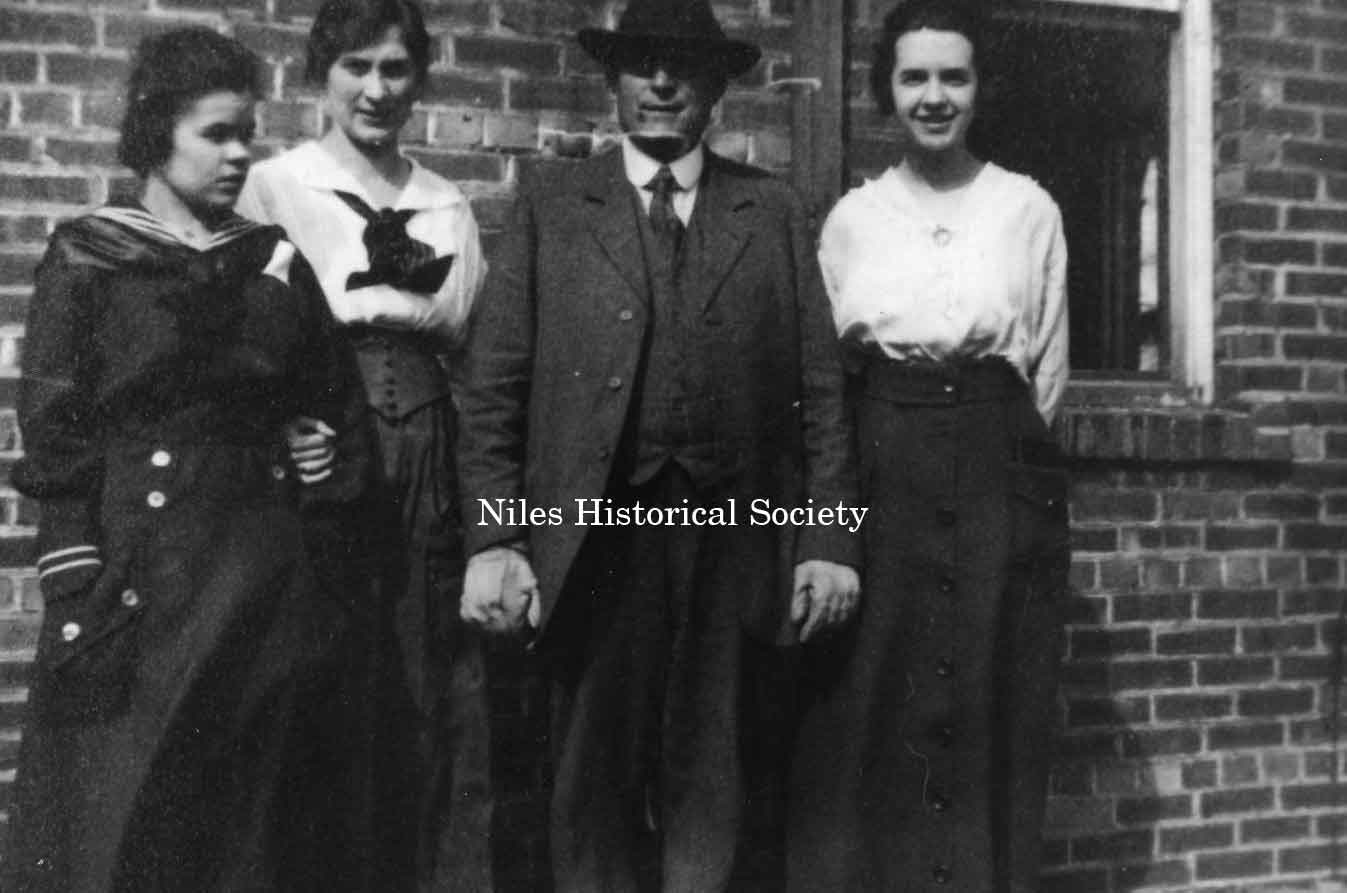
Picture of Mr. Tritt with several employees of the Tritt China Factory, which occupied the orginal location of Bradshaw Pottery. The photo is dated October 1918. Alma Heeter, Edith Stevens, W.E. Tritt, Adella Crumbaker. PO1.632 |
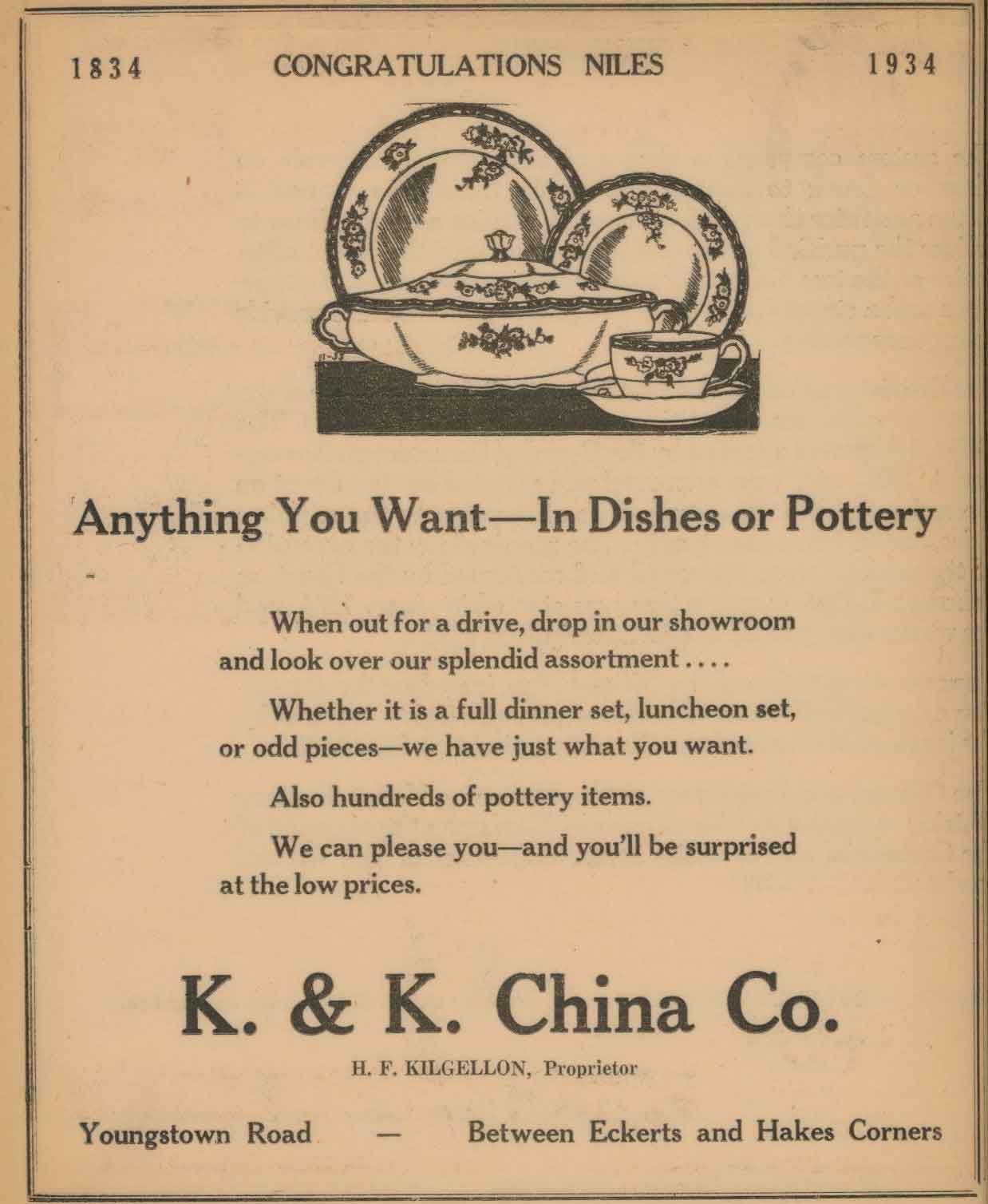
K. & K. China Company was located on 422 between Route 46 (Eckerts Corners) and Niles Vienna Road (Hakes Corners). H.F. Kilgellon was the proprietor of the store. |
| |
||
Atlas
China At that time, in 1921, A.O.C. Ahrendts and two associates purchased the property and assets and formed Crescent China Company. In 1923. the company’s name was changed to Atlas China Co. and the business began to develop and expand, employing 345 persons at peak periods. During the next year, $250,000 was spent on improvements at the plant But a fire that started in the boiler room swept through Atlas China on March 30,1925, leaving the firm with a huge loss. Fortunately, there was enough ware on hand to fill orders for the next 30 days. In the meantime, the chief stockholders purchased a plant in Cambridge, Ohio that had suitable facilities for the manufacture of dinnerware and a new company, The Globe China Co., was organized |
||
Atlas-Globe
China Company In 1926, Atlas China of Niles and Globe China of Cambridge were consolidated, resulting in The Atlas-Globe Co. During the later part of 1927 and early 1928, all operations of the Niles plant were phased out. Sometime during the 1930s, the Niles properties were sold for salvage purposes. |
||
|
Atlas China Stamp |
Trademarks The trademark for Bradshaw China was a brad or nail piercing the word “Shaw.” an example of which may be seen on Page 74 of Lois Lehner’s book, “Ohio Pottery and Glass Marks and Manufacturers.” The book will also give you much information on the trademarks of Crescent China, Atlas China, and Globe China. A collector interested in Bradshaw China ware is seldom successful in adding any pieces of it to his collection, for it is very rare. However, there are still people living who remember Bradshaw’s successor, Tritt China, and pieces of this porcelain tableware are still available. It is frequently marked in gold lettering on the underside “Hand painted By Tritt Studio.” And occasionally, pieces of ware made by Crescent China, or Atlas China or Globe China, do surface. But complete table services? Almost never! |
|
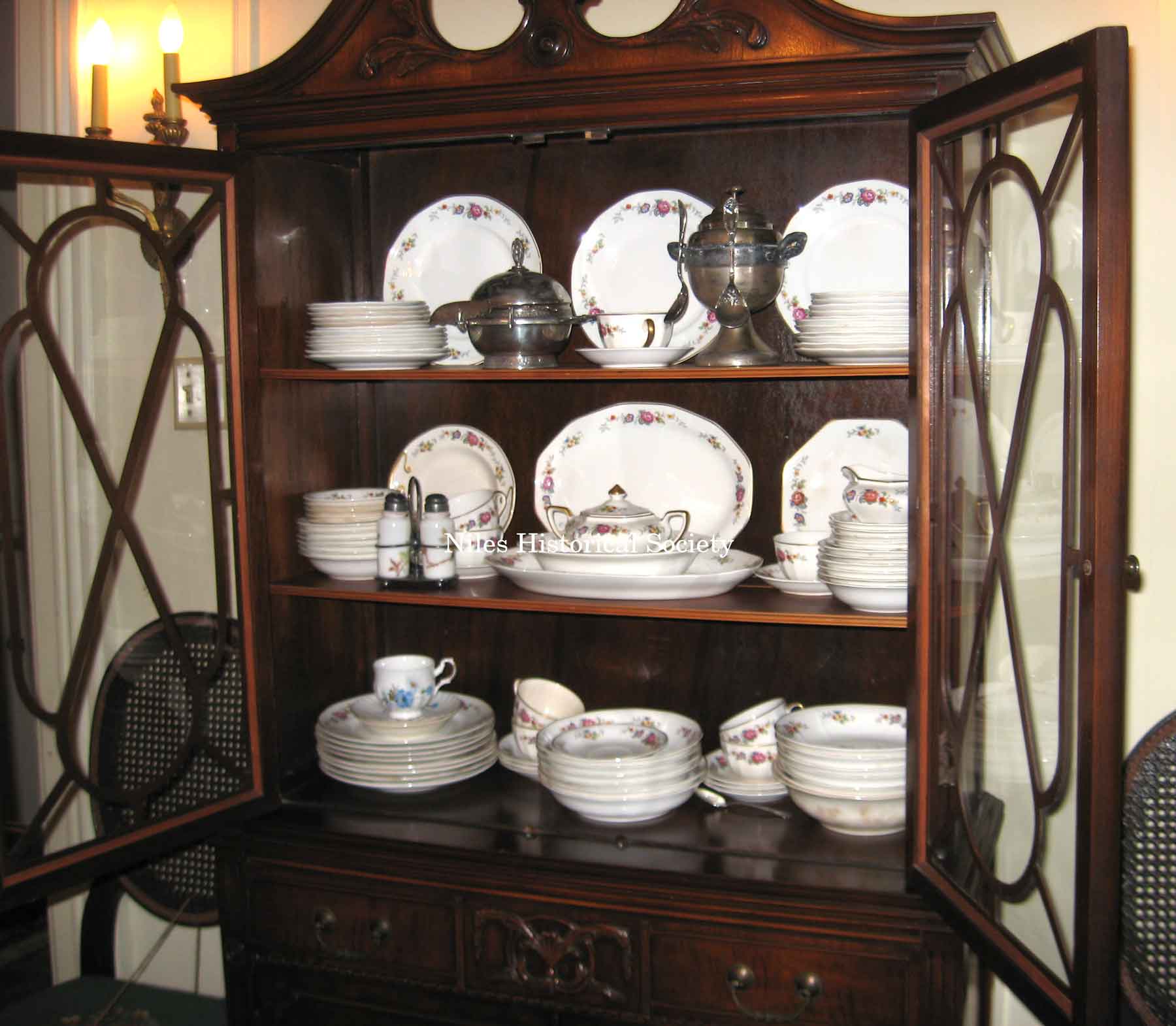
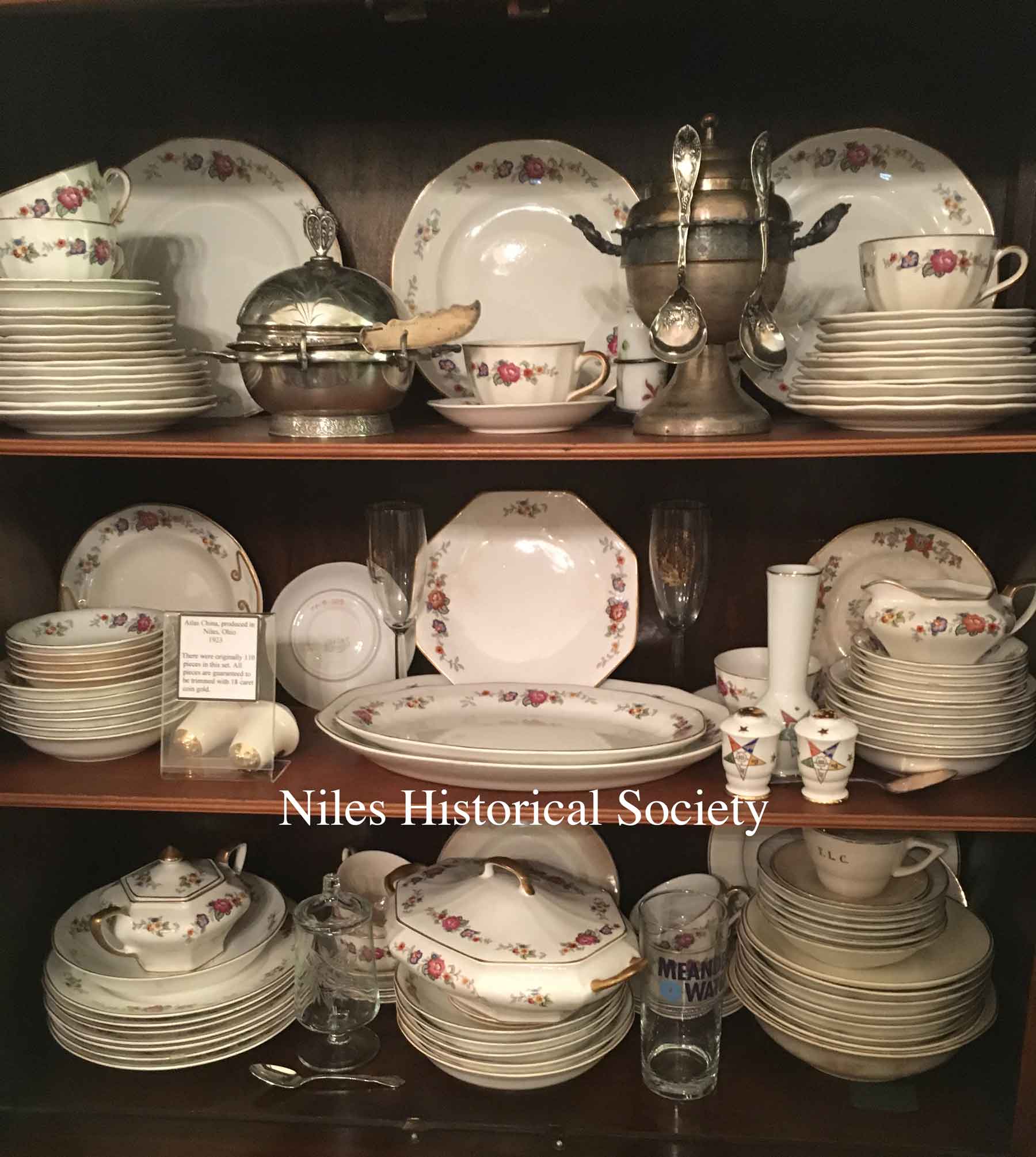
Buffet displaying Atlas China set. |
We do have a complete set of Atlas China Company dinner ware in our dining room A floral pattern with 110 pieces, each one of which has 18 carat coin gold trim around the edge. The trademark “Atlas China Co, Niles, Ohio” appears on the bottom of each piece. We also have a mold that was used in the production of a small bowl on display in the kitchen of the Ward-Thomas Museum. Most people are surprised that Niles ever produced chinaware, but yet over 100 years ago, it was a thriving business in Niles. |
|