Ward-Thomas Museum


An Irish Family Immigrates To Niles, Ohio
Ward — Thomas
Museum
Home of the Niles Historical Society
503 Brown Street Niles, Ohio 44446
Click here to become a Niles Historical Society Member or to renew your membership
Click on any photograph to view a larger image, click on image again to zoom into photograph.
|
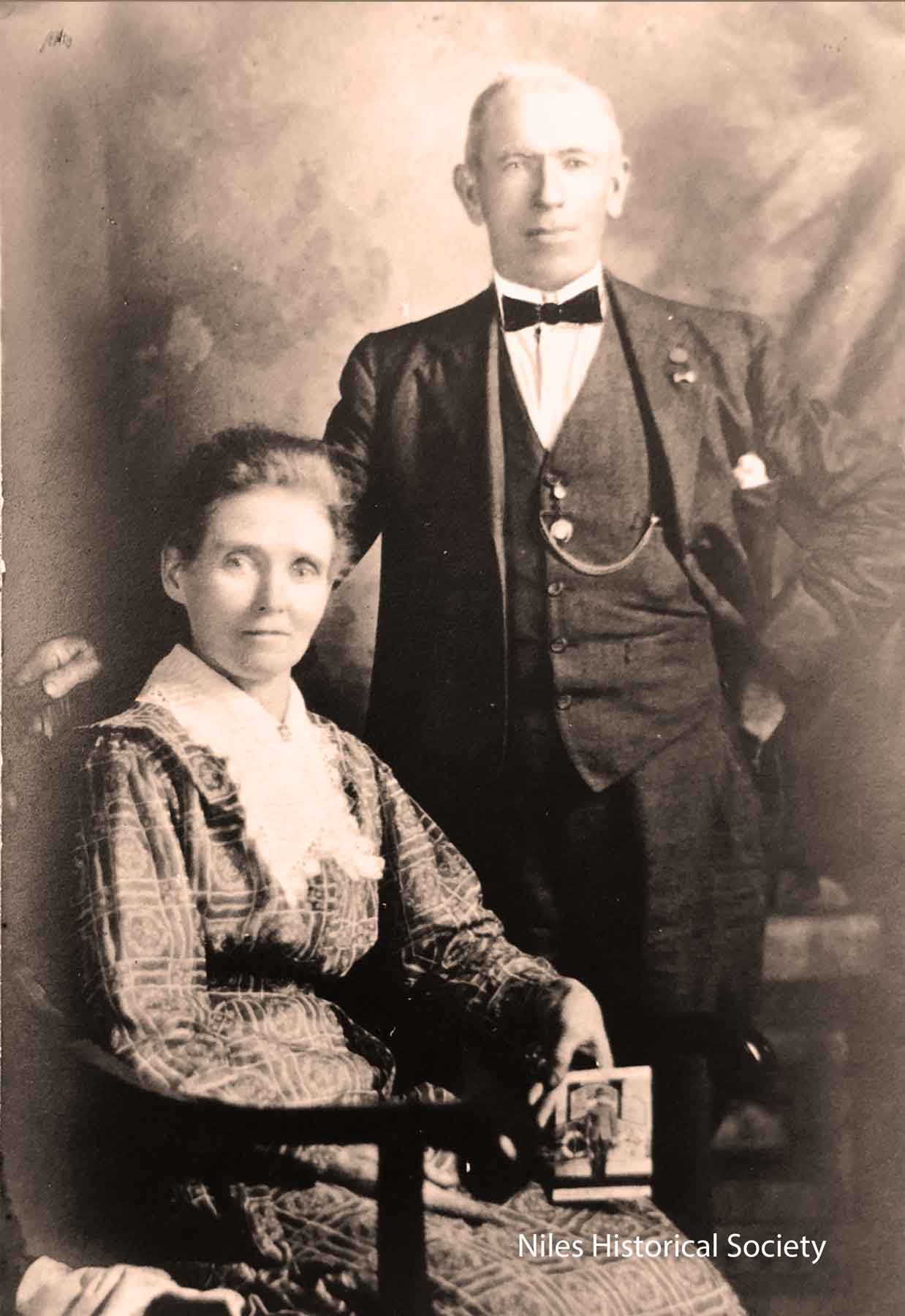
Daniel and Jennie Jones Sullivan |
“It’s
a Long Way from Clare to Here” Irish immigration to Niles began in the 1850’s and continued for decades prompting the founding, in 1864, of St. Stephen’s Parish. By 1880, the Irish were the most numerous foreign-born residents of Niles. Among them were seven members of the John P. and Ellen Casey Sullivan family from County Clare, in the west of Ireland, They came one by one, across the Atlantic over a 13- year period at the end of the 19th century. This is my ancestral family. I will try to tell the story of why they left Ireland and why they came to Niles. For 45 years I have been researching my families’ stories. Records are very limited, consisting of baptism records from Ireland, U.S. census records, obituaries and little else. Regrettably, poor families rarely left much of a record. I have notes from recollections of my grandfather, father and aunts. Years ago, I talked with several of my father’s cousins, all whom were grandchildren of the Sullivan immigrants. Most of them said that they had not asked their grandparents about their lives in Ireland. Nor had their grandparents or parents talked much about Ireland. I once asked my grandmother, Anna
Ryan Sullivan, why she did not want to visit Ireland, as
her younger sisters had. She said, “Ireland must have been
a terrible place, because whenever her father talked about Ireland,
he cried.” For many immigrants, there may have been few
good memories of Ireland to speak of. |
| |
|
|
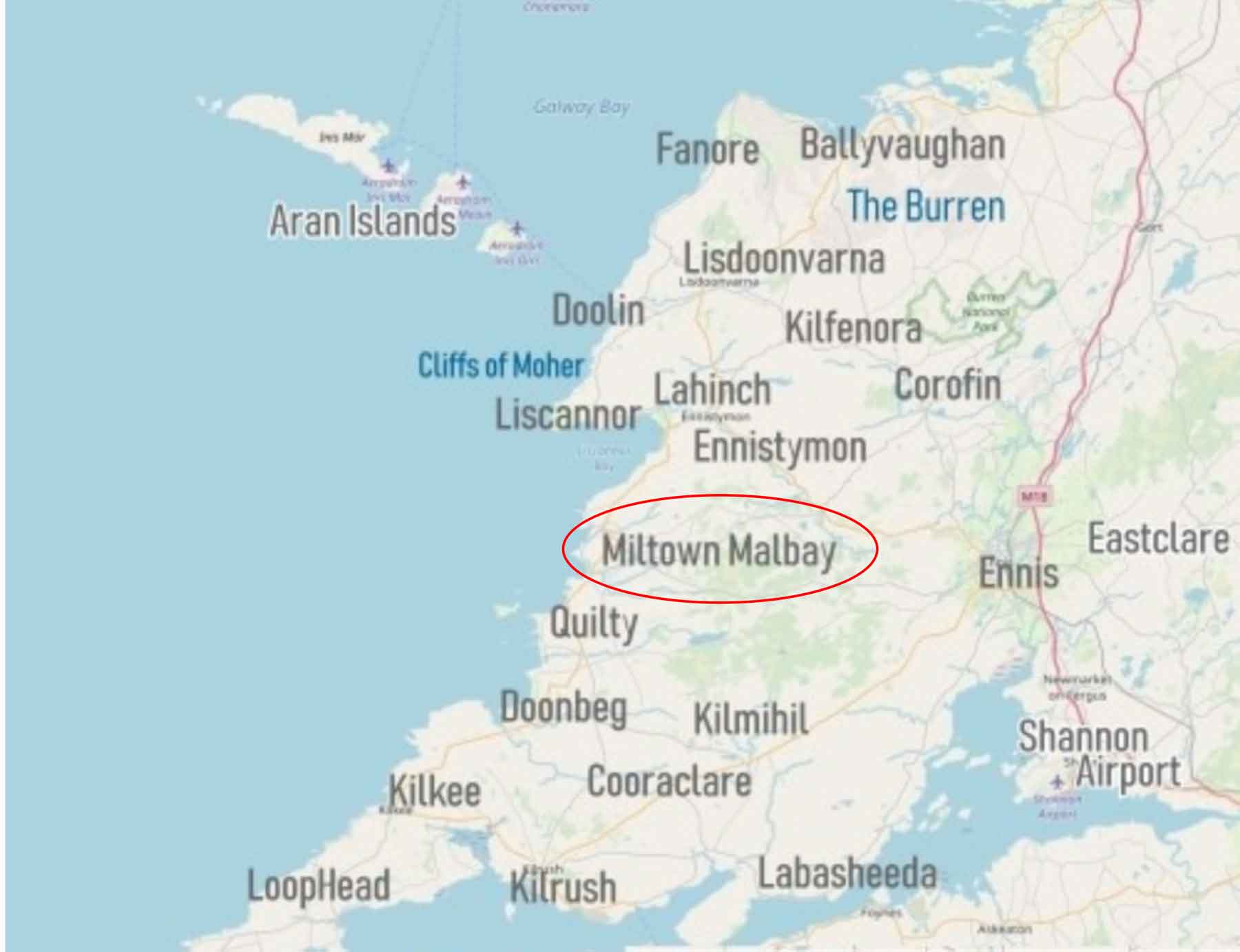
Map location of Miltown Malbay |
Our Sullivan family was from west County Clare in the area near the small town of Miltown Malbay. Judging from the baptismal records, the family moved frequently among rural locations in the area. For many decades Catholics were forbidden to inherit, purchase or even lease land in Ireland. The vast majority of the Irish, especially in the West, were landless peasants, who would subsist on small plots of land with no actual claim to the land. There were many families evicted from the scant plots of land they occupied. It appears that John P. Sullivan died in the 1880s in Ireland and did not emigrate. When his children became old enough, they would emigrate. They knew they had no choice but to leave Ireland. The forlorn term “exile” was often used by the Irish instead of “immigrant”. They’d leave for America, beginning with 20 year old Johanna. Steamships were the way to cross the Atlantic by the 1870’s, they were faster, safer, and less expensive than the sailing ships of the famine era. Those earlier sailing ships are remembered as “coffin ships’ for the high rate of deaths that occurred during the voyages |
| |
|
|
|
Johanna Sullivan Kane [1855-1895] was the first to emigrate and arrived in Niles in 1875. It was common for young Irish women to find work as domestics in America, usually in the larger cities. However, she married Michael Kane in 1877. The Kane family were earlier immigrants to Niles and also came from County Clare. Michael Kane had a sister and two brothers, who settled in Niles: Margaret Kane Mahoney, John Kane and Patrick Kane. All of these Kane siblings were born in County Clare in the 1840’s and immigrated in the 1860’s. Articles in the Niles Times noting both Michael’s and Margaret’s deaths in 1916, referred to the Kanes as a “pioneering” family in Niles. Michael worked as a laborer and had several business ventures. One was a tavern near the Erie Railroad depot, which seems to have been an initial stop for Irish coming from the west of Ireland. Many of the newly arriving immigrants referred to the Niles railroad stop as “Mickey Kane’s Crossing” Years before, the Irish came to Ohio to work digging canals and laying railroads. By the 1870’s most of the Irish immigrants were drawn to Niles and the Mahoning Valley by the iron and steel industry. The Irish were early practitioners of the “chain immigration” pattern, common among immigrants seeking passage to America. Relatives who had come earlier would often send funds to help their families back in Ireland, as well as help pay the passage or emigration. I have noticed frequent County Clare connections for many of the Irish coming to Niles. Three very common names in County Clare are McMahon, McNamara and O’Brien, all names very well represented names in the Niles area. Johanna Sullivan Kane died a young mother in 1895. Michael erected a beautiful monument for her in St. Stephen’s Cemetery. |
| |
|
|
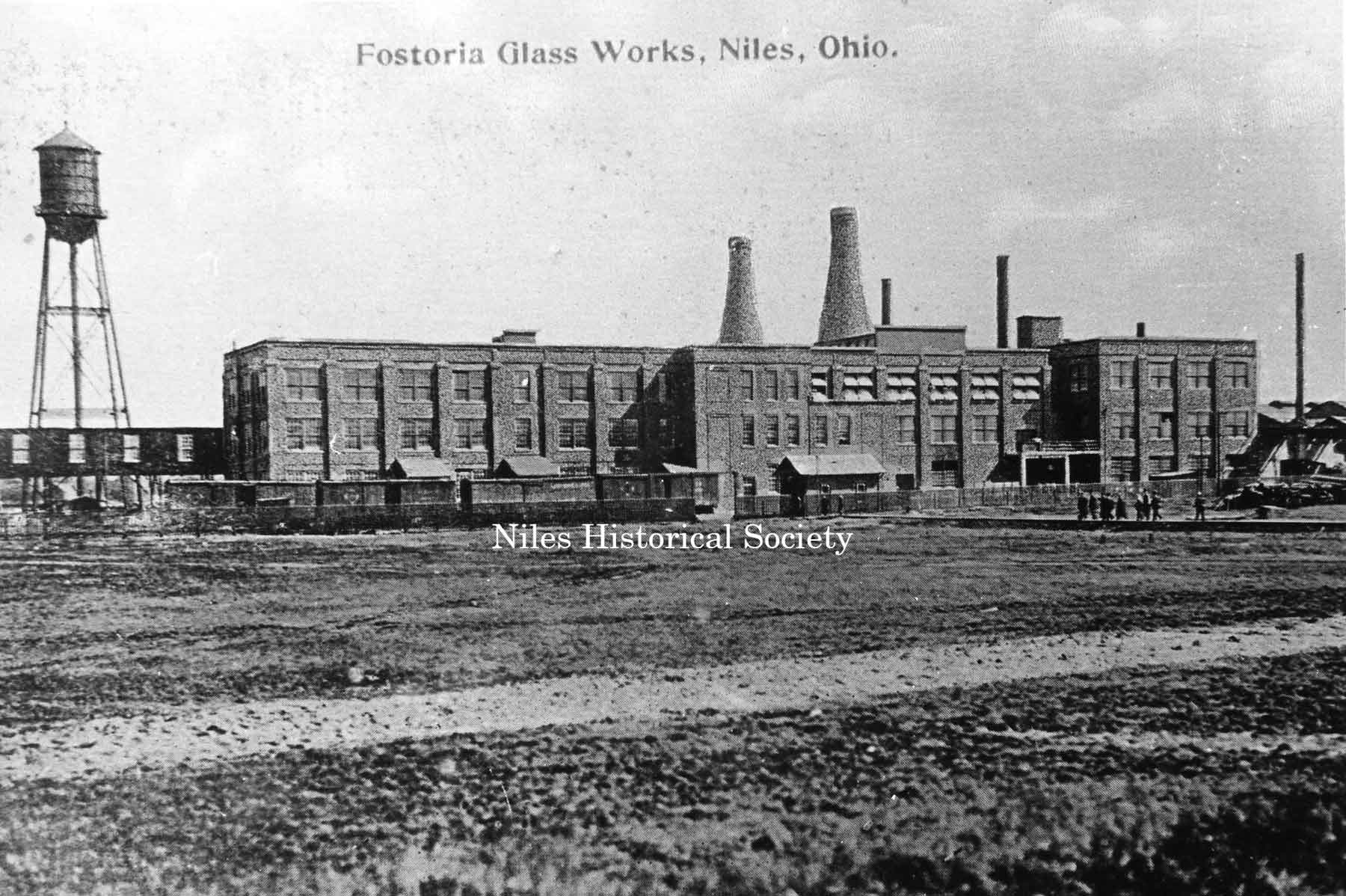
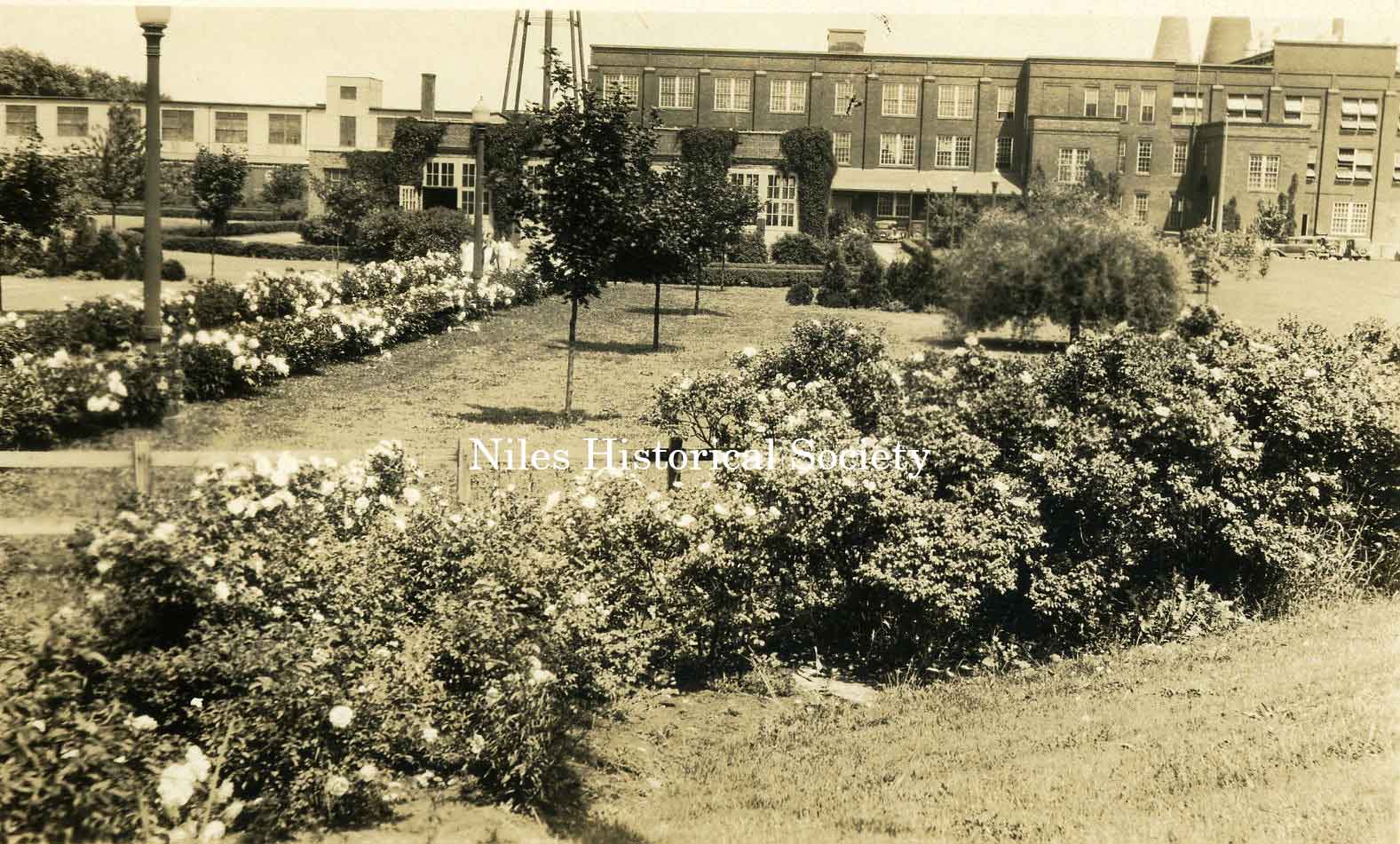
Fostoria Glass Works was constructed in 1910
|
Michael and Johanna Kane had five children. Anthony Sullivan [1859-1939] was the
second oldest and he immigrated in the early 1880’s. Among
other jobs, he worked at the glass works [later General Electric]
in Niles. He married Johanna Fitzpatrick in 1888 and
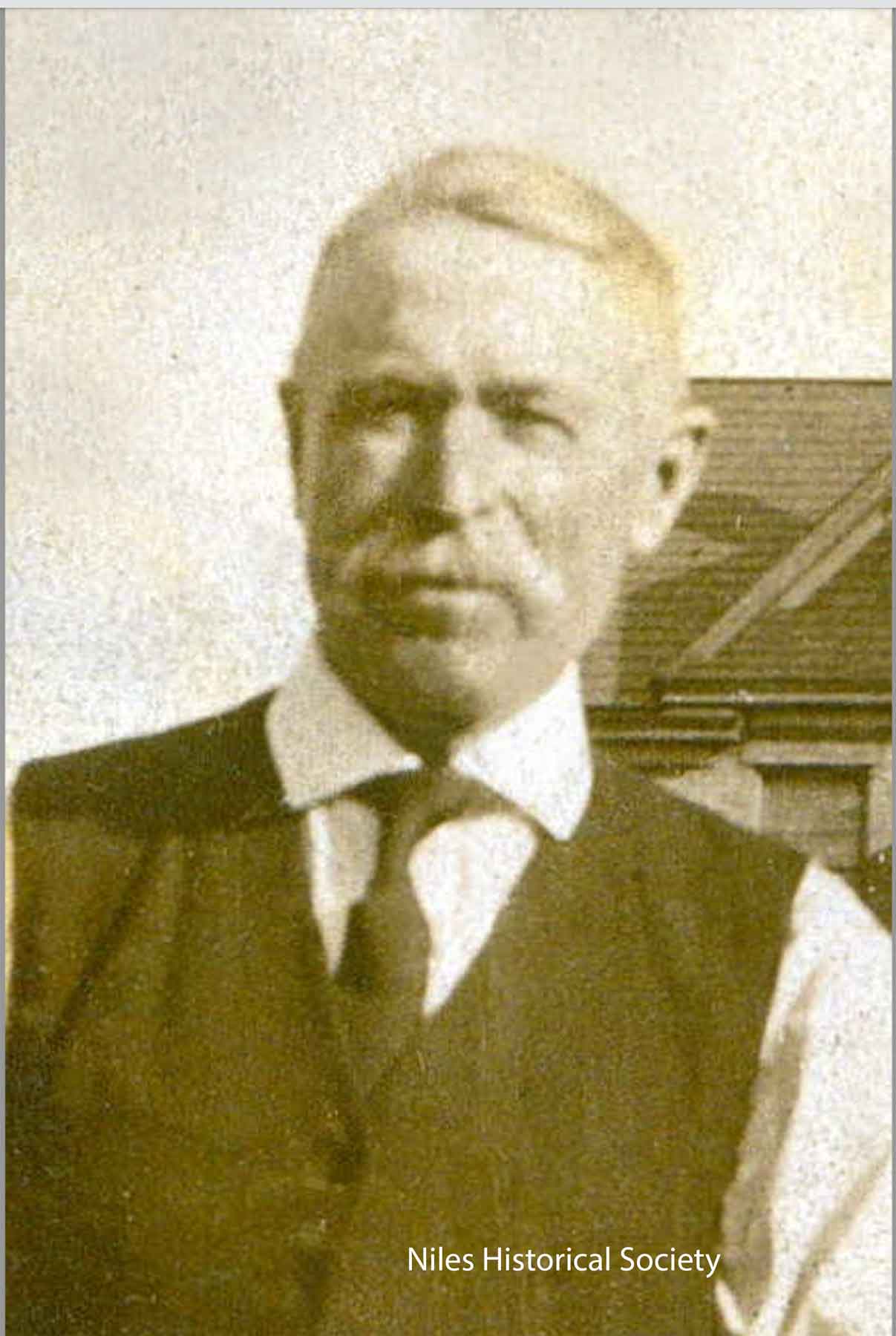
they had at least six children. After Johanna died in 1899. Anthony placed his children in an orphanage. The children returned after he married Mary Gallagher Malloy [also from County Clare] . Son, John, later moved to Youngstown and raised a family there. The others remained in Niles. |
| |
|
|
Daniel Sullivan, on cornerstone[1862-1939] at laying of cornerstone for Niles High School [1914]. |
Daniel Sullivan [1862- 1939], my great-grandfather, immigrated to Niles at age 16, but returned to Ireland. He immigrated again in 1886 and worked at a variety of laboring jobs in the area. Notably as a cement mason in the building of the old Niles McKinley High [later Edison Jr High]. Reportedly he danced an Irish jig at the dedication of the high school. Later, he worked as the sexton at St. Stephen’s Cemetery. Daniel married Jane Elizabeth “Jenny” Jones in 1891. Jenny was born in Niles of Irish immigrant parents, Patrick W. Jones and Margaret Shannon. Patrick’s family was from County Clare and they were earlier Irish immigrants to the Niles/Warren area. Daniel and Jenny Sullivan’s children: |
| |
|
|
Story of when
the Niles Streets were |
Ellen Sullivan Houlihan [1867-1953] immigrated in 1885. After marrying Patrick Houlihan, they lived and raised a large family in Youngstown. Margaret Sullivan [1870-1943] immigrated
in 1888, along with her mother, Ellen Casey, and brother,
Martin. They were the last of the family to immigrate
to Niles. Margaret married Thomas Sullivan [not related,
however of County Clare], in 1893. Margaret and Thomas Sullivan
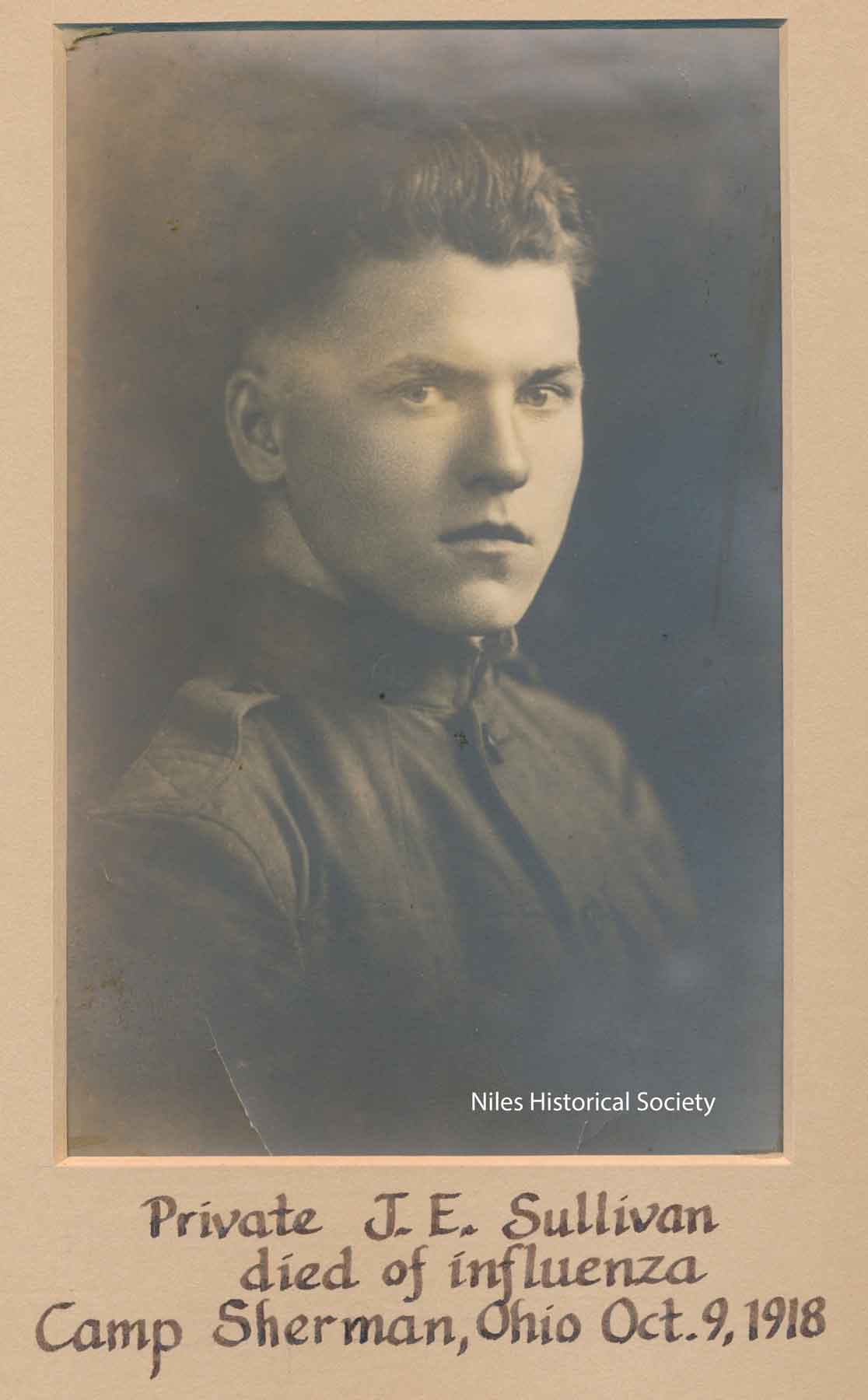
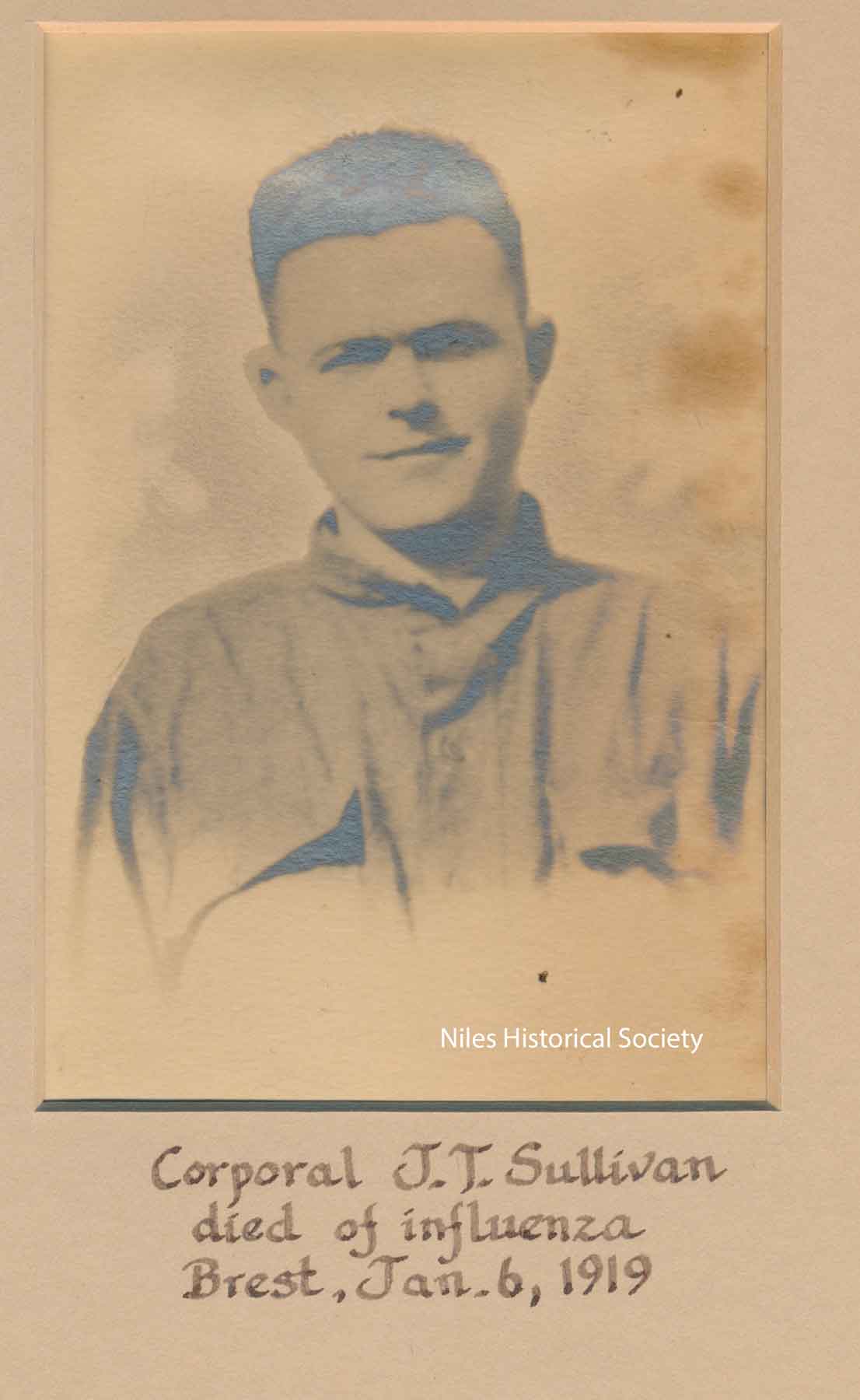
raised their family in Niles. Nellie died during the great influenza epidemic of 1918- 20, a young wife and a new mother. John and James died in the service during WW I. Sullivan Street in Niles was named for them. Martin Sullivan [1872-1947] immigrated in 1888, along with his mother, and sister. Martin worked in the steel mills; and as a “merchant policeman”; later a Trumbull County deputy sheriff. Martin married Delia Sullivan [Thomas’s sister] in 1904. Our family matriarch, Ellen Casey Sullivan [1835-1920], lived with Martin and Delia in Niles and Girard. Martin and Delia had three children: Notes: A number of the Ohio-born Sullivans served in WWI. Cousins John P. Sullivan, Frank A. Sullivan and Patrick Houlihan served in the National Army with the Ohio 332nd Infantry. The 332nd was the only American outfit sent to Italy and took part in the decisive Battle at Vittorio- Veneto in 1918. My father related that when WWI broke out, there was a very strong anti-English mood among the Irish here. They would never fight to “save the English”. However, these young men did answer the call, “to make the world safe for Democracy” in 1917. They were now Irish-Americans. Unanswered Questions: The Irish poor continued to emigrate. By the late 1800’s many people had already left for overseas, especially the young, and as the young left the area, its people saw a diminished future there. It must have been painful to leave, but more difficult to stay. America’s opportunities beckoned. Why they came to Niles is a mystery. I have noted many County Clare connection? I’ve wondered why so little of the Irish language was passed on. Most of the immigrant Sullivans listed “Irish” as their native tongue on early census reports. The ability to easily speak English was a great advantage for Irish immigrants in America. Immigrant parents may have been concerned that their children would be discriminated against if they spoke Irish. |
| |
|
|
Anthony Sullivan |
Legacy: Among the traditions passed on in our family: Ken Sullivan July 2026
A source for much of the information about
the conditions in Ireland was: |
| |
|
|
|
|
![Johanna Sullivan Kane [1855-1895]](Stryz2/Sullivan%20Web/memorialb.jpg)
![Daniel Sullivan, on cornerstone[1862-1939] at laying of cornerstone for Niles High School [1914].](Stryz2/Sullivan%20Web/Cornerstoneb.jpg)