Ward-Thomas Museum

History of Mount Carmel Church
Ward — Thomas
Museum
Home of the Niles Historical Society
503 Brown Street Niles, Ohio 44446
Click here to become a Niles Historical Society Member or to renew your membership
Click on any photograph to view a larger image, click on image again to zoom into photograph.
History of Mount Carmel Church. The first Niles immigrants were English and Welsh Protestants of many denominations; none large enough to organize a congregation or have a permanent House of Worship. Small groups met in private homes, but there was not a single organized church in Weathersfield Township until 1839. Roman Catholics, mostly Irish immigrants, also first worshipped in private homes. During the period from 1838 to 1879, eight different congregations were established: Methodist, Catholic (St. Stephen), Baptist, Episcopal, Welsh Presbyterian and Primitive Methodist. The Catholics in Niles were attended to by priests from St. Columba Church in Youngstown until 1854 when St. Stephen’s Church was designated as a mission. In 1865 the parish was established for all catholics of Niles and Mineral Ridge. For both the pioneers and immigrants, their churches became a means of keeping their traditions. Just after the turn of the century, three ethnic churches were founded. with services held in their native tongues: the Lutheran in German, Our Lady of Mt. Carmel in Italian, and the Presbyterian in Hungarian. |
||
| |
||
History of the buildings of Our Lady of Mt. Carmel Parish 1906 |
||
| |
||
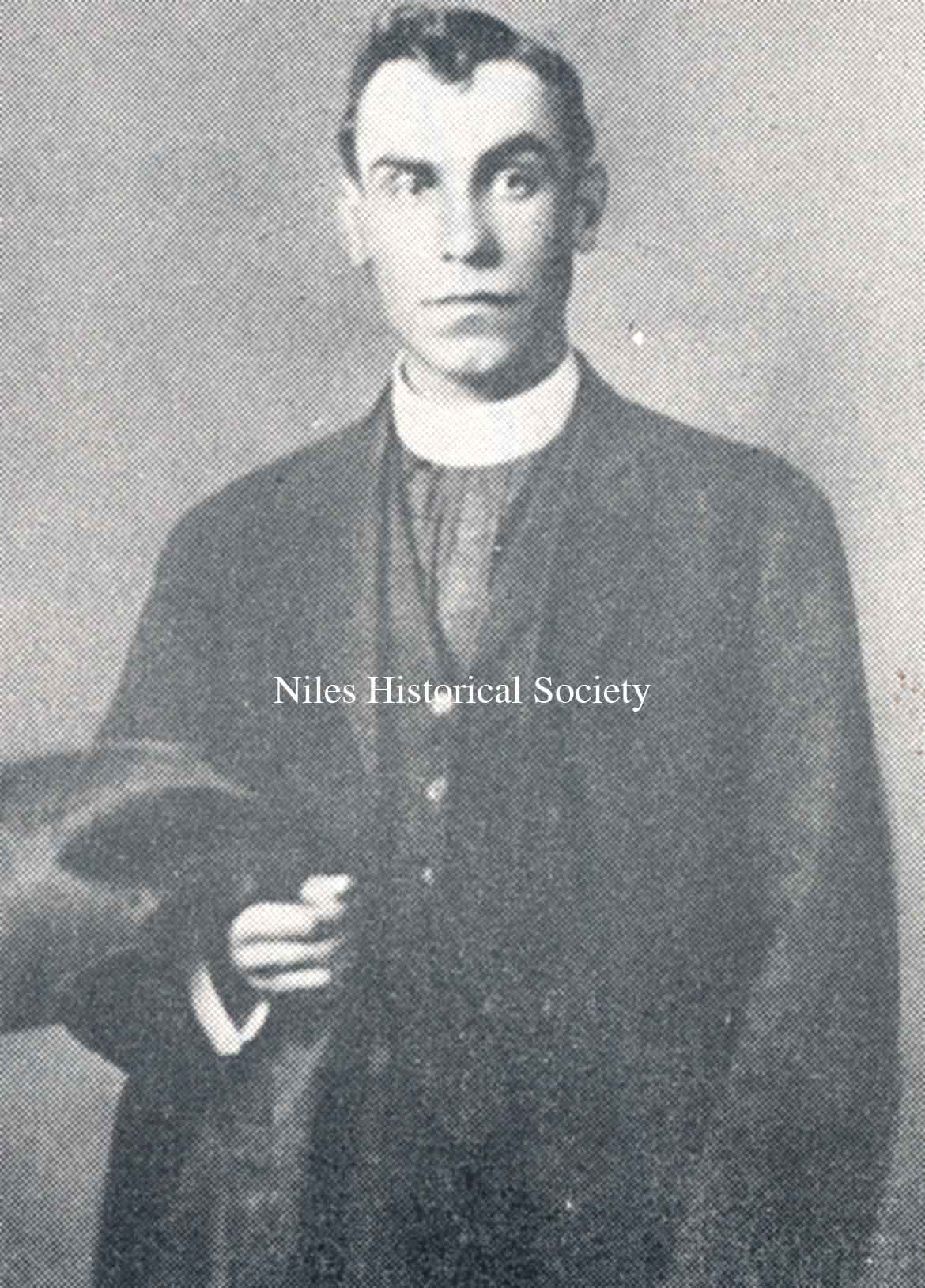
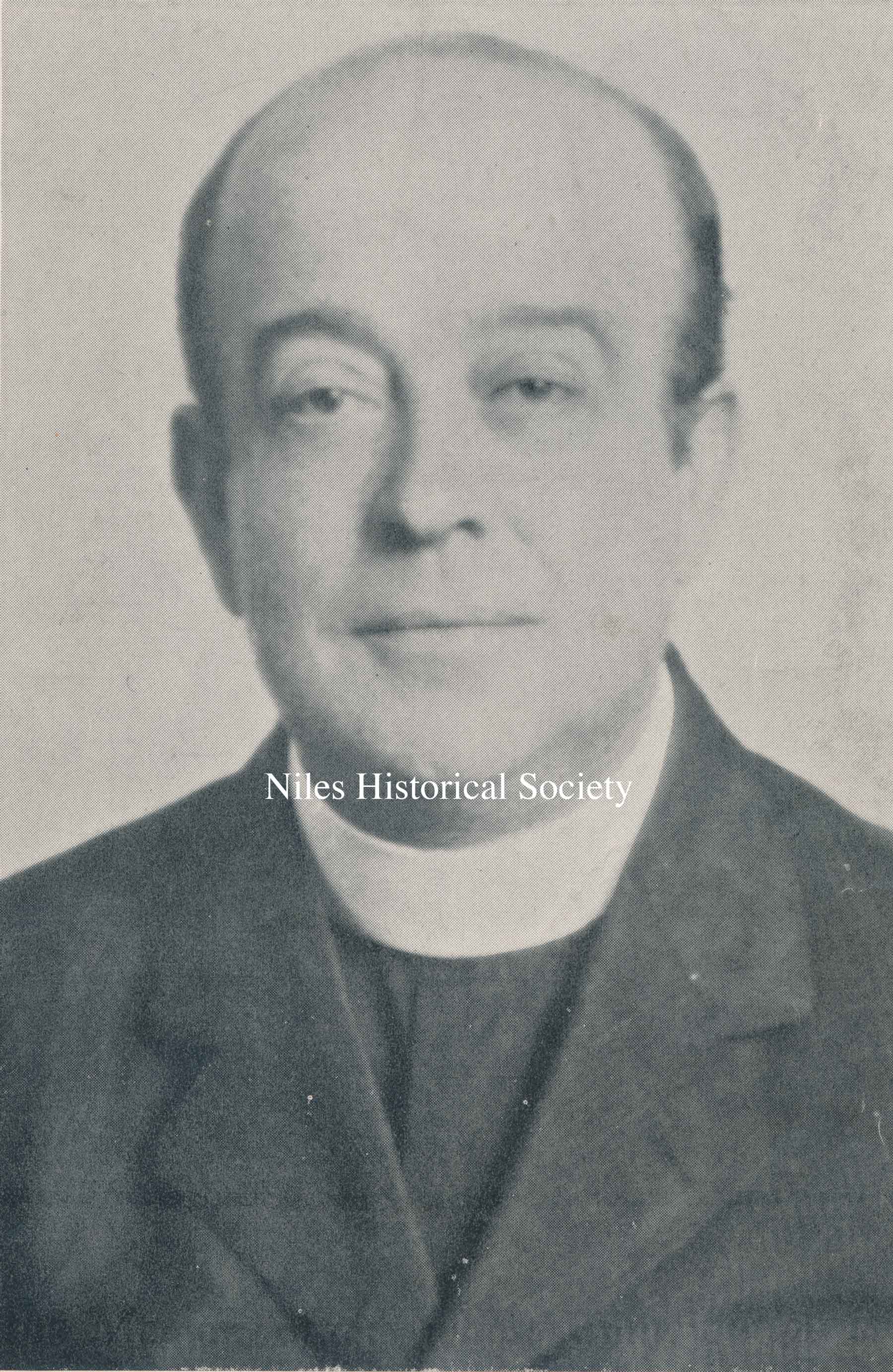
Father Vito Franco |
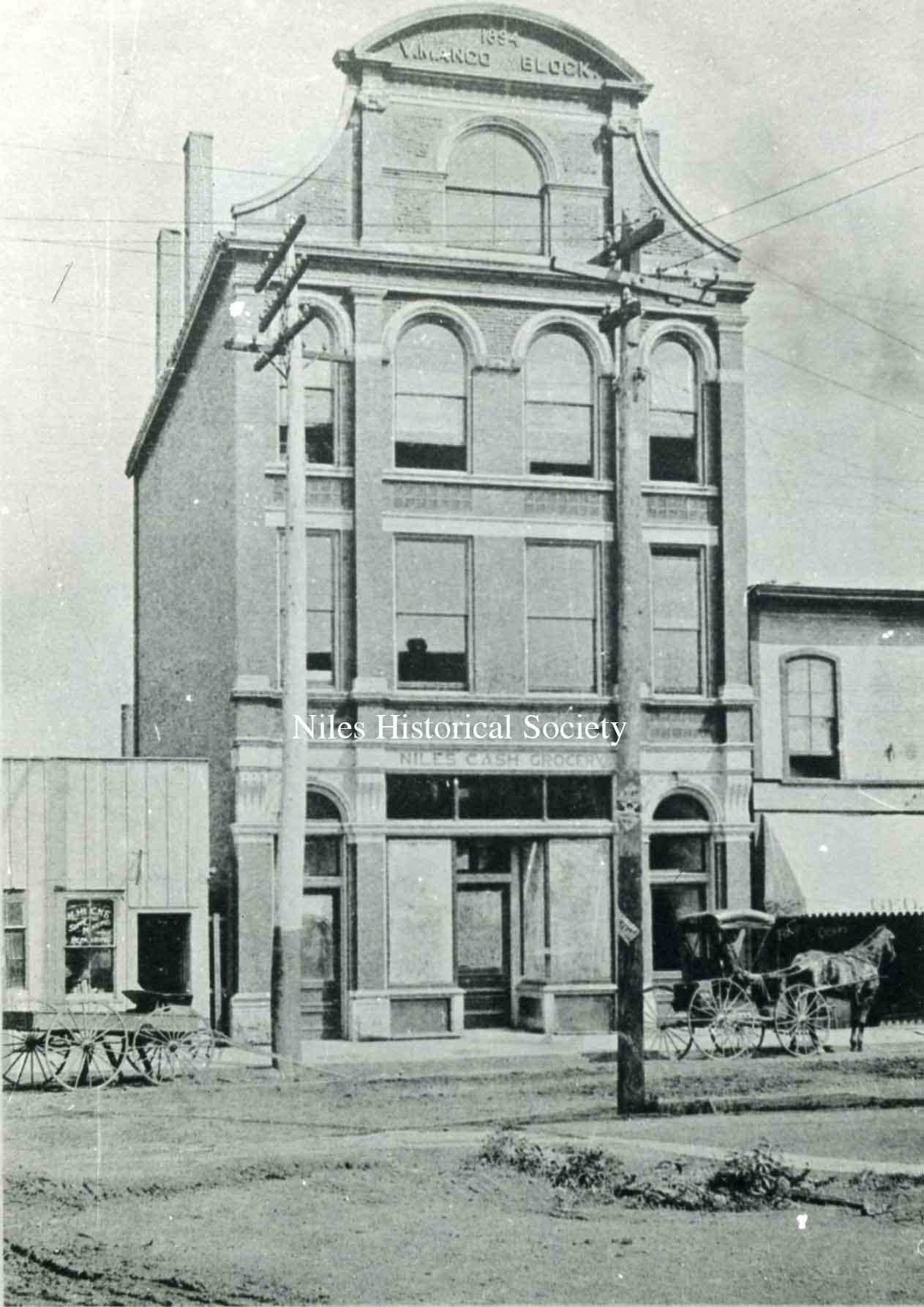
First meetings were on the second
floor PO1.217 |
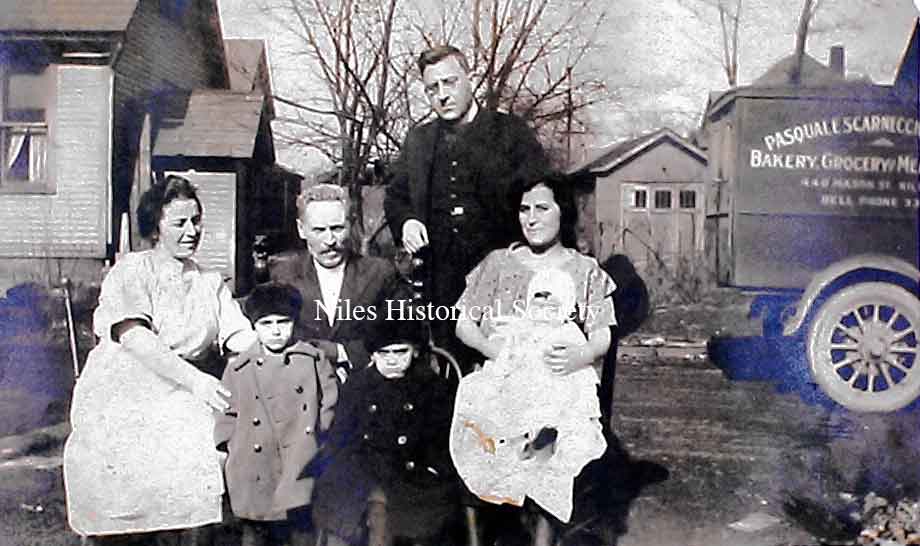
Pasquale Scarnecchia house on Mason
Street
Father Vito and Scarnecchia Family PO12.18 |
| |
||
|
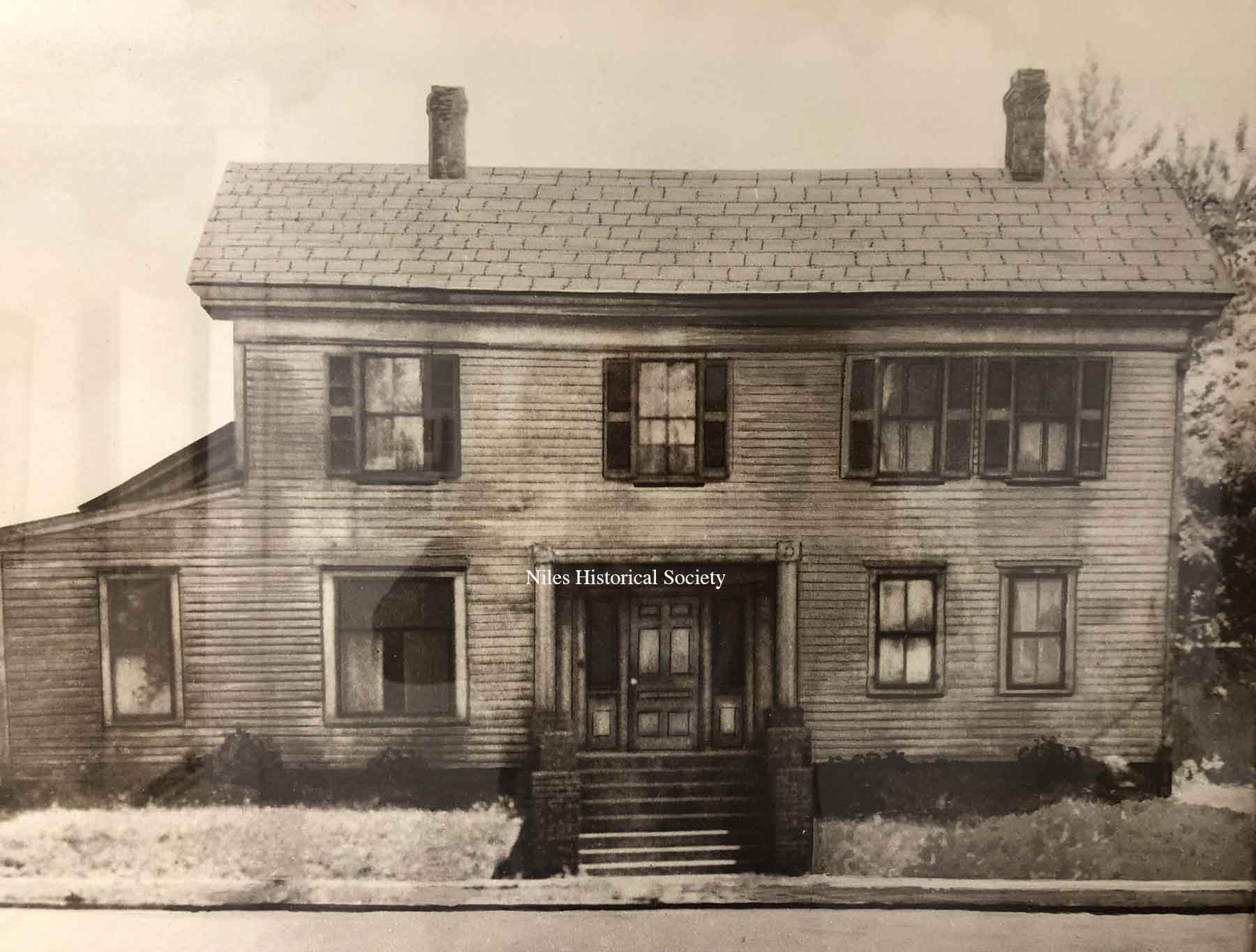
The Robbins home at the corner of Erie Street and Robbins Avenue was purchased in 1908. It had been the residence of Josiah Robbins and his wife, Mary Heaton, since 1839. This home had been the center of political thought in the Niles' area during the days of the Whig and Tory parties. The house was in deplorable condition with broken windows, fallen plaster, an inadequate ancient coal furnace, failing plumbing, and no electricity. The building was renovated and the building was divided. The lower floor on the west side was transformed into a chapel, while the east side was made the living quarters for Father Franco. On Easter Sunday, 1908, the first mass was celebrated, representing a real achievement for Father Franco, the committee and the community of Our Lady of Mount Carmel. |
|
| 1911 • Reverend Franco is transferred and Reverend John Farinacci becomes the pastor. 1913 • 1500 Italians belong to the parish. • Father requests permission to sell property to cover the debt, but permission is denied. The Church remains in debt. 1914 • Reverend Farinaccci departs suddenly and Reverend Ottavio Zavatta becomes pastor. He becomes discouraged by the seeming indifference of the parishioners and leaves. • Reverend Nicola Santoro of the Precious Blood Society becomes the new pastor. • Reverend Santo is besieged by creditors and a date is set to auction the church property. The case is settled out of court and Father Santoro is advised to retain the Robbins Avenue property. 1919 • The Our Lady of Mount Carmel Society is organized. After several fundraisers, the Society makes a substantial down payment towards the altar, communion railing and marble steps for the new church. They later contribute to the organ and two statues in the church and furnish a room in the Mission House. 1923 • A committee is formed to erect a new structure for worship having outgrown its old Robbins Home structure. Money is raised and the Bishop sanctions the excavation of the basement on the Robbins Avenue site. |
||
| |
||
|
Father Nicola Santoro
|
Early
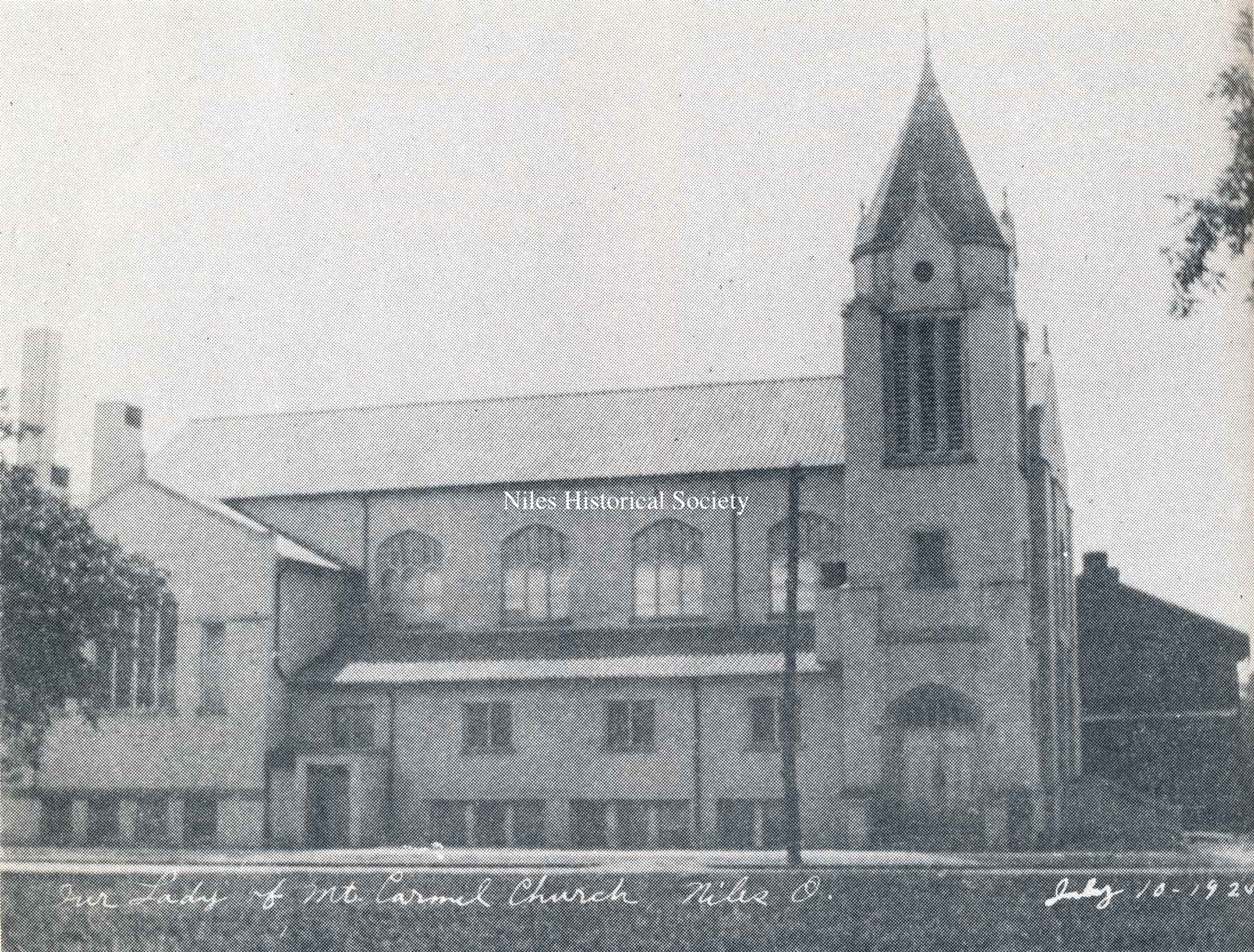
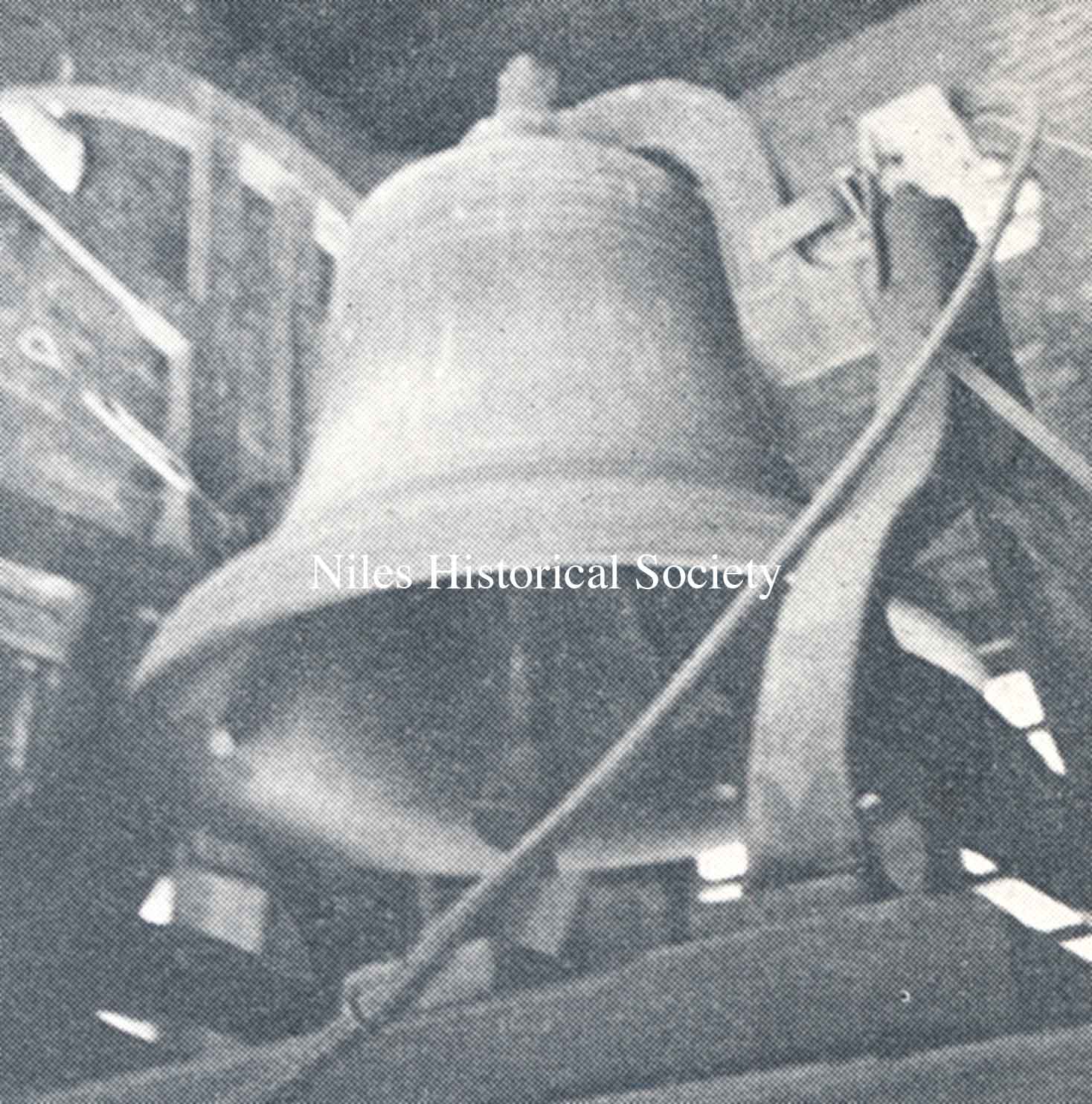
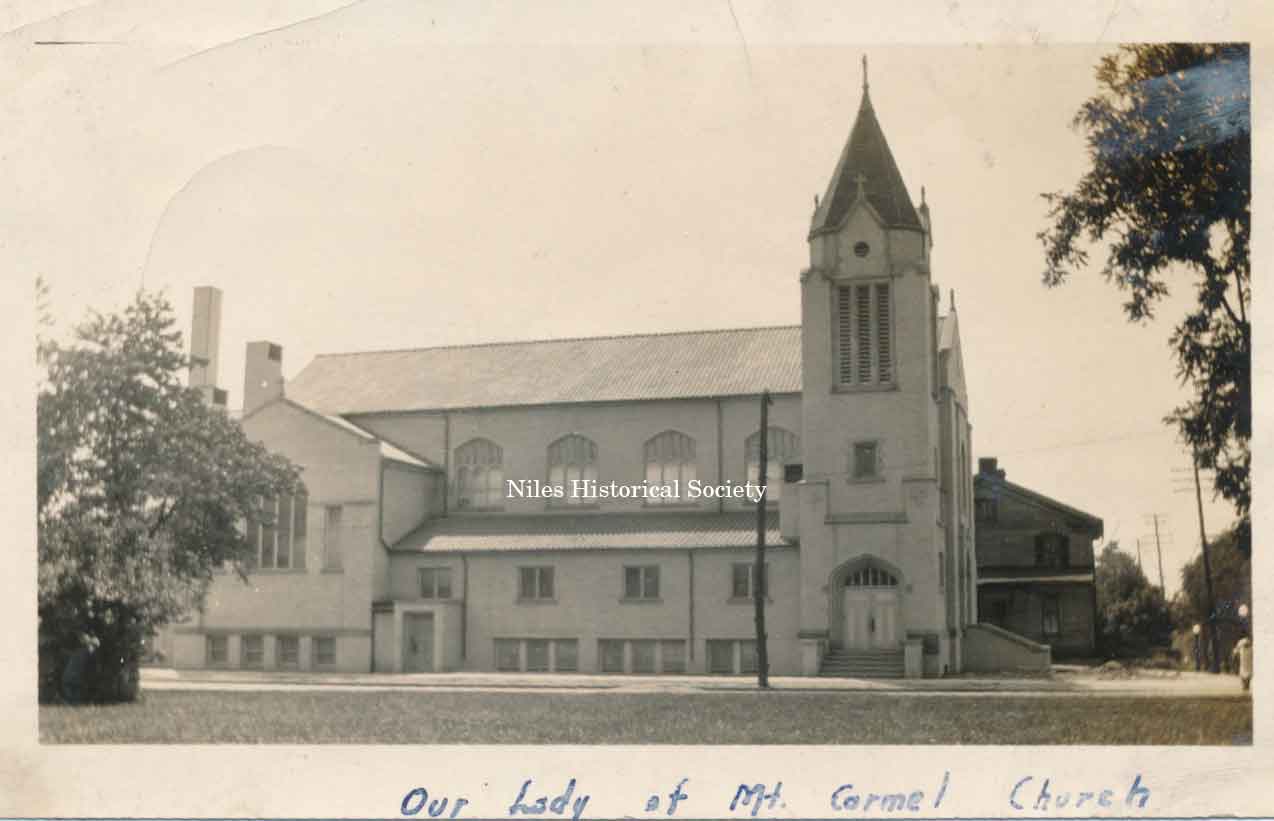
Confirmation Class As the number of parishioners attending church services multiplied, the expanded chapel in the Robbins Home became inadequate. A committee was formed in 1923 to erect a new structure. Money was raised and covered the basement. The Cleveland Diocese gave permission for a $30,000 loan to roof the church. The First Communion was administered on June 24, 1924 and in October the blessing of the bell donated by Vincenzo Mango occurred. On Christmas Eve 1924, Father Santoro celebrated his Silver jubilee as a priest in this new house of worship. |
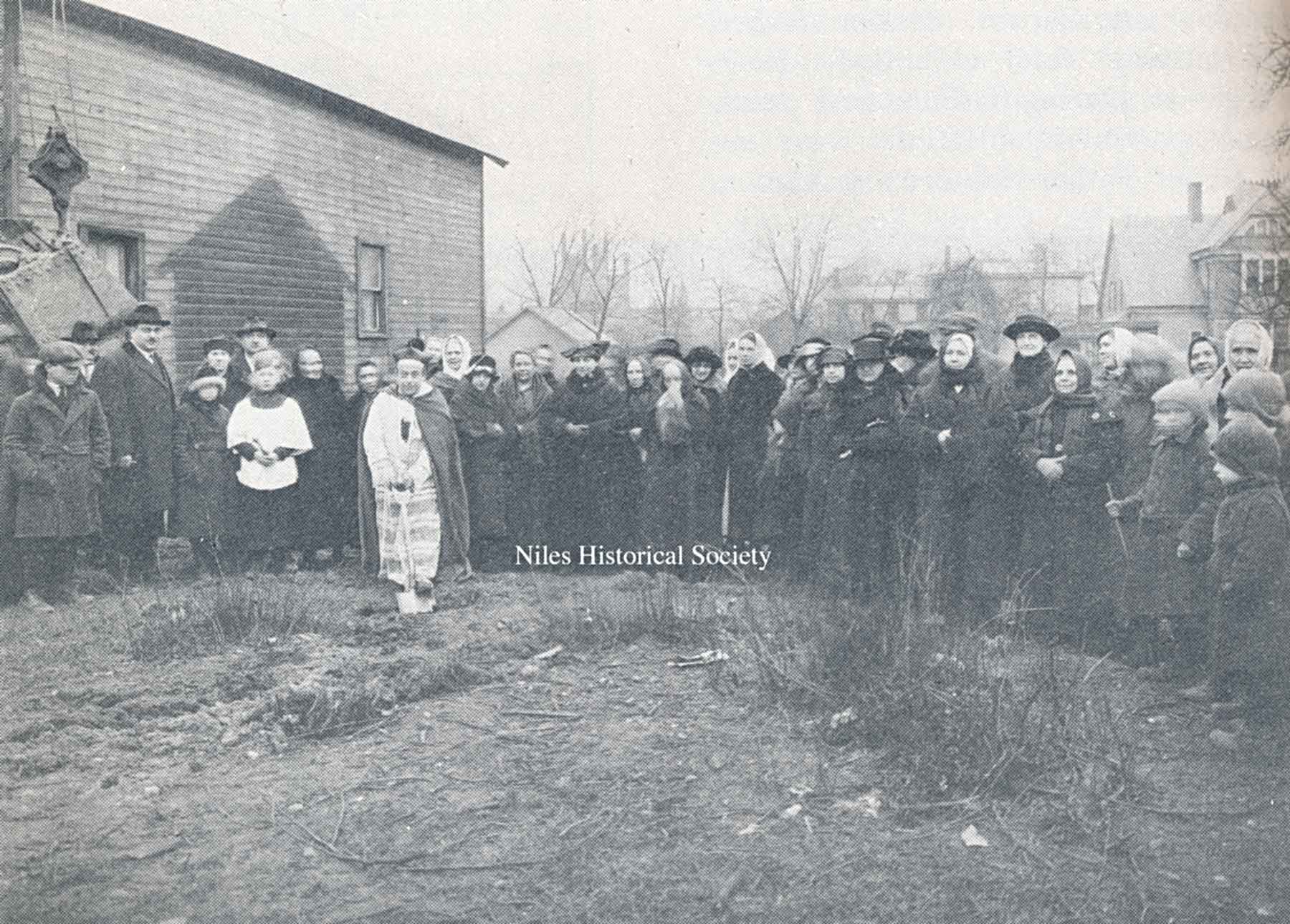
Groundbreaking for the new
Mount Carmel Church, 1924. |
Unfinished interior of |
Bell donated by Mr. and |
The Scarnecchia House at 449 Mason Street was the temporary chapel from 1906-1908. The Robbins Home on Robbins Avenue and Erie Street became the chapel from 1908-1924. The first mass in the new church was celebrated on Christmas Eve, 1924. |
| 1924 • Roofing of the church begins with a $30,000 loan. • Church bell is donated by Vincenzo Mango. • On Christmas Eve, Father Santoro celebrates his Silver Jubilee in the new house of worship. • The church has a seating capacity of 800, with a large center nave bordered with pillars and two side aisles. 1929 • Special committee is formed to raise funds to plaster the interior walls of the church. • Stained glass windows are imported from Munich, Germany. • Father Santoro celebrates Christmas Mass in the completed church. 1932 • Father Santoro requests permission to build a “Mission House” for the Precious Blood Fathers. • The rectory would be built with funds from the order. The building was completed in 1935. |
||
|
Mt. Carmel Church with Robbins
Home
Early view of the Mission House located on the previous site of the Robbins Home on Robbins Avenue, 1934. |
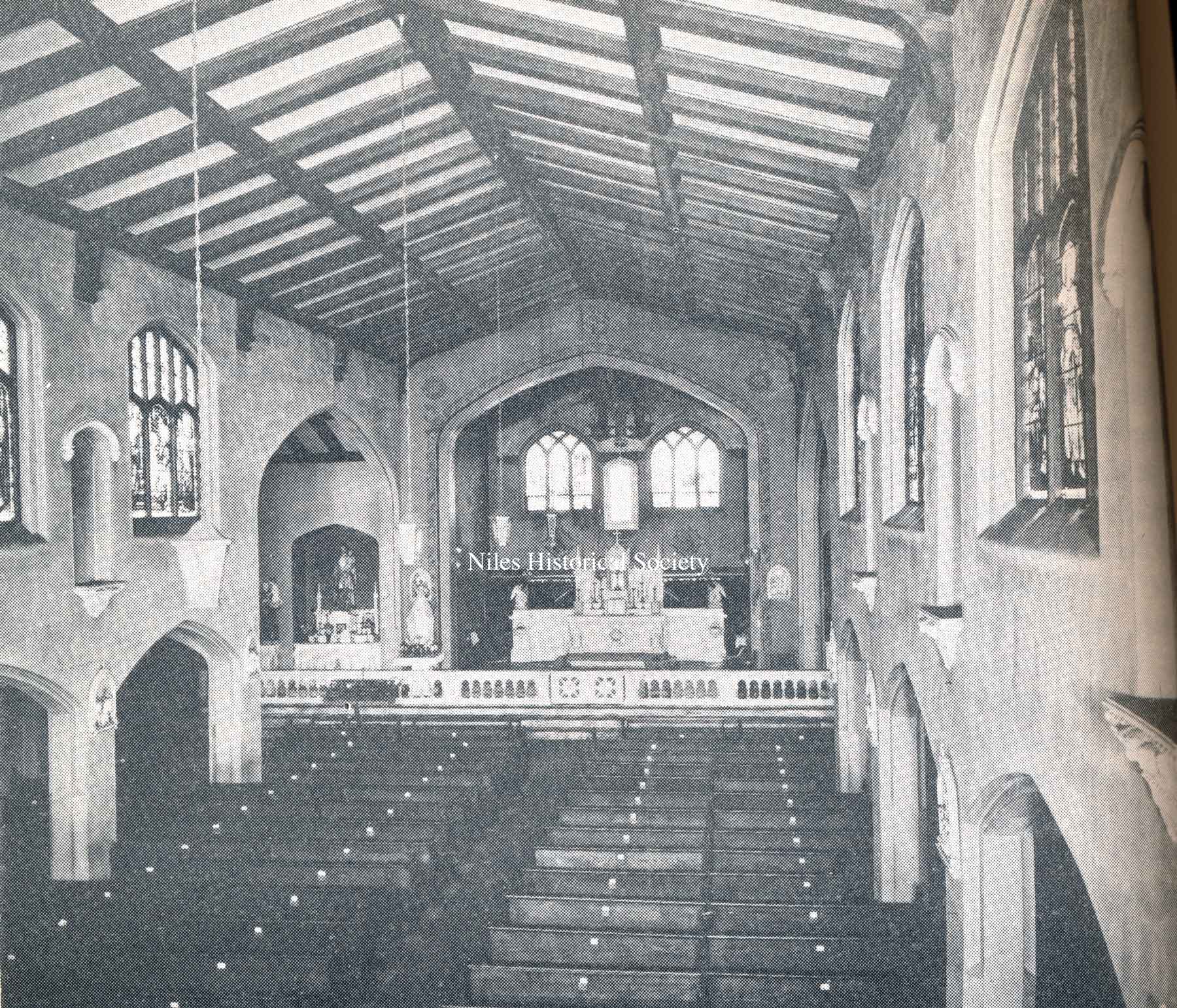
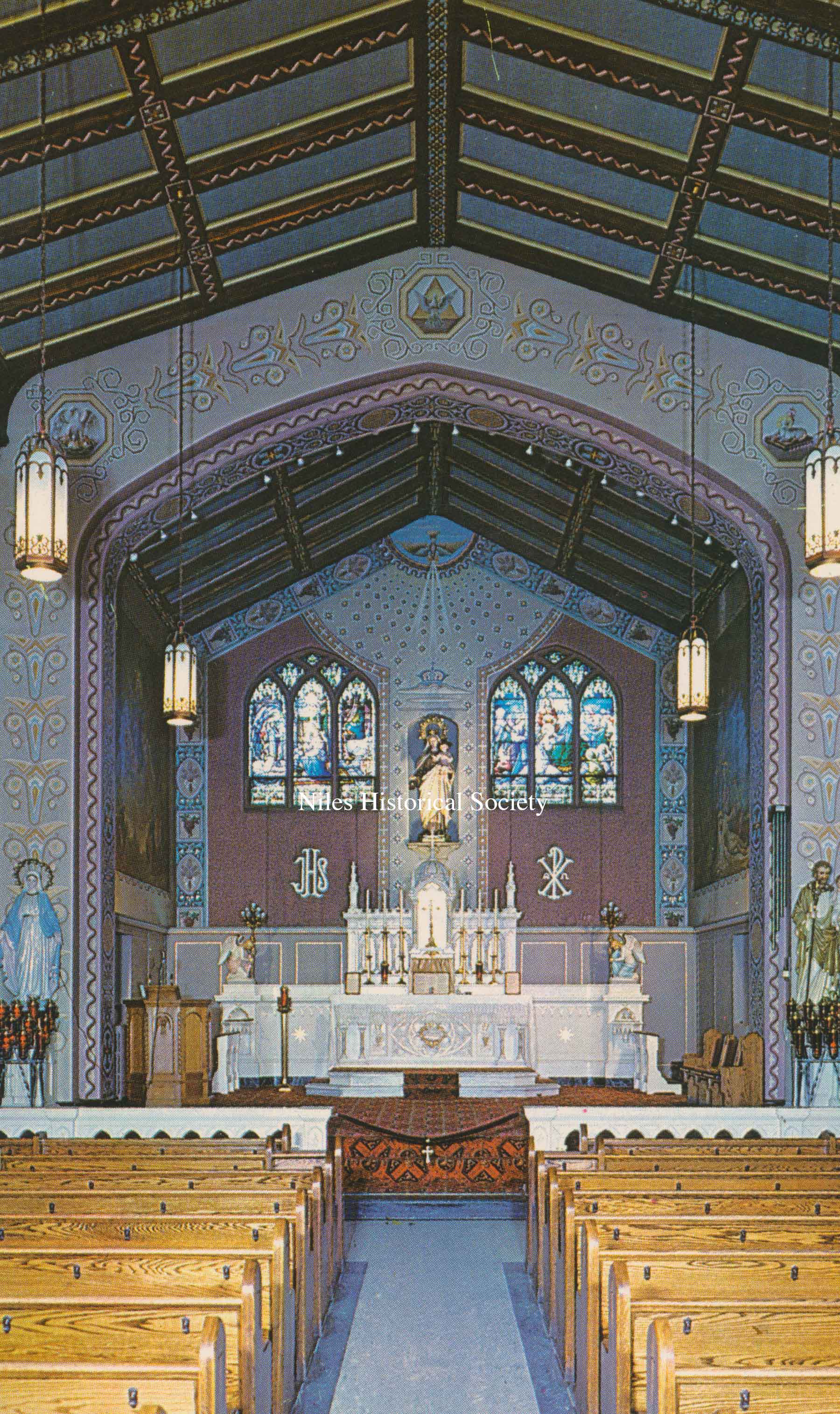
On January 26, 1932 Father Santoro wrote to the Bishop concerning the Precious Blood Fathers and the parish in Niles. He stated that,“Precious Blood Fathers working for the Italian immigrants in America, wished to establish a Mission House. It would not only be a home for the priests serving Mount Carmel, but would also be a base of operations for all those preaching Missions anywhere in the area”. The order would assume the parish debt and build a rectory at their own expense. In return, the property would receive the parish "In Perpetuum" while all the property would remain in the name of the diocese. The structure was completed in October 1935. (R) Interior view of the altar and main nave of Mount Carmel Church. |
|
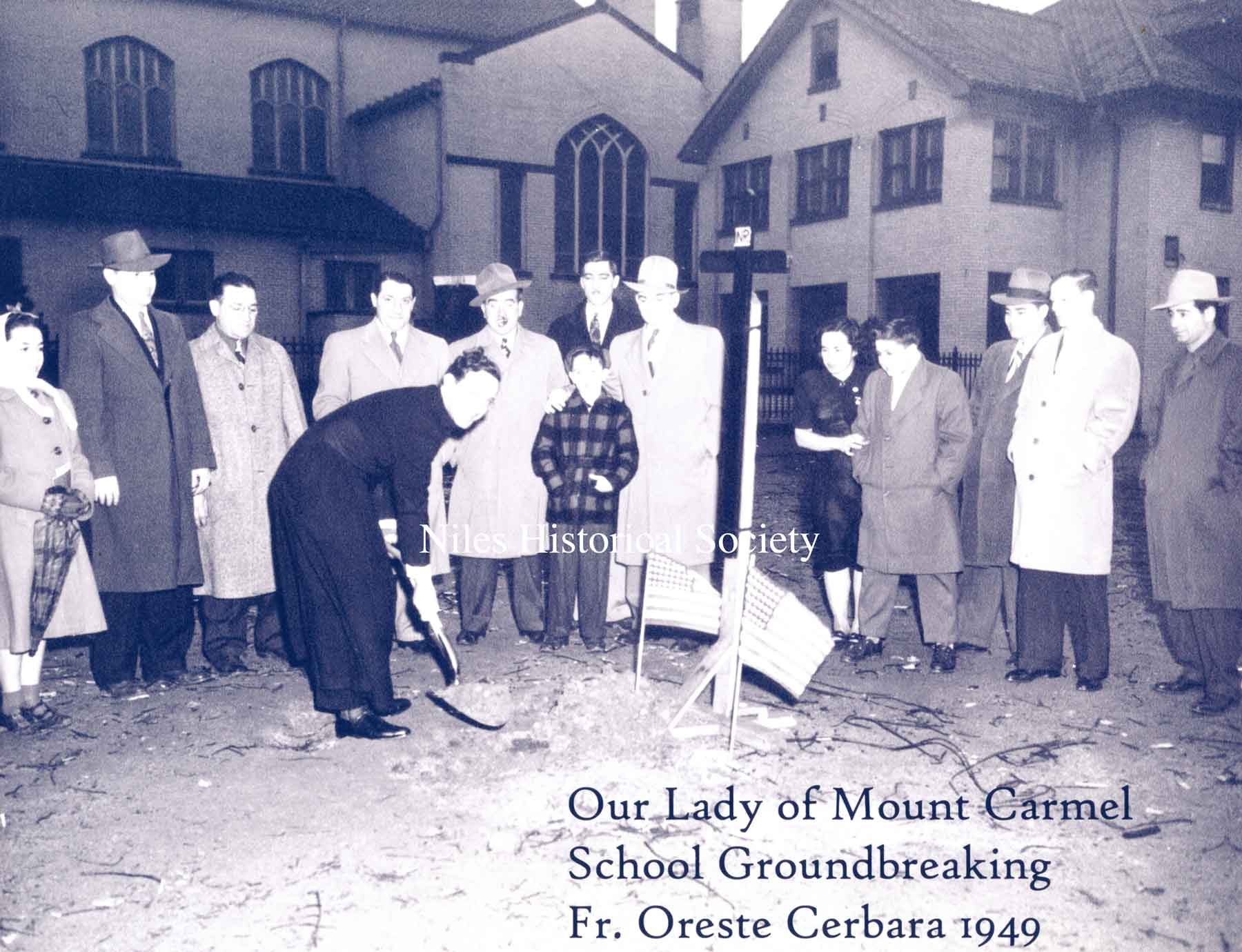
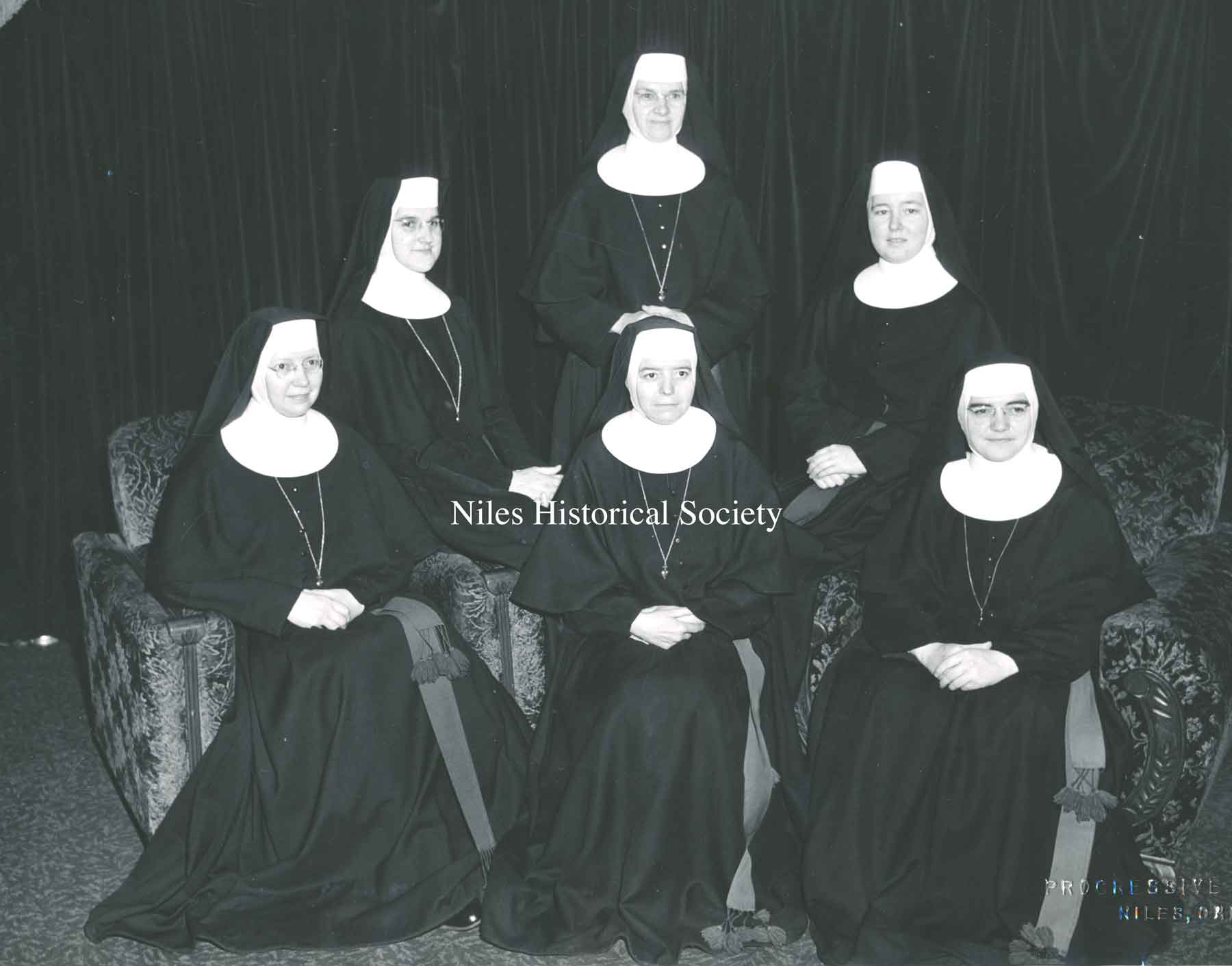
| 1933 • The annual summer festival begins around the feast of Our Lady of Mount Carmel. Booths are erected behind Washington Jr. High School. • Other early festival sites were held in Mason Woods and Peffer Athletic Field. 1938 • Reverend Oreste Cerbara, newly ordained, comes from Rome. 1939 • Wicks pipe organ is purchased. 1941 • Upon the death of Father Santoro, Reverend Joseph Saraceno becomes pastor and continues the traditions and customs of Mount Carmel. 1947 • Summer festival is extended to a full week. A living rosary precedes Our Lady’s statue during the procession. • Friday night bingo begins in the church hall. 1948 • Reverend Nicholas Arioli becomes the new assistant pastor and focuses on the young adults. • With money from bingo and other fund-raisers. Father Oreste begins plans for a new school and ground is broken in February. • Six sisters from the Sisters Adorers of the Blood of Christ open the completed school on September 29 with 229 students. Sister Donata is the first principal of the school which serves kindergarten through fourth grades. |
||
Father Oreste Cerbara |
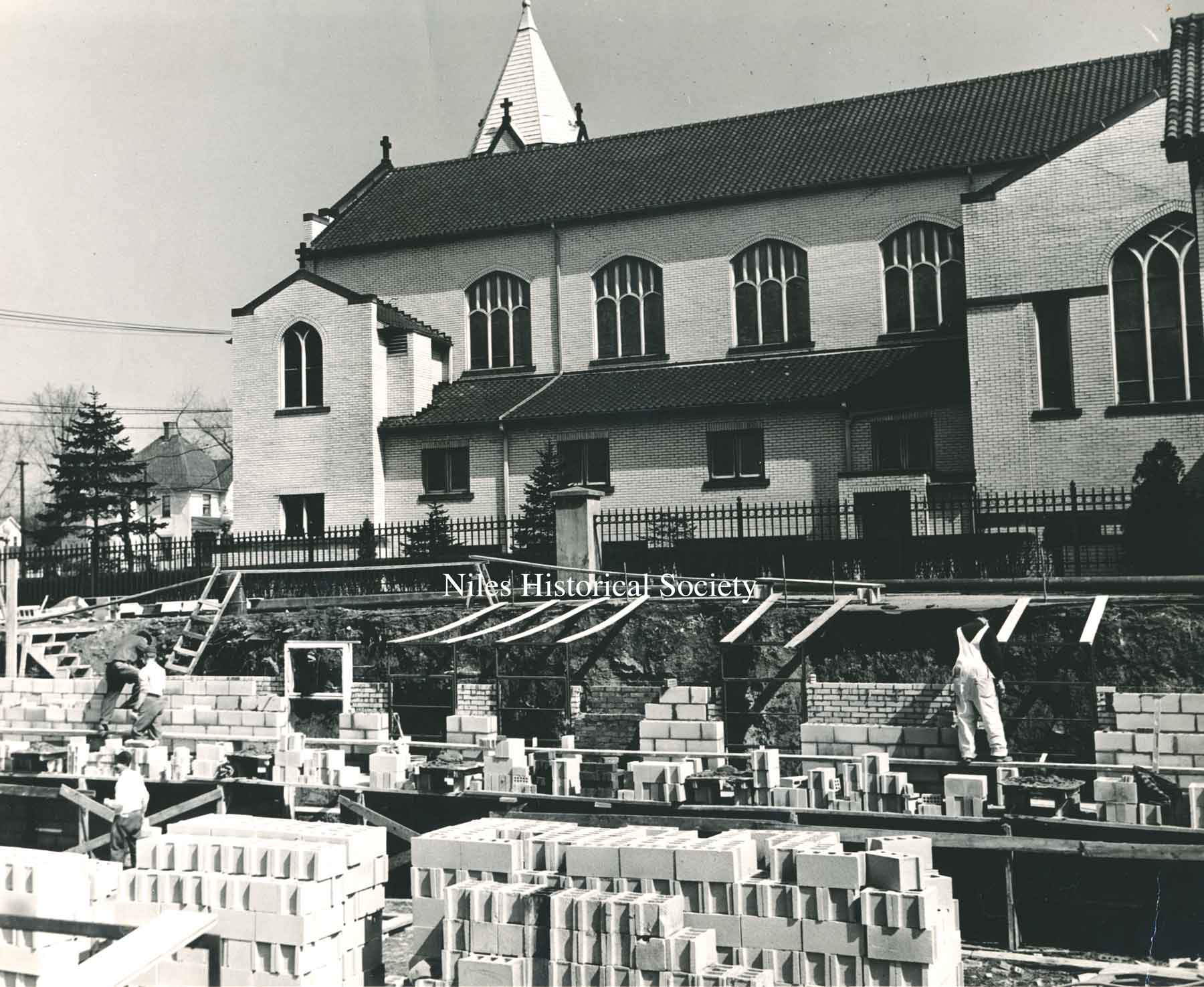
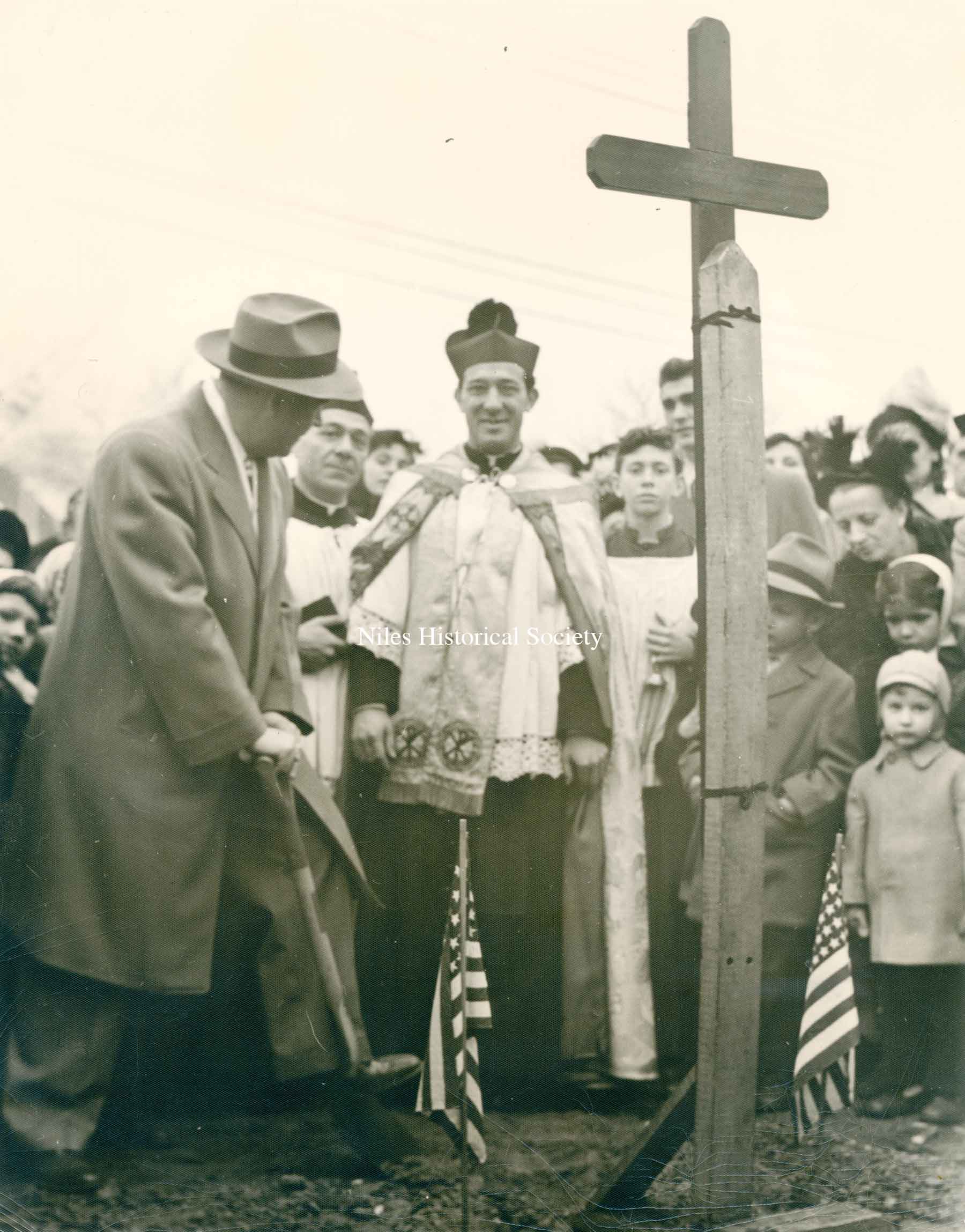
School Groundbreaking |
Mount Carmel School basement construction.
|
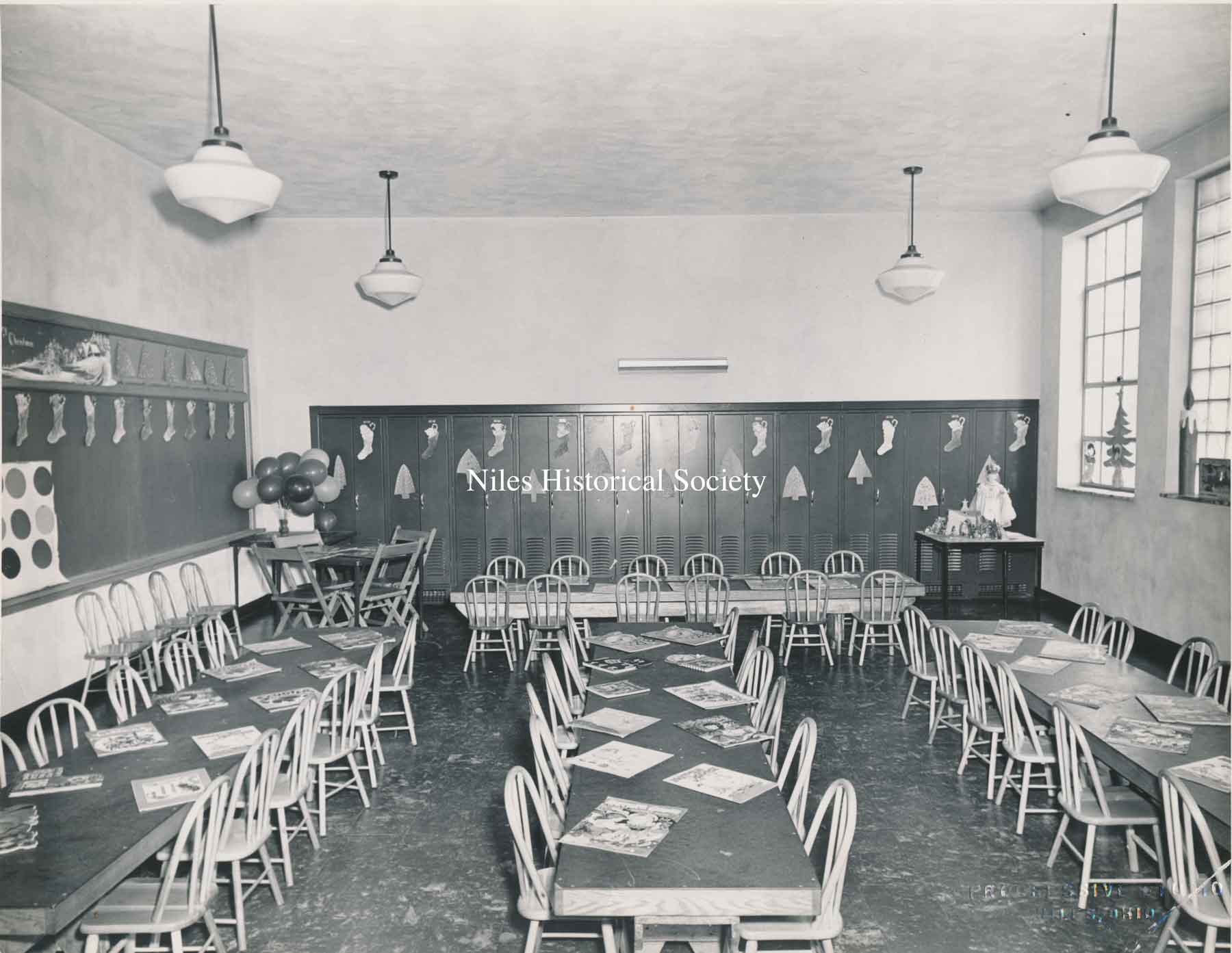
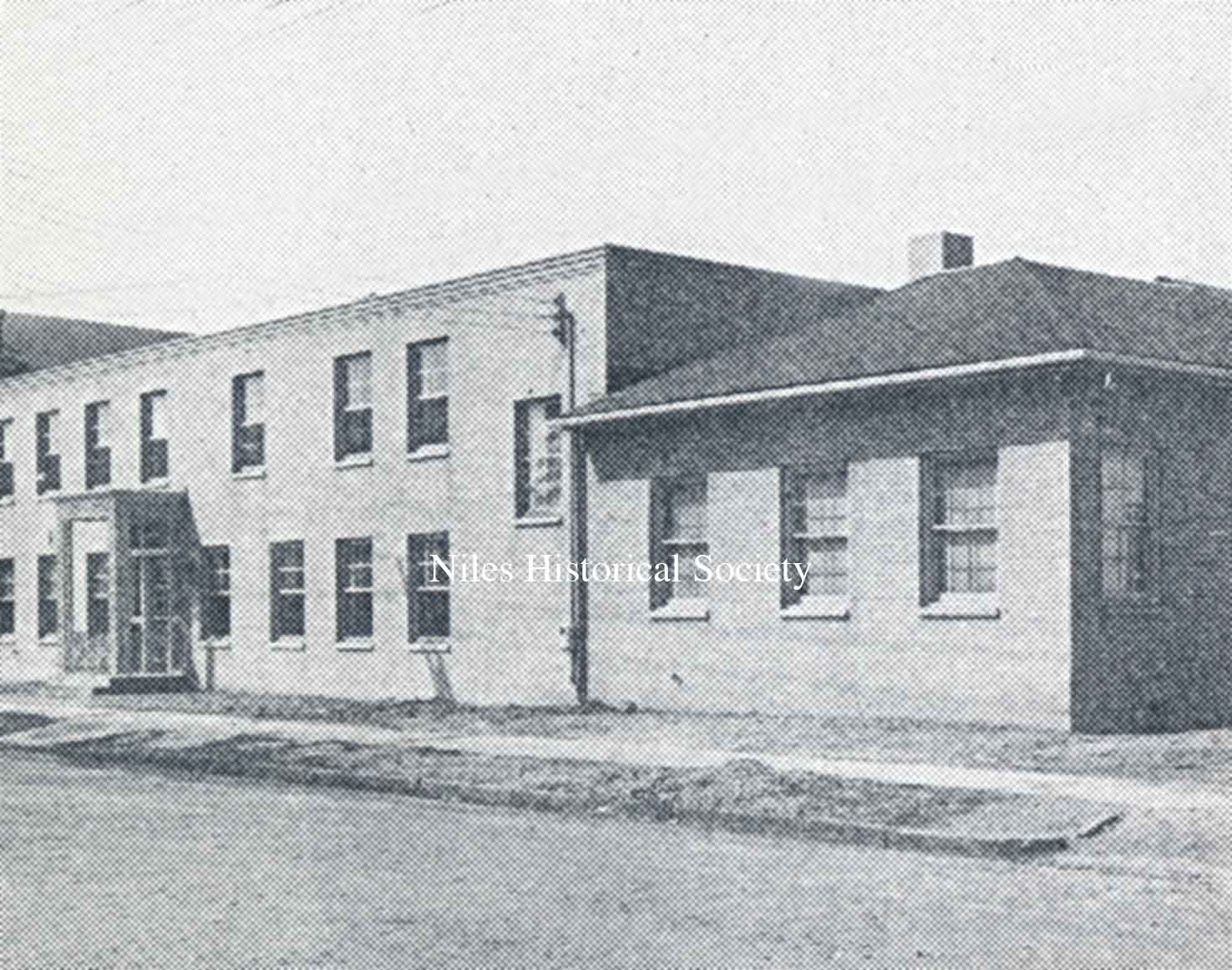
Mount Carmel School was completed September 1949 with a staff of six sisters and 226 students from K-4 grades. |
Mount Carmel School classroom. |
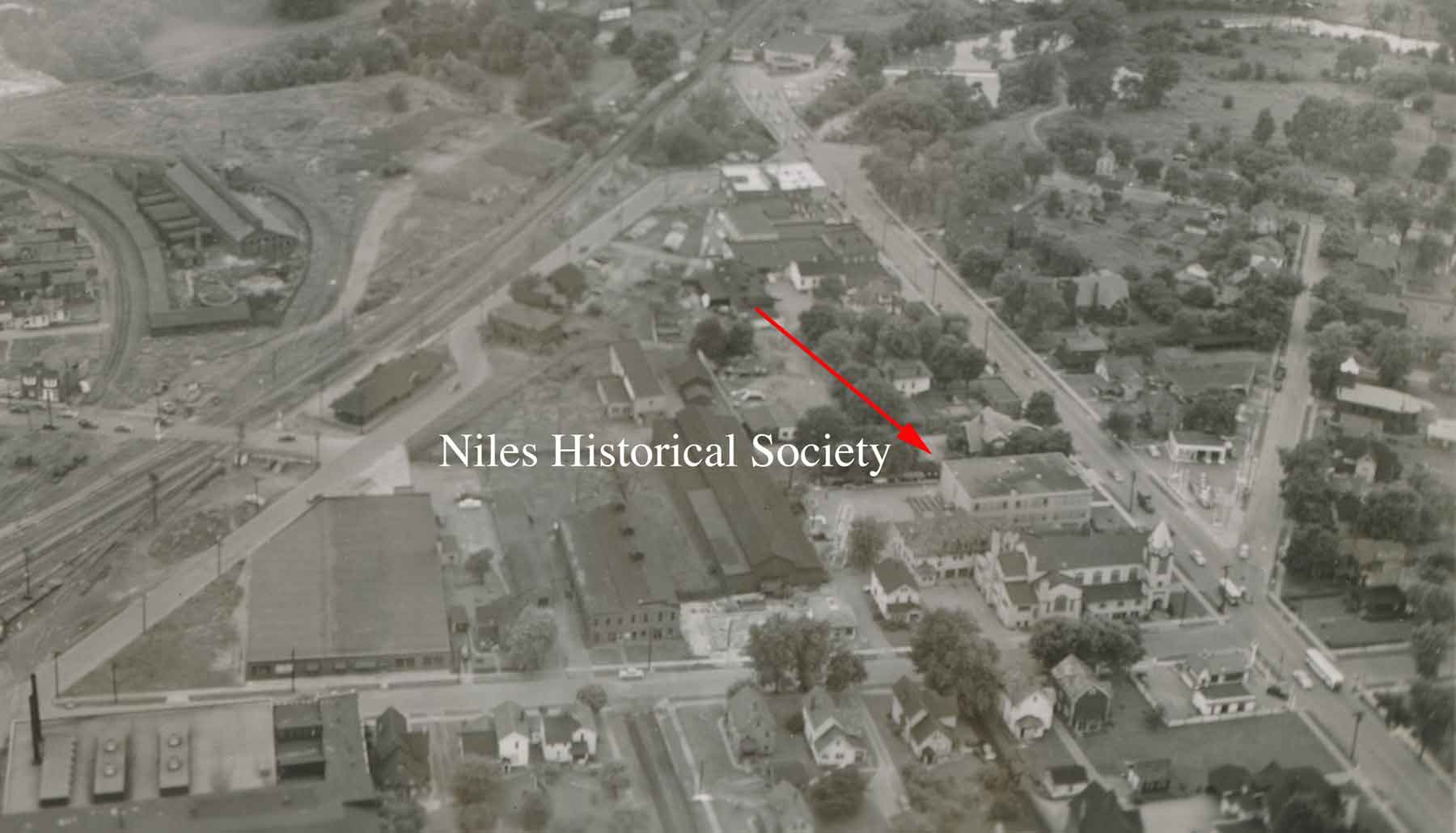
Aerial view of Robbins Avenue and Erie Street featuring Mount Carmel Church, Mission House, and school. The convent and chapel for the Sisters had not been built yet. |
| 1951 • A convent is built on Erie Street to house twelve Sisters. |
||
(Front) Sr. M. Donata, Principal,
Sr. M. Stella, Sr. M. Celeste |
Convent and Chapel on Erie Street. |
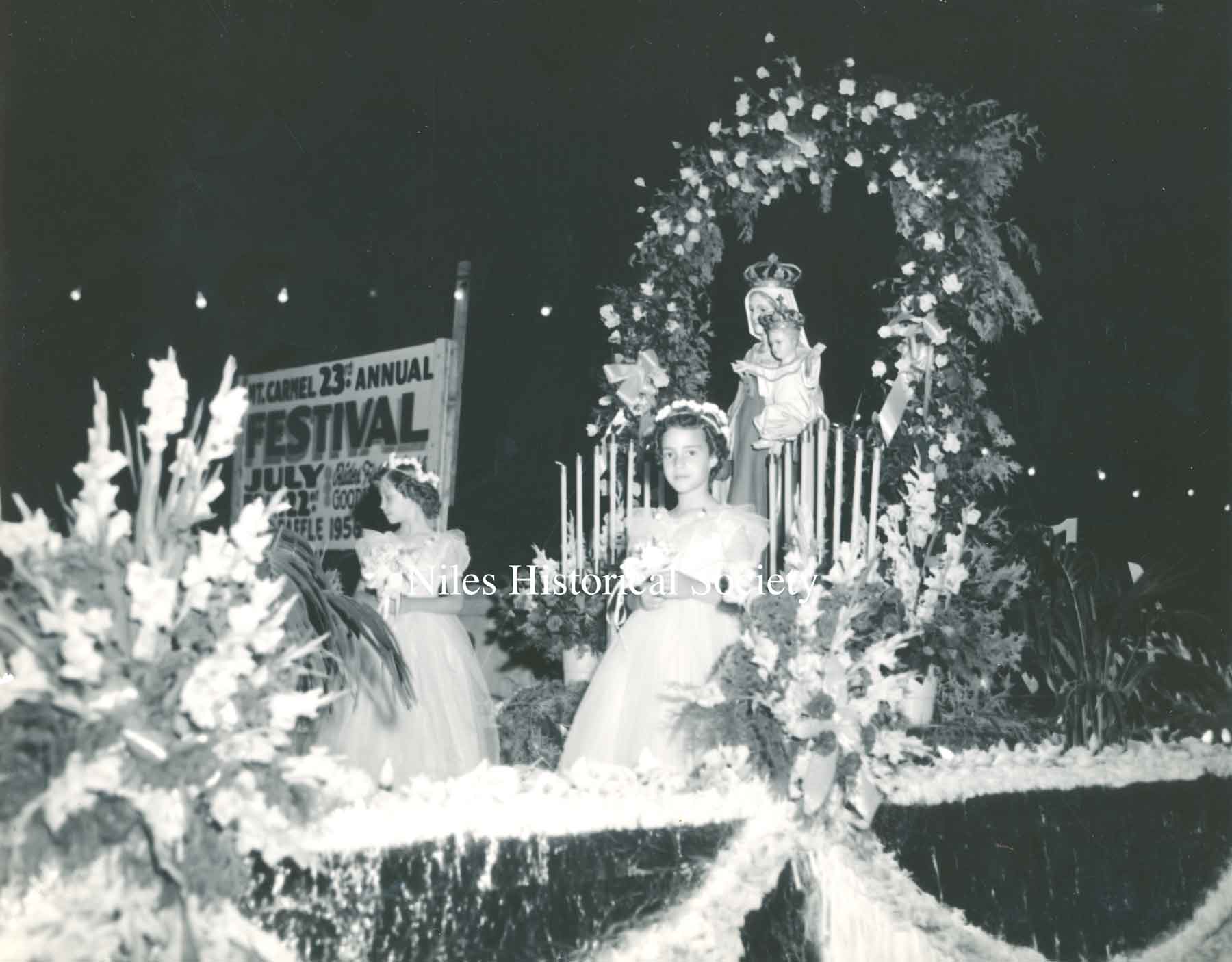
Float in Mount Carmel procession, 1956. |
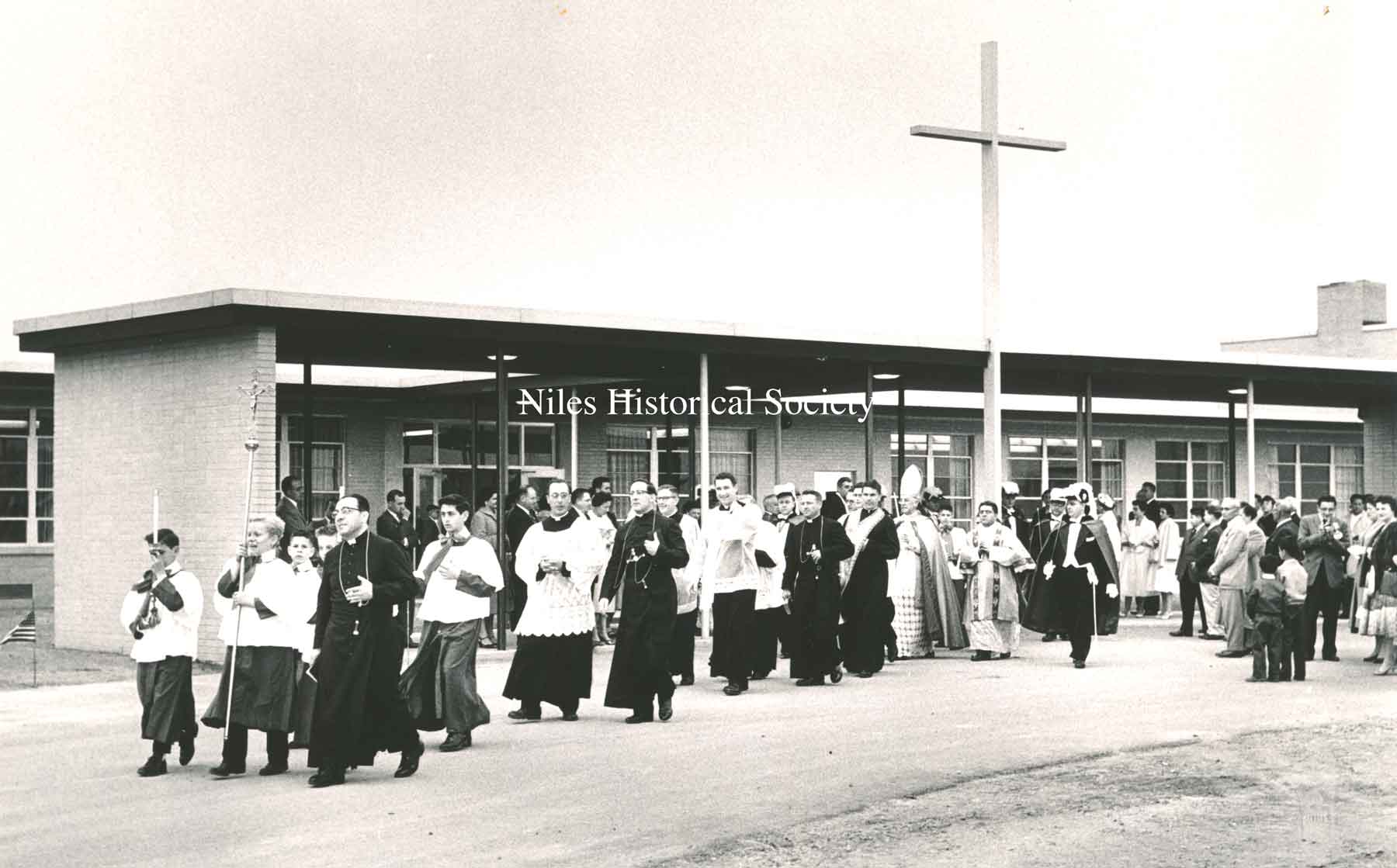
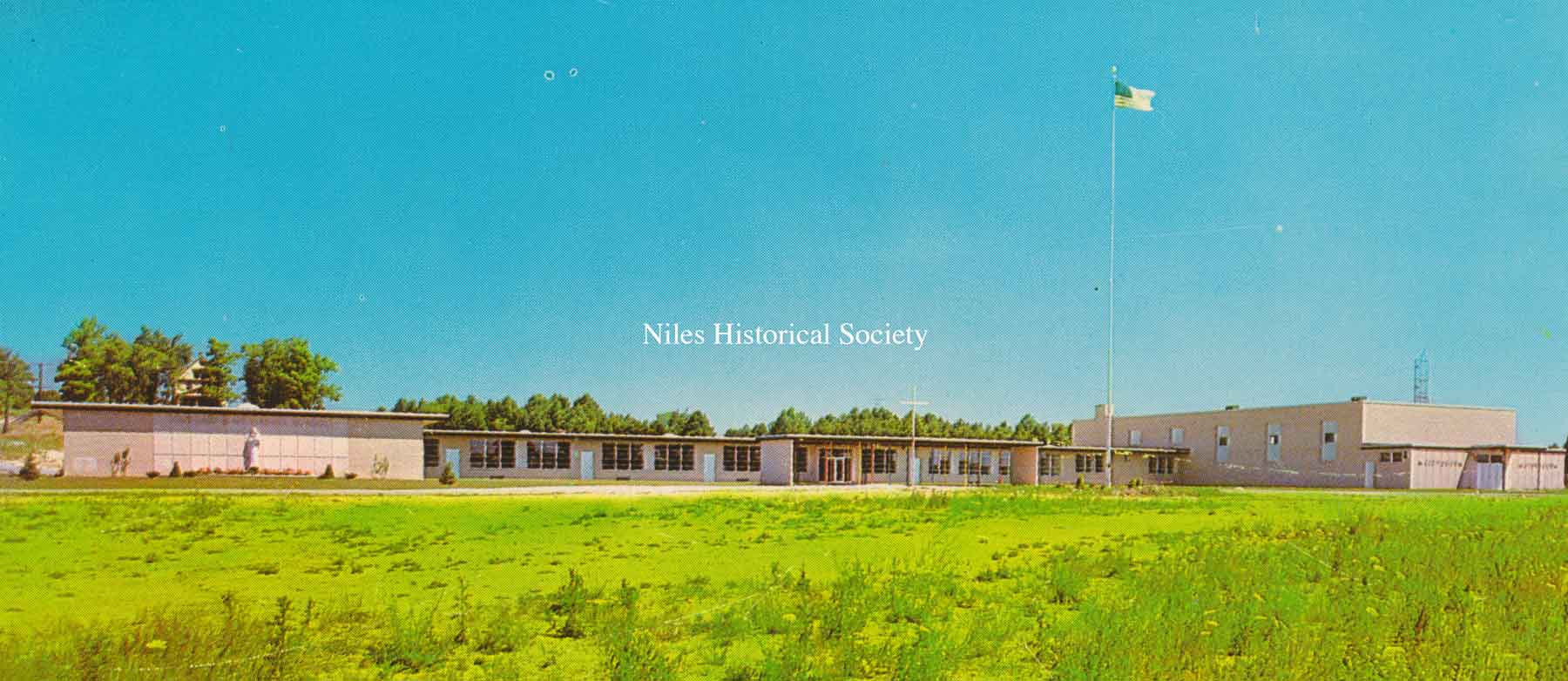
| 1957 • Father Oreste purchases 11 acre parcel in the under-developed North Rhodes area. • The Rhodes Avenue School is built with much volunteer labor. |
||
Groundbreaking Rhodes Avenue School |
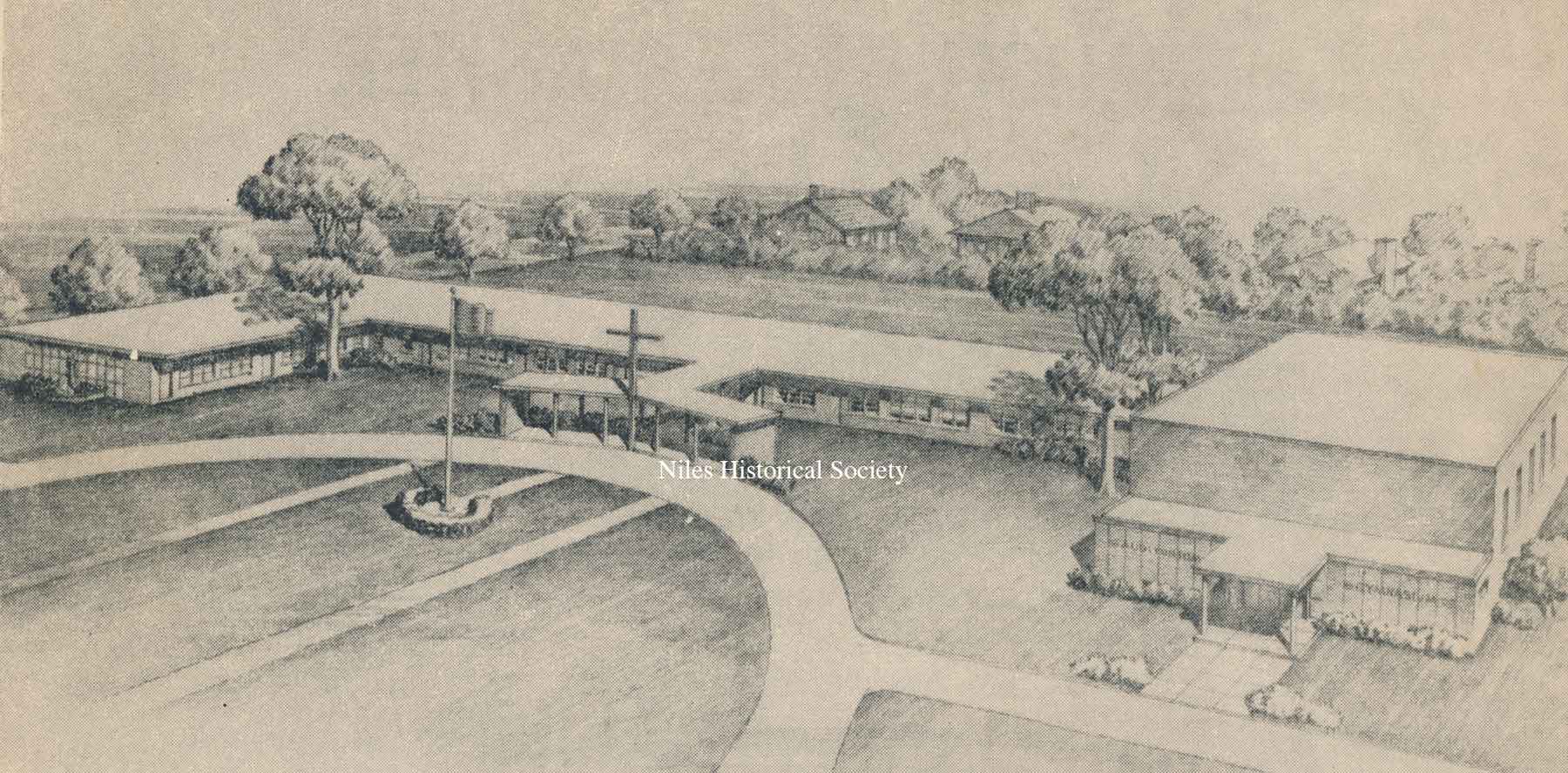
Architect rendering of proposed
Dedication of Mount Carmel School |
Mt. Carmel School on North Rhodes Avenue.
|
 |
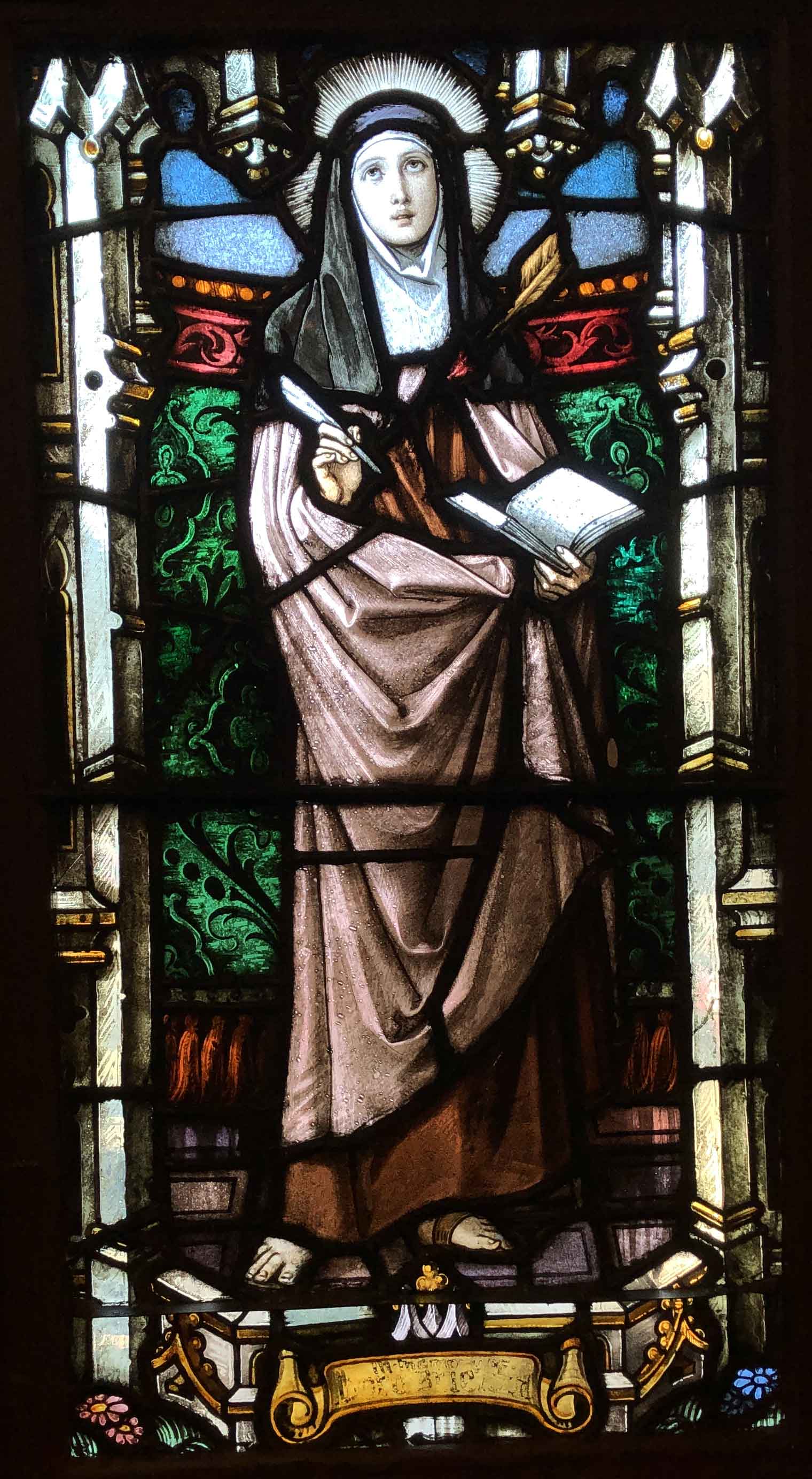
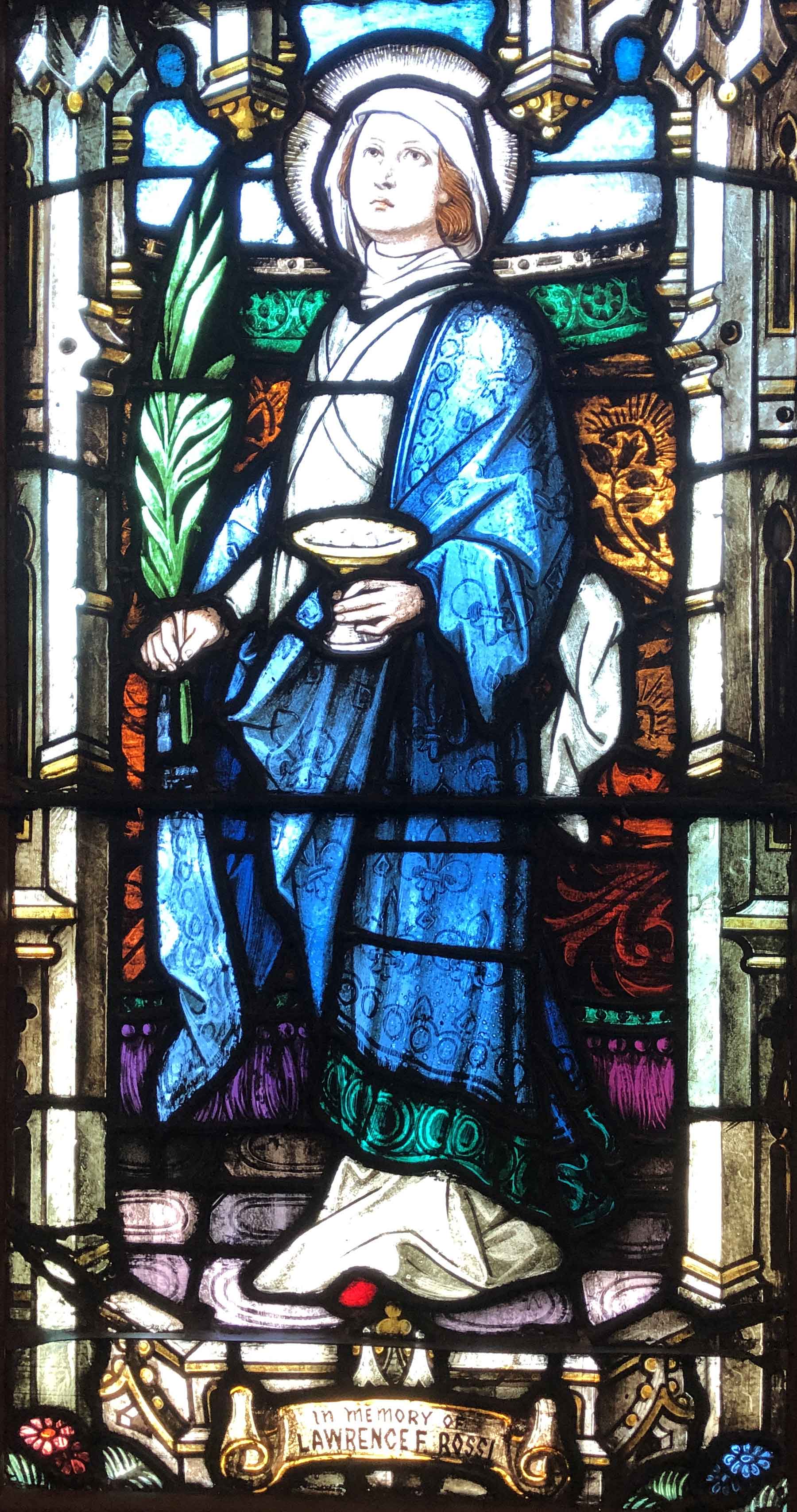
Mt. Carmel Church windows are adorned with stain glass artwork that the families donated. |
 |
 |
 |
|
|
|
||