Ward-Thomas Museum


The History of the Schools in Niles, Ohio
Ward — Thomas
Museum
Home of the Niles Historical Society
503 Brown Street Niles, Ohio 44446
Click here to become a Niles Historical Society Member or to renew your membership
Click on any photograph to view a larger image, click on image again to zoom into photograph.
|
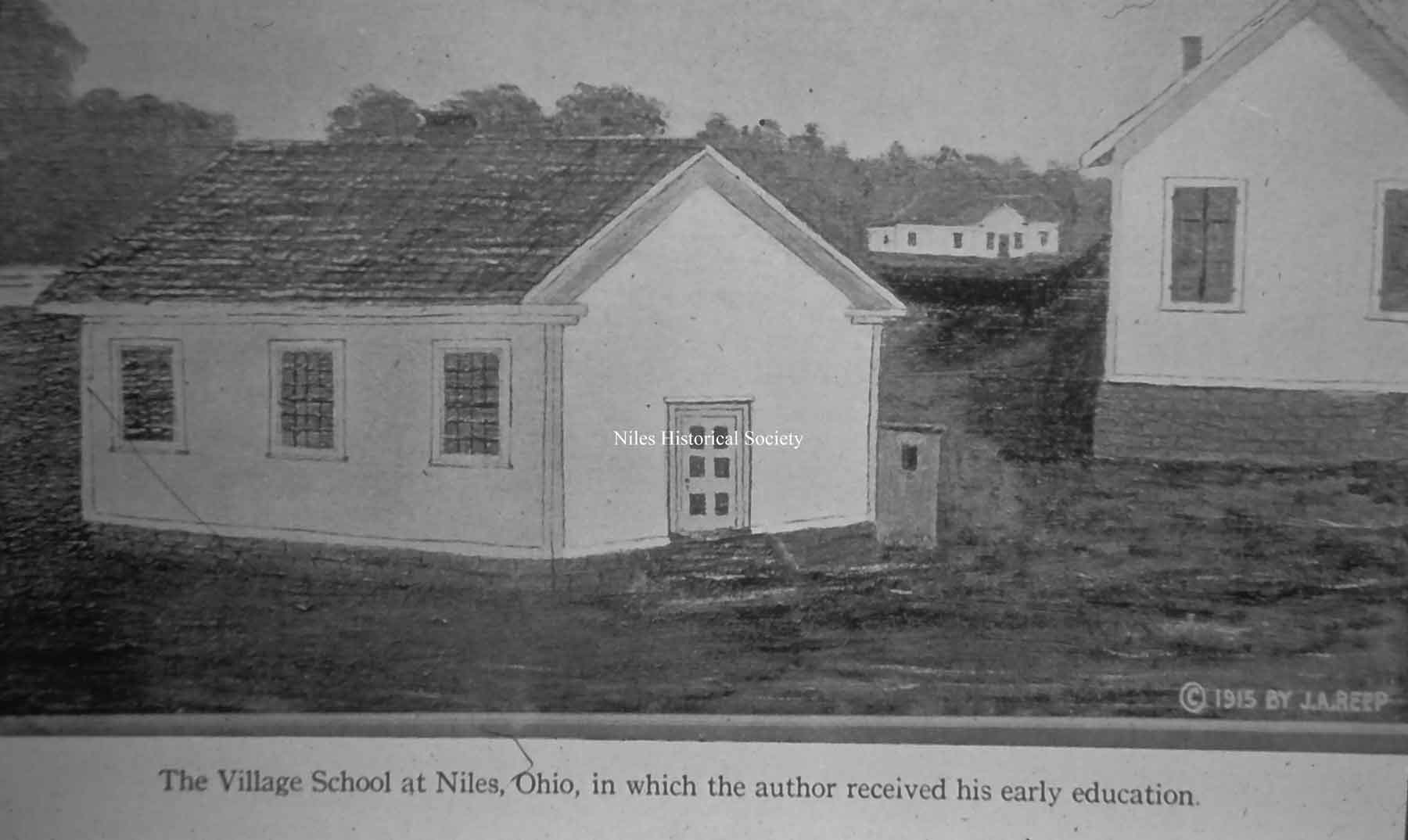
Little White School House A drawing of the “Little White School House” as it was referred to, was the first school house built soon after the town was plotted in 1834. It was built on the north side of what is now the Memorial grounds. It was in that school that William McKinley, the future president, received his first formal education.PO1.1169
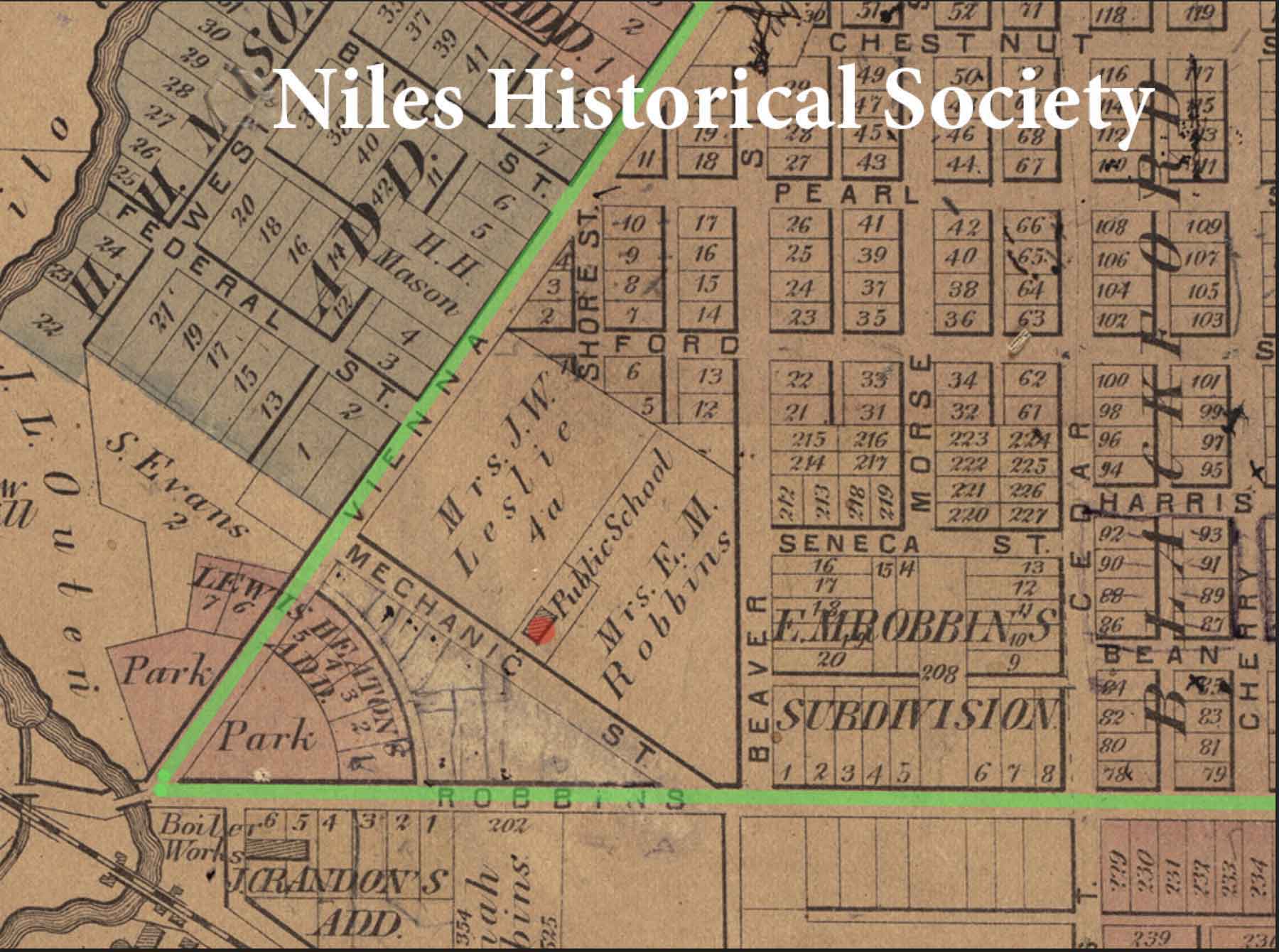
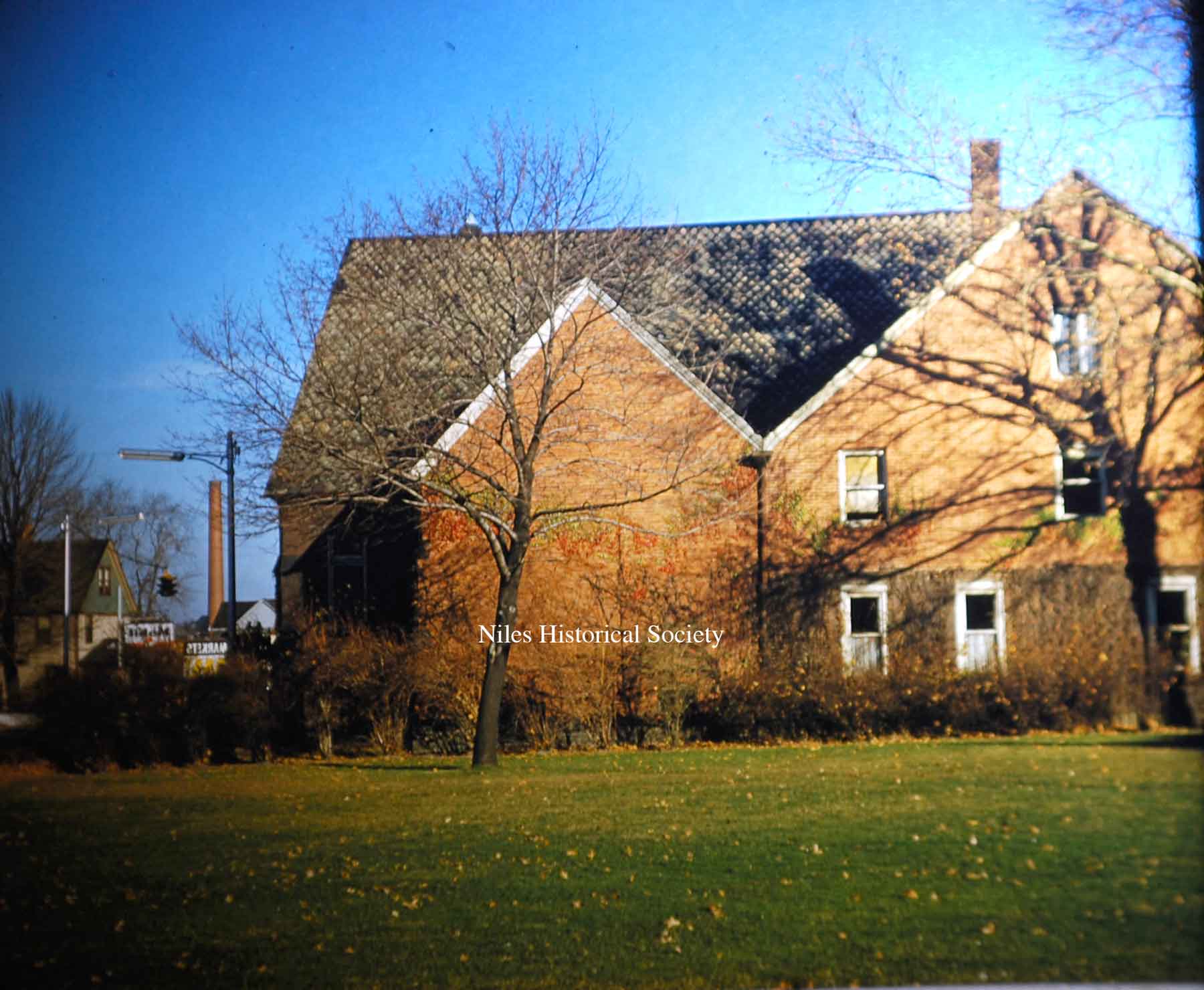
Location of Leslie Avenue School In 1891 with the growing population, it became necessary to construct a second school house near the northeast corner of Leslie and Linden Avenues. The frame building was renamed Grant Street School in 1920. It has since been razed.
About 1834, the first public school, a little white frame building, was erected on North Main Street where the McKinley Memorial now stands. This school is the only one shown on the map of 1844 and was located just at the rear of the present Presbyterian Church.
Back of First Presbyterian Church(1957) where the first school in Niles was located. |
Niles Schools Origins. Like other small frontier communities, Niles struggled to establis and maintain a system of public schools. Before James Heaton laid out the village and provided land for the first public school, the first school at Heaton Furnace, and perhaps the first in Weathersfield township, seems to have been a small log cabin with greased paper windows, located south of the river, on what is now South Main Street. Historians write of another school house on the high ground above the Heaton Grist Mill located along Mosquito Creek, near the heart of the present city, where the children of the settlement attended and where Herman Harmon, a descendant of the early salt maker, was teacher. Two additional schools seem to have been in use at various times in parts of the present city before 1842. Quite early, a wood school house seems to have stood near the corner of Leslie Avenue and Linden Avenue. Although this part of the present city was not included in the village of Nilestown before 1842. About 1834, the first public school, a little white frame building, was erected on North Main Street where the McKinley Memorial now stands. This school is the only one shown on the map of 1844 and was located just at the rear of the present Presbyterian Church. The first parochial school was organized by St. Stephen Church in 1868. With the exception of 2 or 3 one room schools located on Chestnut Street, Walnut Street, and two more were reported on the South Side of Niles, it wasn't until 1871, that Niles was able to build a major school. Central (Union) School, a three story brick structure, opened for classes May 22, 1871, with six teachers, including the principal. That same year marked the appointment of the first superintendant of schools, L.L. Campbell. Twenty years were to pass before additional schools could be built, beginning with Leslie Avenue School on the corner of Leslie and Linden Avenue( which is now a church) in 1891. Joseph Butler gives an interesting description of early school life in the little white school house in his book ‘Recollections of Men and Events’. “It was” he wrote, “a small building erected of wood and painted white. In it, the boys were seated on one side of the room and the girls on the other; the seats being a long bench which began on the side furthest from the door and extended down each side and across the lower end with just enough of a break to form a passage way from the door. This bench and a sloping shelf to form the desk were made together. The teacher’s desk occupied a raised portion of the floor at one end opposite the door, and back of it was a blackboard decorated at times with an impressive rod.” “In the center stood a large eggshell cast iron stove …” The usual punishment was to stand in the center of the room, but occasionally the birch was used … The teachers boarded around in the homes of pupils which brought them in closer contact with pupils and parents and made it easier for the parents to contribute their share to the support of the school. Books in those times were very highly
prized and scarce. They were well cared for and all members of
the family used the same books, as they were needed. Teachers boarded in the homes of pupils, bringing them in close contact with the parents, and enabling the less affluent to defray a good part of their school costs in this way. Books were scarce, highly prized, and usually well preserved, since successive members of the family were expected to use them. With the exception of Central School and the new McKinley High School (1914), all the public schools were referred to by the name of the street they were located on; for example Garfield school was originally referred to as Third Street School. In 1919, due to the efforts of Marion Kelley, a newspaper reporter and member of the Board of Education, the existing schools were renamed for U.S. presidents. Built 1893, Warren Avenue School-Jackson School; Built 1896, Cedar Street School-Lincoln School; Built 1905, Bert Street School-Monroe School; Built 1905, Third Street School-Garfield School; Built 1911, Bentley Avenue School-Jefferson School; Built 1919, Madison Avenue School-Roosevelt School. Built 1920, Harrison School in McKinley Heights; Built 1924, Washington Junior High School; Built 1957, S.J. Bonham on East Margaret Avenue was named after the previous school superintendant who promoted the 1953 bond issue that allowed for the new school buildings of the New McKinley High School, the new Lincoln School and the new S.J. Bonham school. which were needed due to WWII “Baby Boomers”. |
|
| |
||
|
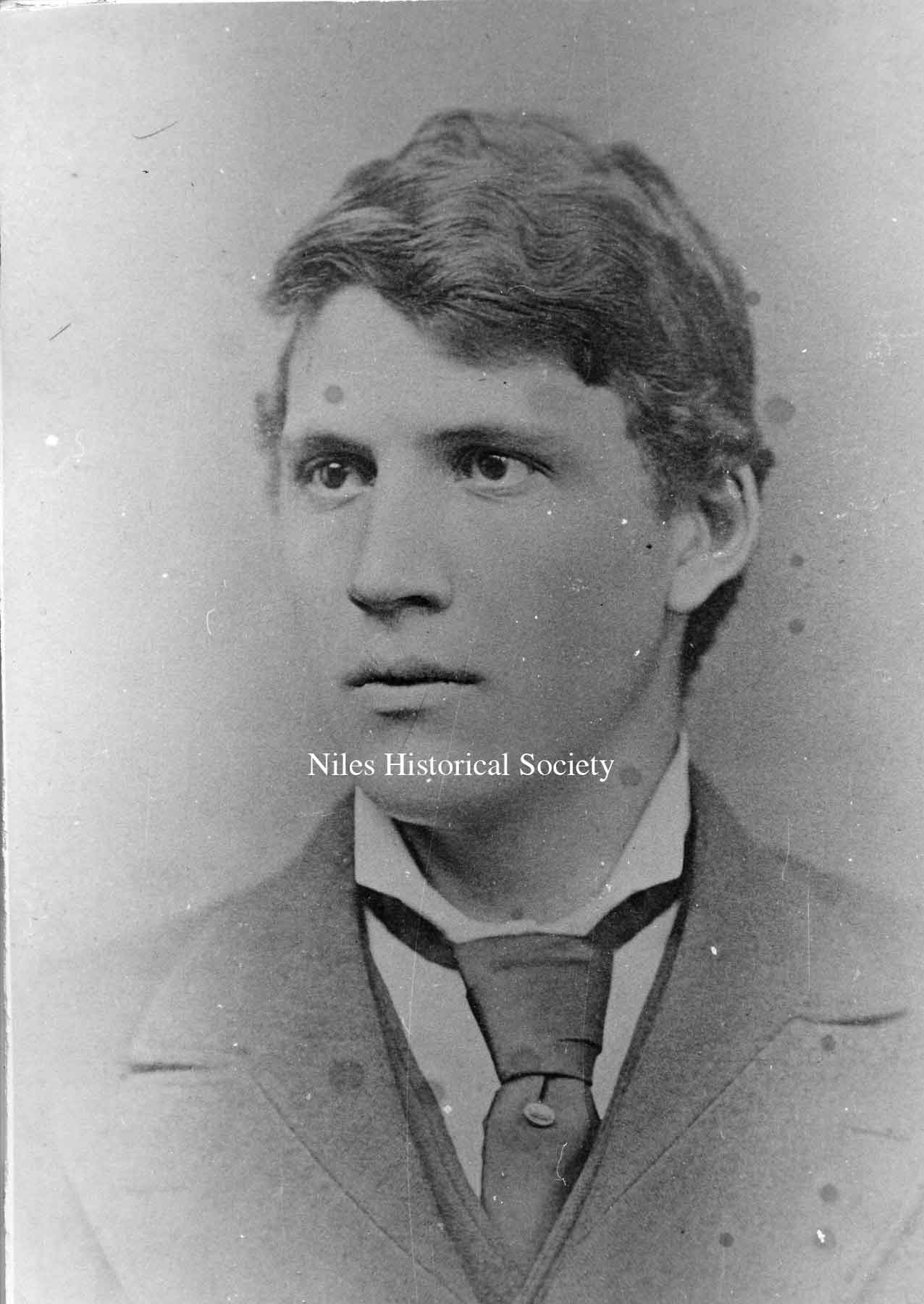
Frank O. Robbins |
History
of Origin of Niles Schools. “In the limited time I have taken to look
up the history of the Niles schools, I have been unable to learn
anything of the actual organization of School District No. 8,
nor have I found anyone who could tell anything of its history
previous to 1842. The earliest record now in existence is a minute
book of the directors’ meetings and the first entry therein
is as follows: This done, the oath of office was administered by James Dempsy, Esq. Meeting adjourned Friday, September 16th, 1842. WM. McKinley, Clerk. William McKinley, who signed this record, was the father of our martyred President McKinley, who was born in the following year. I have not been able to learn whether the building known as the “White School House” standing west of the Presbyterian church, had already been built, but presume that it had. as it is referred to frequently in the records as a meeting place for the directors. At this time teachers were hired for short terms,
three months, or a little longer. Wages varied from $5.50 to $15.00
per month, part to be paid out of the school fund and balance
to be paid in bar iron at a specified price per pupil and to be
furnished by the patrons. There was but one school, ‘the
White Schoolhouse’, in the district at this time, and the
branches taught were thoseof a common English education: writing,
reading, arithmetic, geography and grammar. |
|
| |
||
Central High School. PO1.1179 The bell for the tower has moved from the Central School tower to a rock pedestal on the lawn of Niles School(1914), to Niles McKinley High School(1959), and finally is displayed at the new(2013) Niles McKinley High School on Dragon Drive.
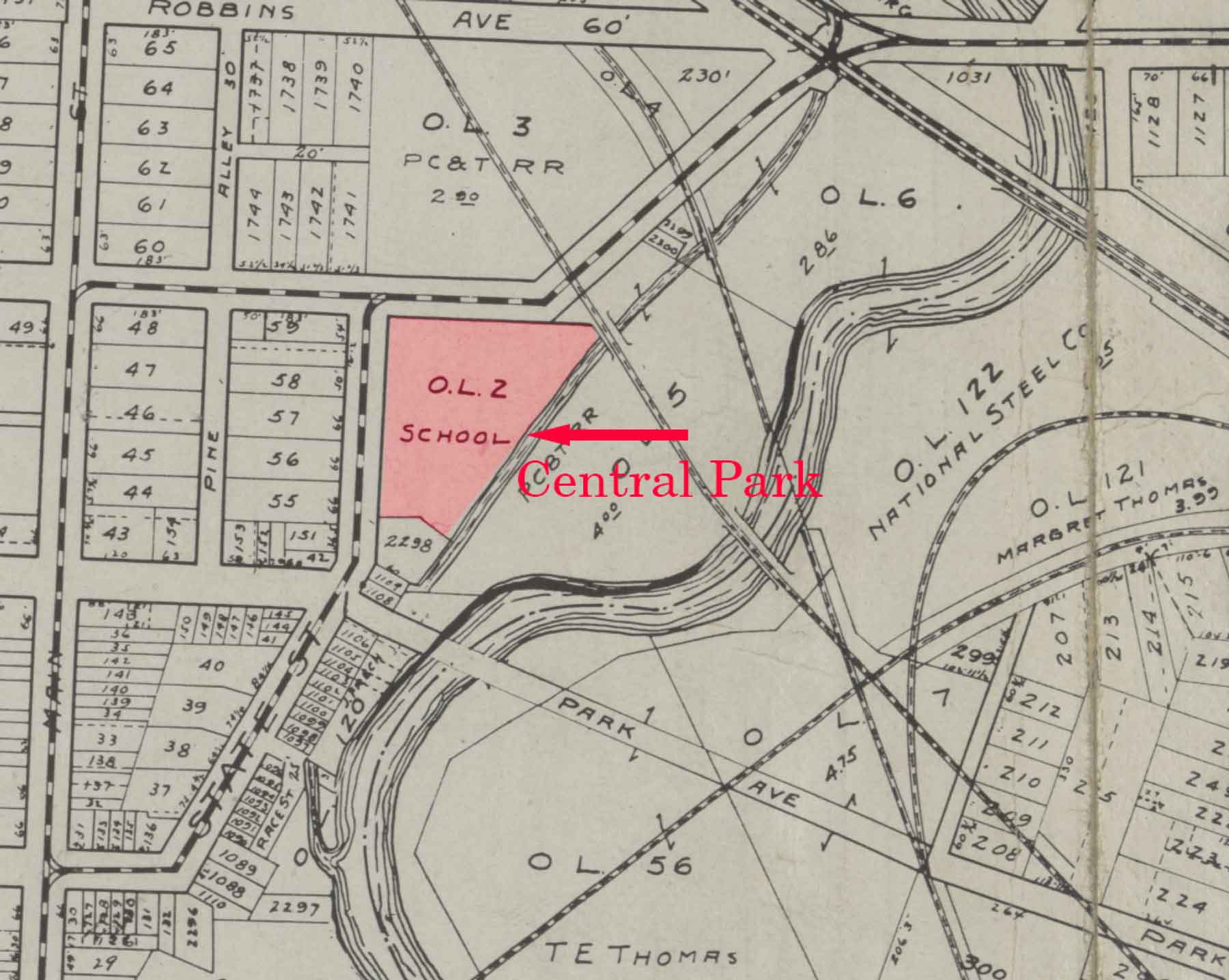
The location of the old Central School and future location of Central Park, dedicated in 1928, is indicated on the 1918 map. |
In 1870 a three story brick and mortar school(Union School then Central School) was built and opened in 1871 with six teachers. The school was located on State Street where the Central Apartments are presently located. It was described as “the best in the county”. By 1890 the average teacher’s salary was $45.00 a month. Parents paid term tuition for each child of 80 cents for primary grades, $1.20 for grammar school, and $1.80 for high school. It is interesting to note the names of some of the people who either taught the school or who served on the school board: In 1844, we first meet the name of H. H. Mason as director and clerk; in 1845, we find on the Board, the name of J. G. Butler, the father of J. G. Butler, Jr., known to all of our citizens. Under the new school law, in 1849, three directors were elected.In the fall of that year, Amos Allison, H.H. Mason and J. G. Butler. The first instance in the records telling of the hiring of two teachers was in March, 1847; these teachers were Alba Sanford, known to the old citizens as ‘Santa Anna’ and his daughter. Their compensation was $20.00 per month. I can not learn whether they both taught in one building but the presumption is that they did. In the fall of 1851, an enumeration of the white youth over four and under twenty-one in District No. 8, showed that there were within the district 110 males and 92 females between these ages. You will notice that in those days there were no boys and girls, only males and females. In a meeting of the house holders April 12, 1852, held at the White School House, a committee consisting of William Ward, William Hunter and J. G. Butler was appointed to inquire into the propriety of having the school divided and conducted thereafter upon the Union system; we can say nothing relative to this report but it is probable that at this time, the school house later known as the Niles High School, was built at the western end of what was then known as James Street(Church Street). “The Ohio legislature passed a modified
Ohio School Law in 1853. As a result of the new law, the state
collected a uniform property tax across the state, which it
then redistributed to each school district based upon the number
of students enrolled. The Ohio School Law of 1853 also provided
money for school libraries for the first time in Ohio’s
history.”
|
|
|
|
||
P01.1185 |
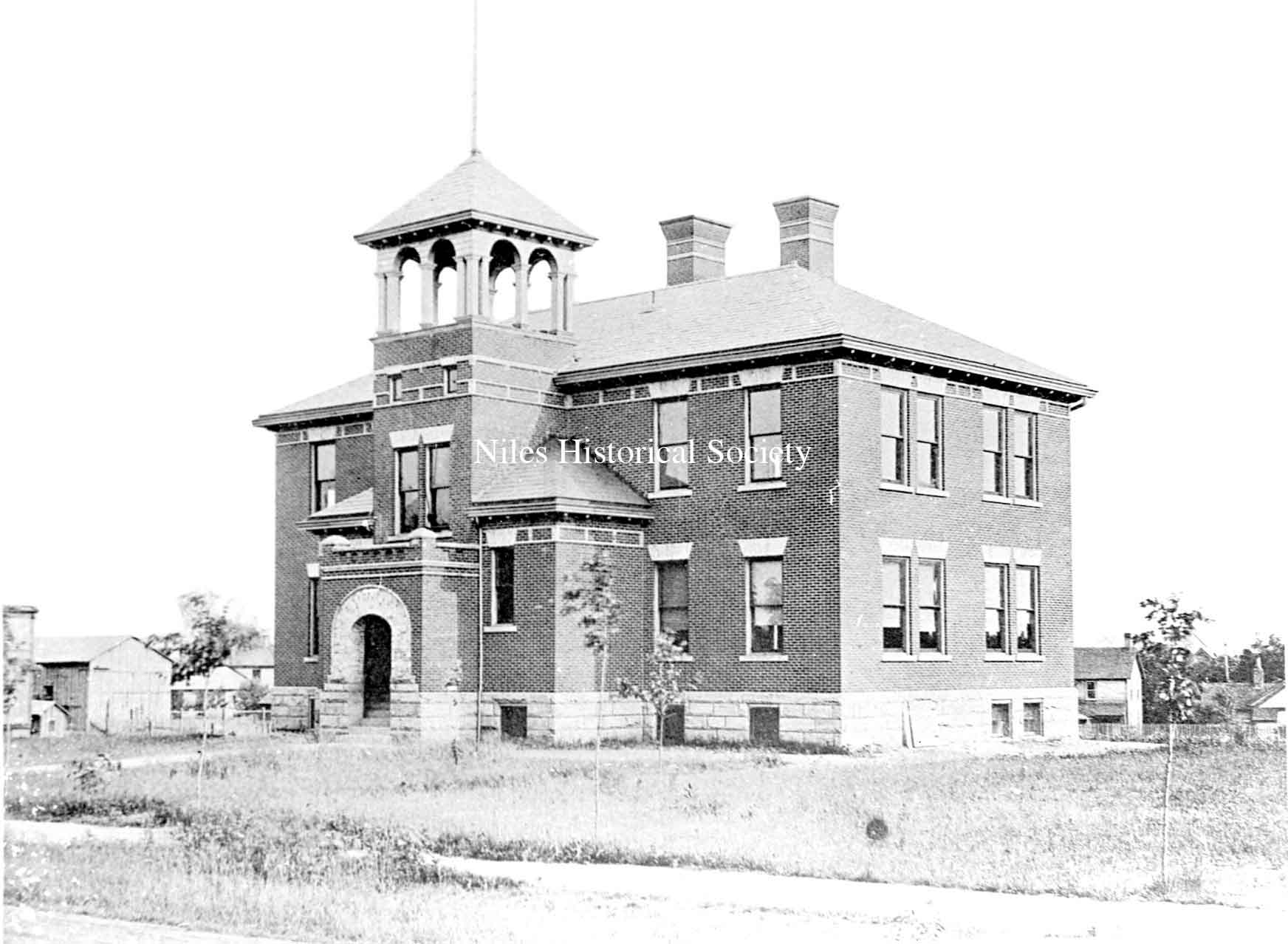
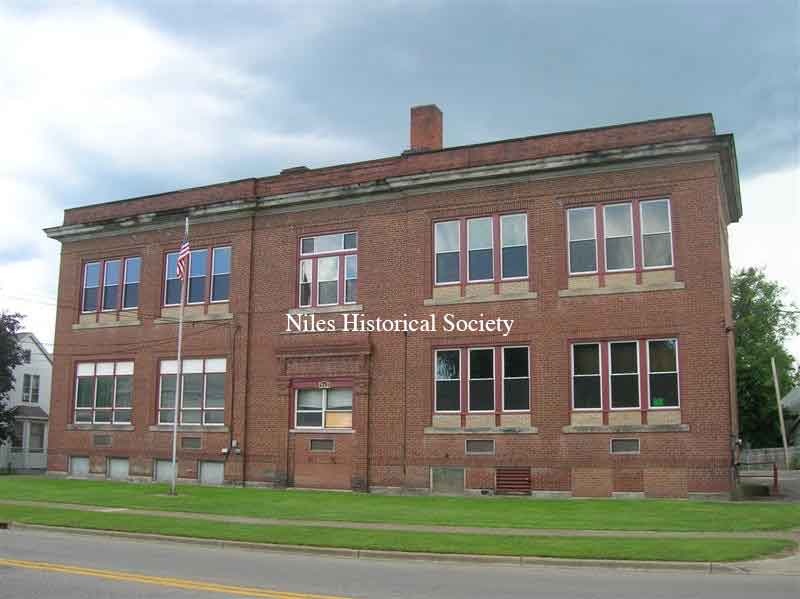
Built in 1893 The Warren Avenue Building, renamed Jackson School in 1920, became the Administration Building when the new Jackson School on Smith Street was dedicated in 1965. The building has been sold. |
 |
| |
||
|
PO1.1865 |
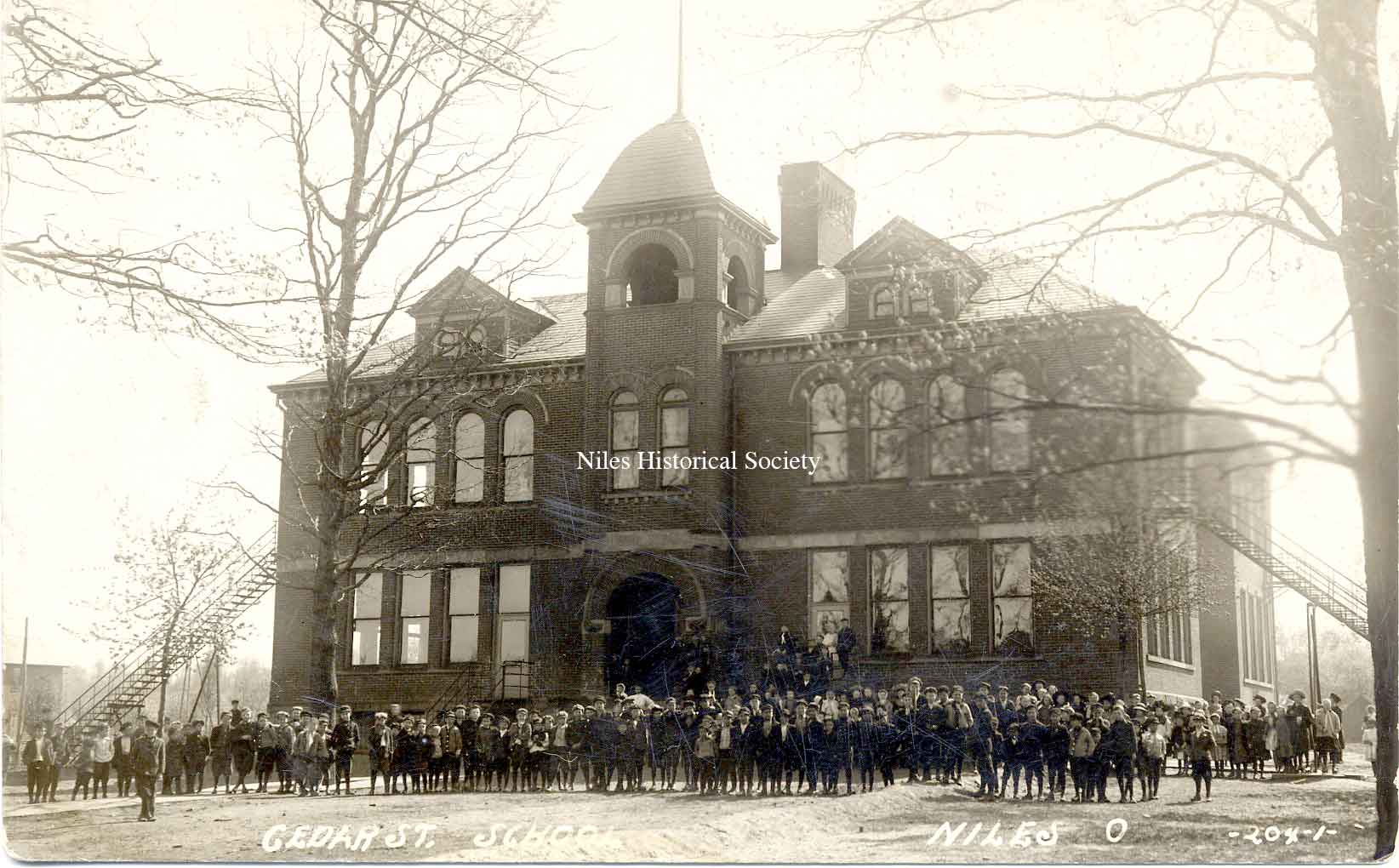
Built in 1896 The Cedar Street Building, renamed Lincoln School in 1920, was later razed in 1958 after the new Lincoln School on Frederick Street was opened in 1956. |
 |
|
|
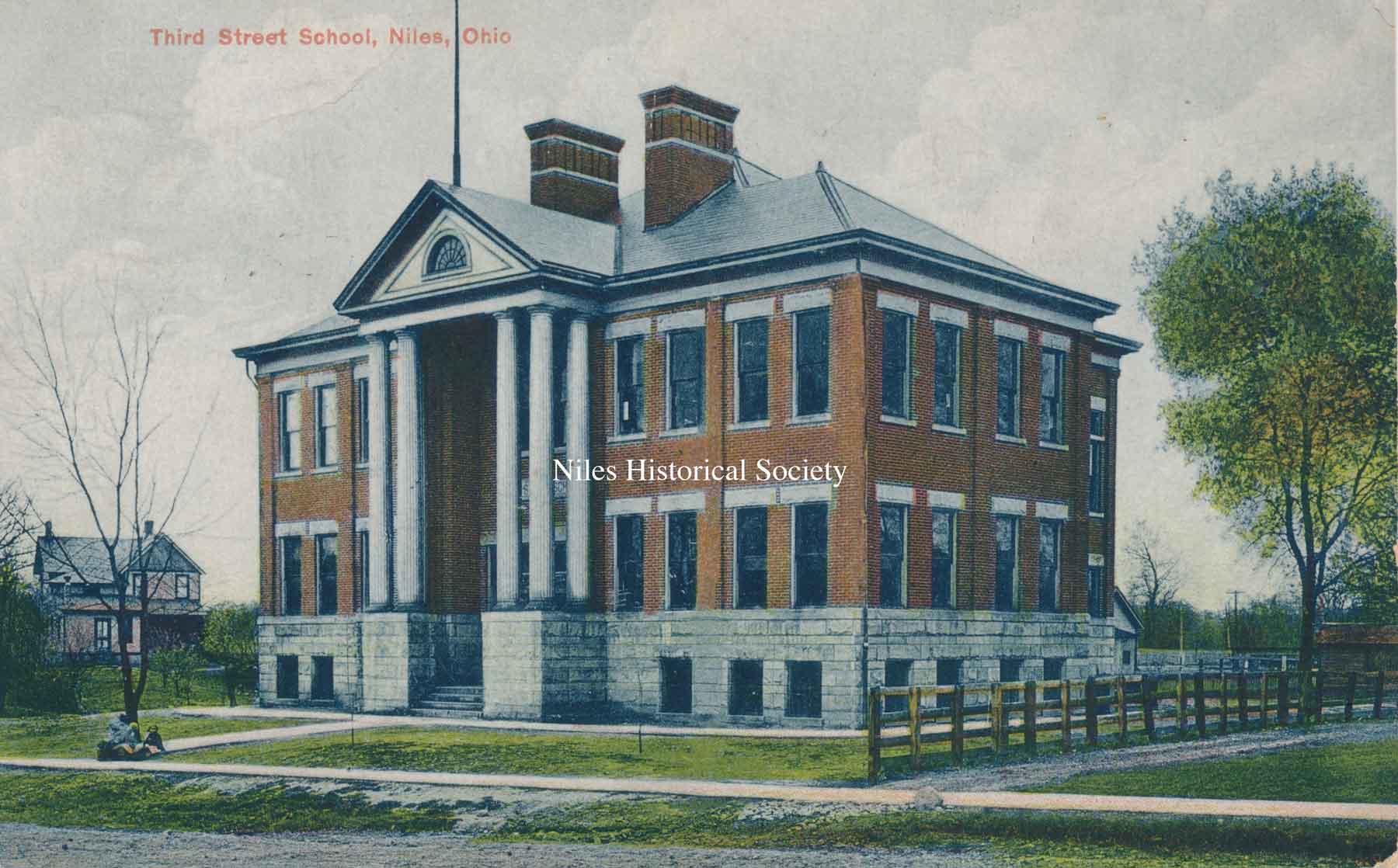
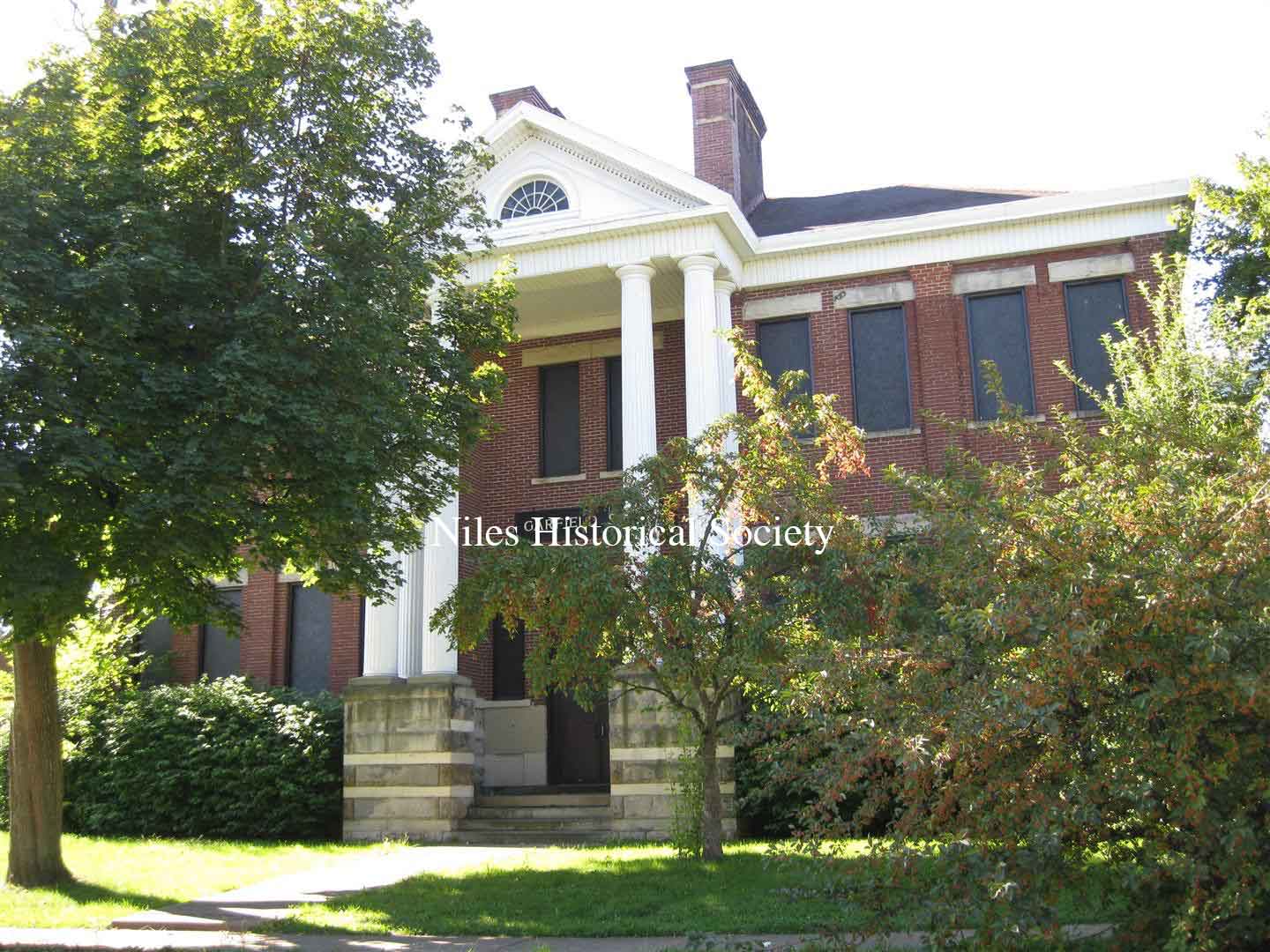
Built in 1905 The Third Street Building, renamed Garfield School in 1920, was the oldest continuing school building until its closure in 2003. The building was sold in 2005 and was razed(2019). |
PO1.2342 |
| |
||
|
PO1.1217 |
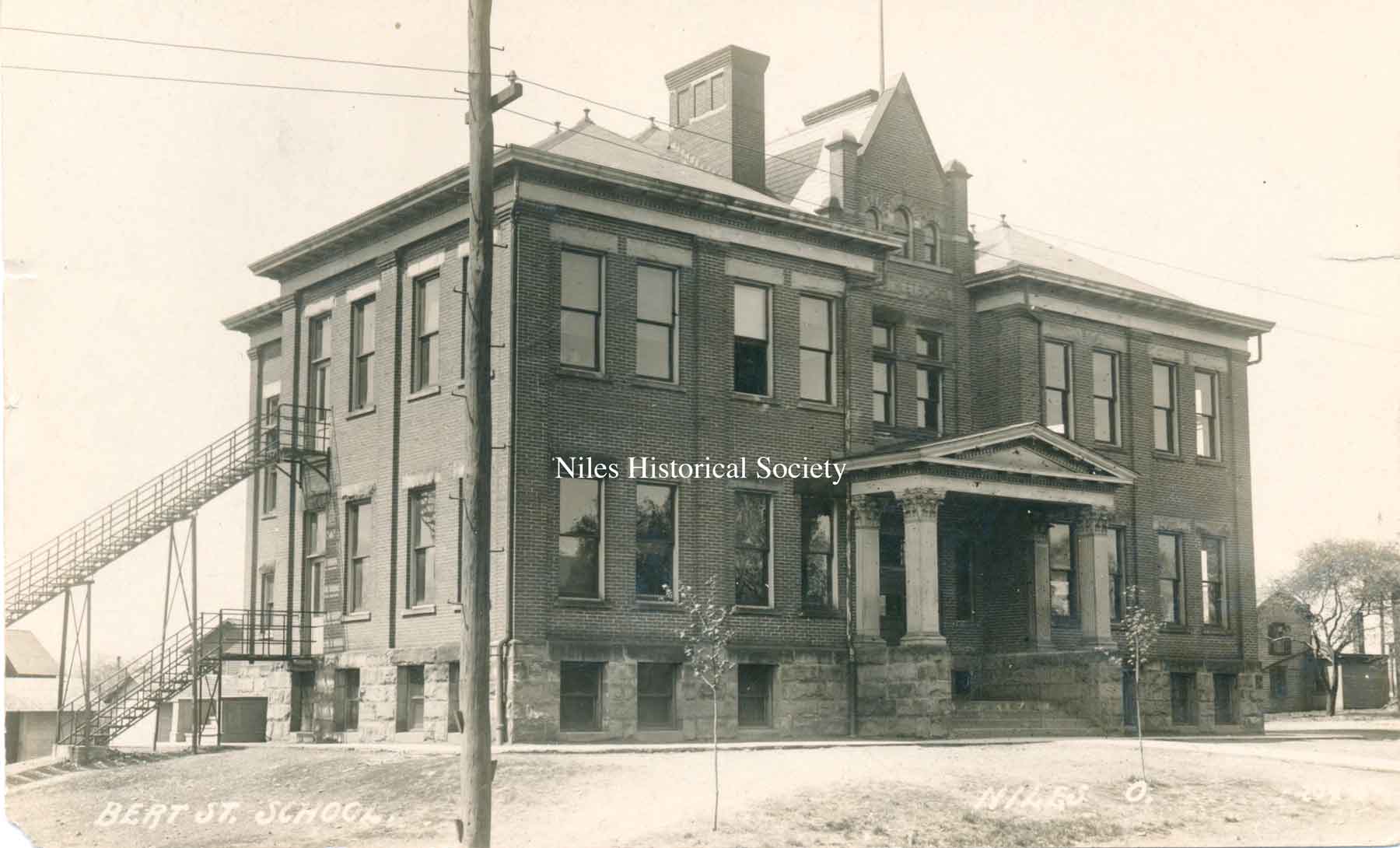
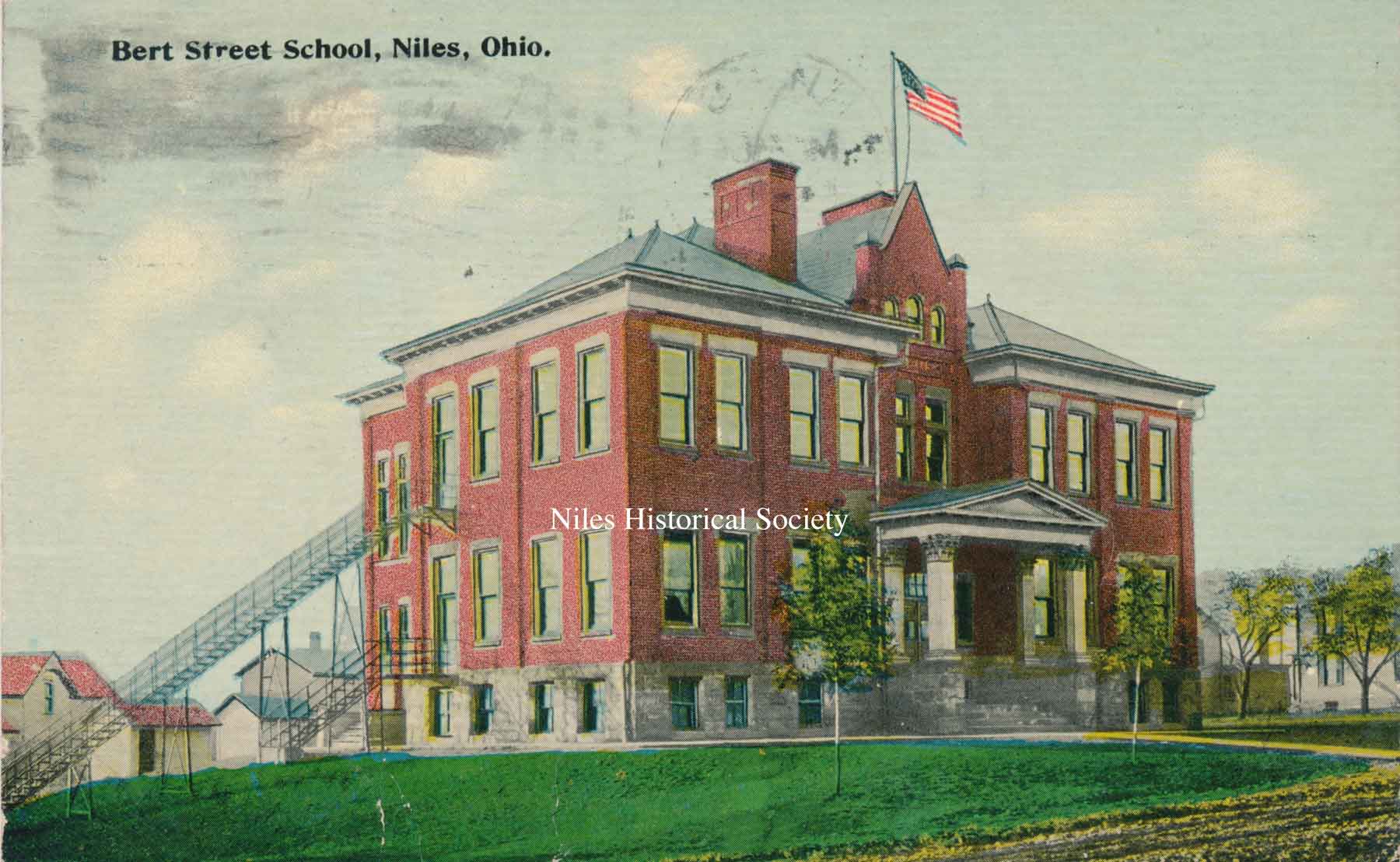
Built in 1905 The Bert Street School Building on Belmont Avenue, renamed Monroe School in 1920, was closed and razed in the 60s. It had only four classes, grades 1-4 and was attended by children living in the “Russia Field” school district. |
 |
|
P01.1215
S11.124 |
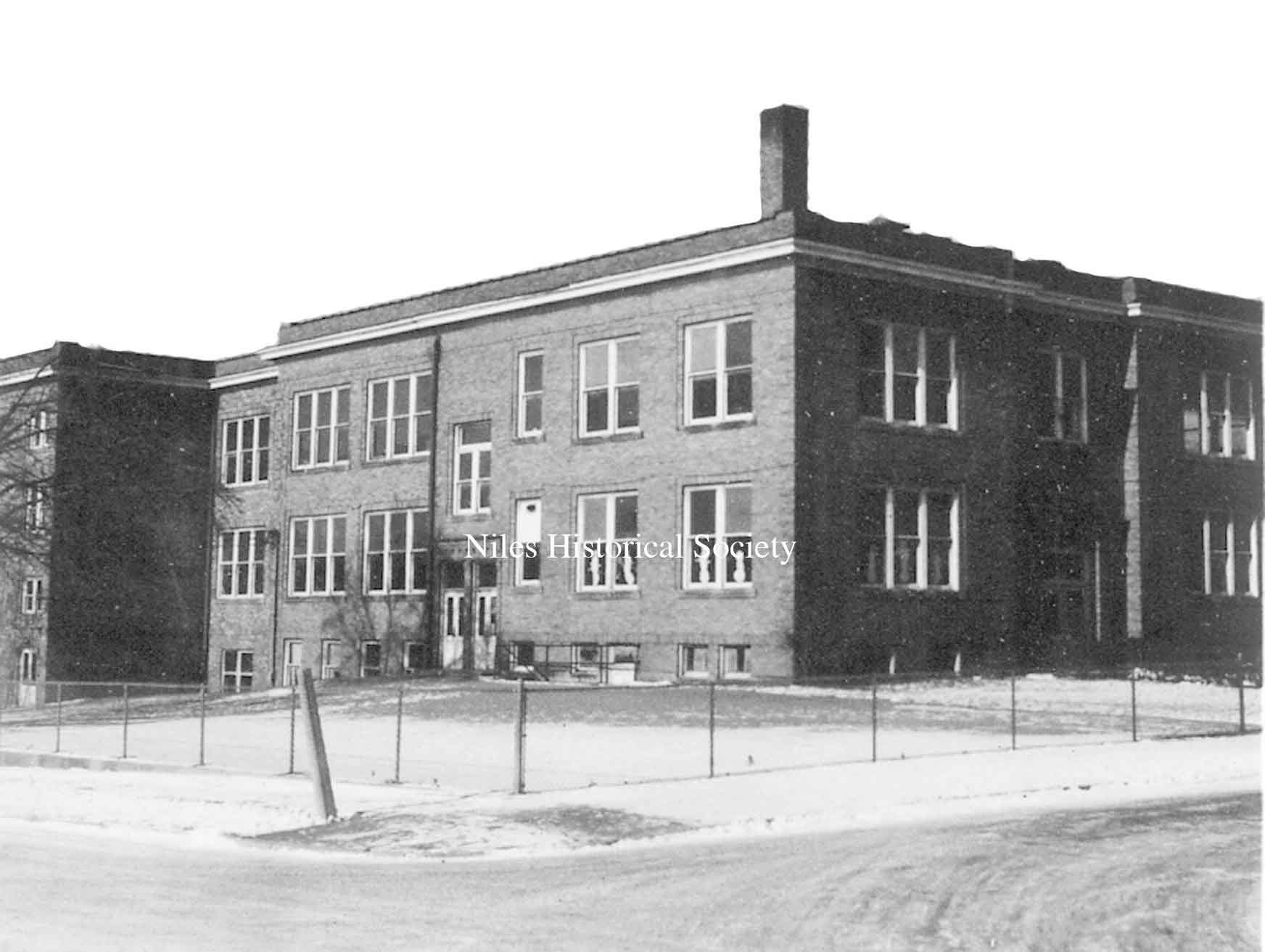
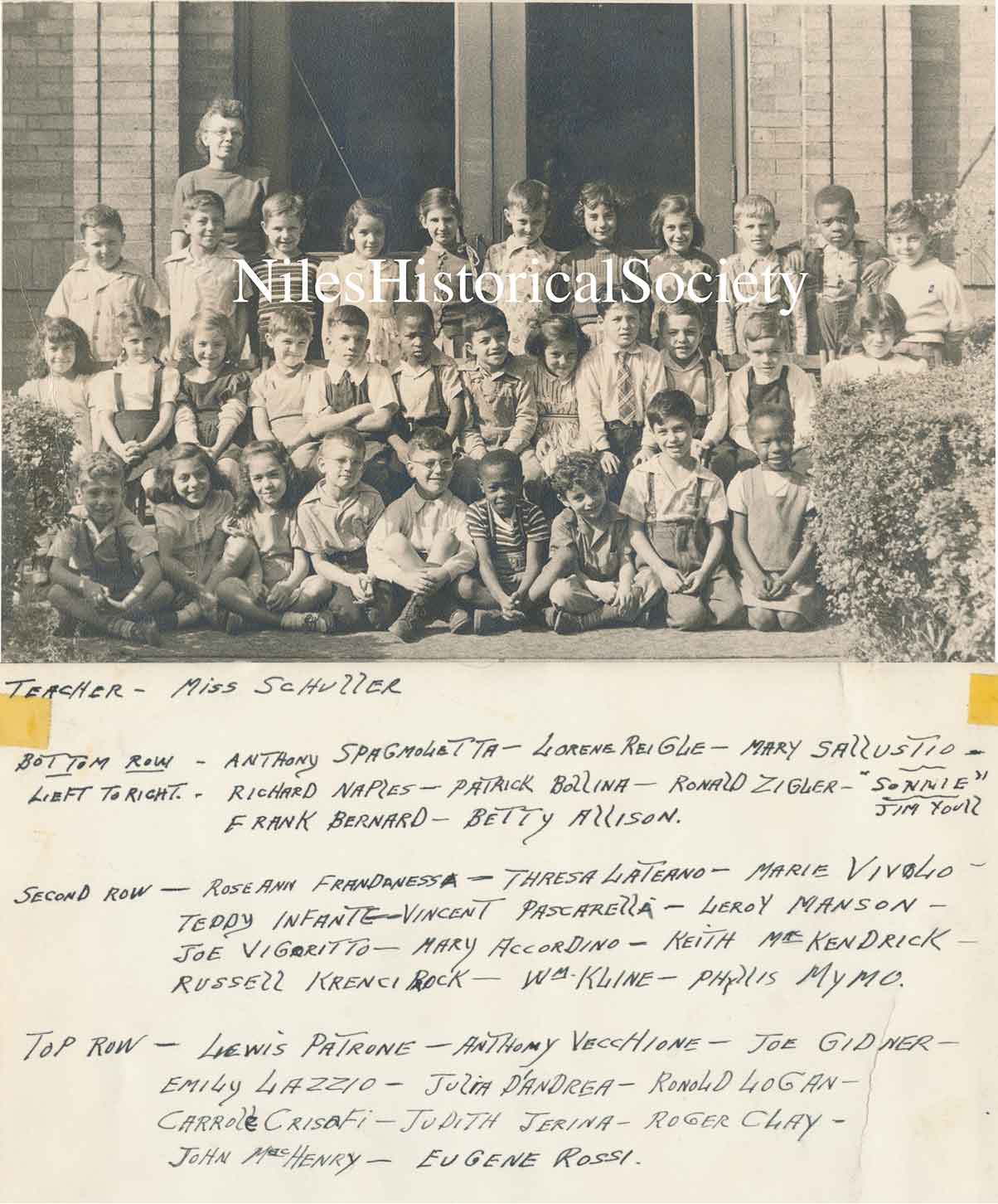
Built in 1911 The South Bentley Avenue Building, renamed Jefferson School in 1920, was closed in 1980 and razed. Senior housing apartments are have been built on this site. Students living on the south side of Robbins Avenue attended grades K-6. Miss Schuller’s class at Jefferson Elementary School with names of the students below the photograph. |
|
P05.52 |
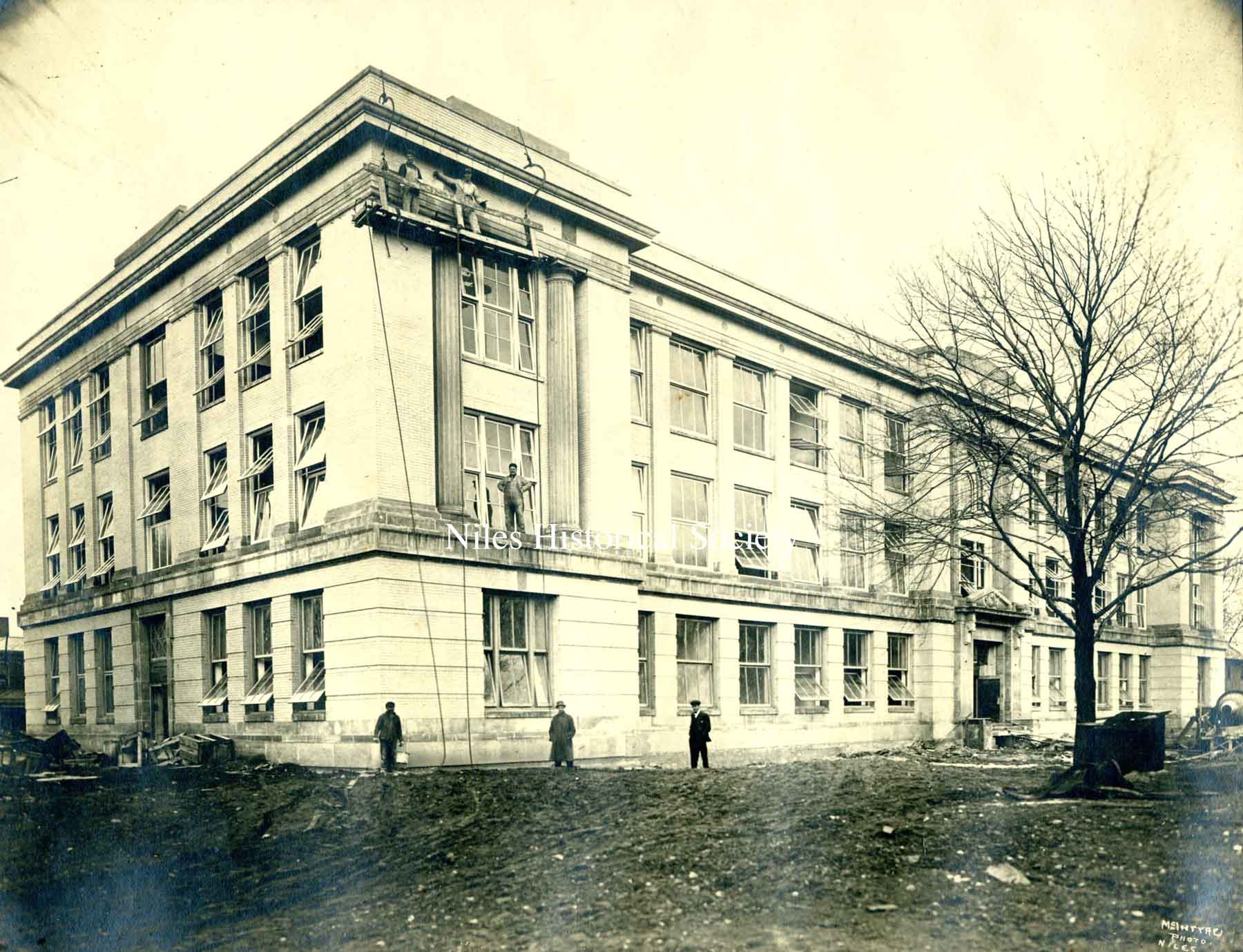
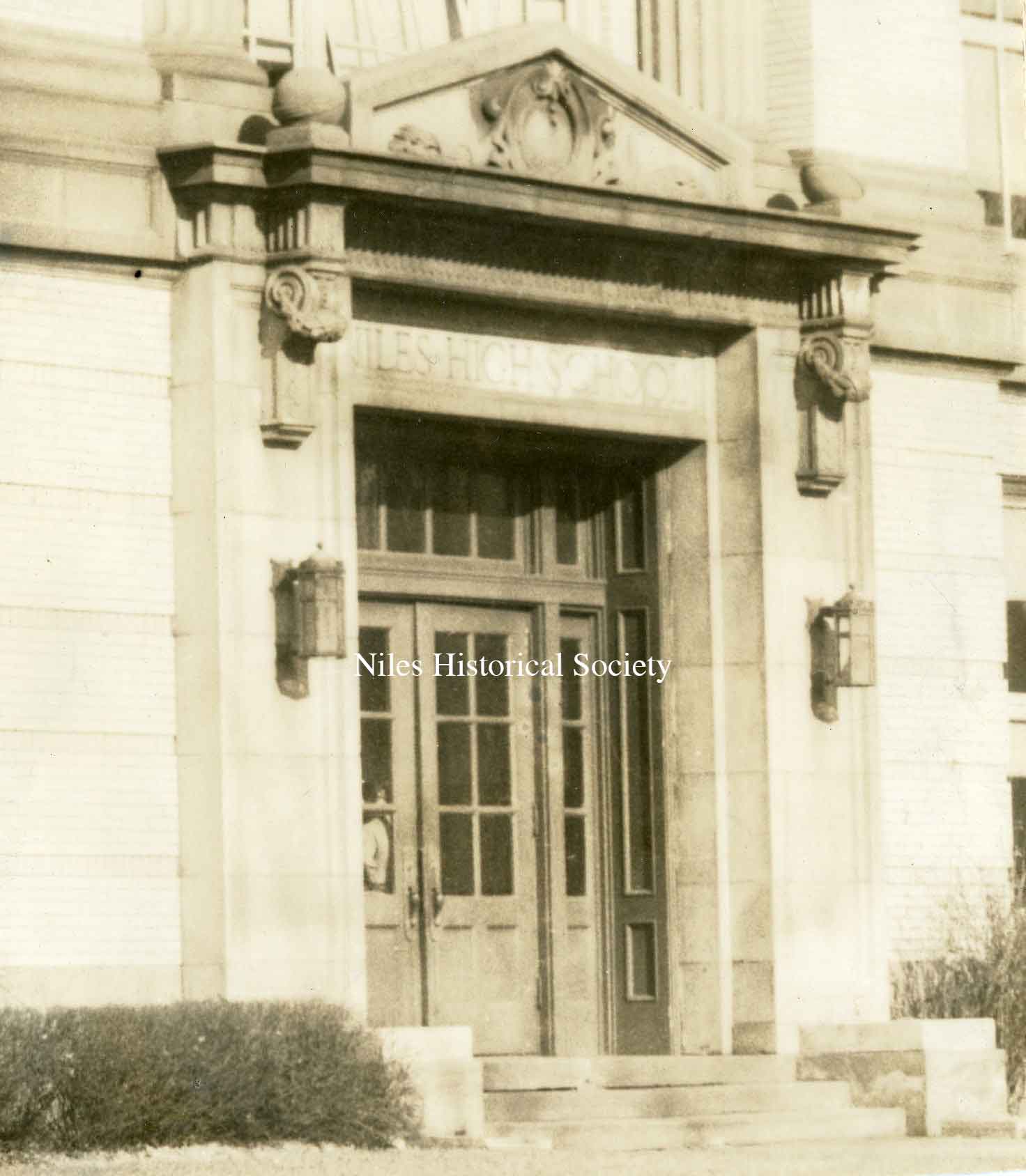
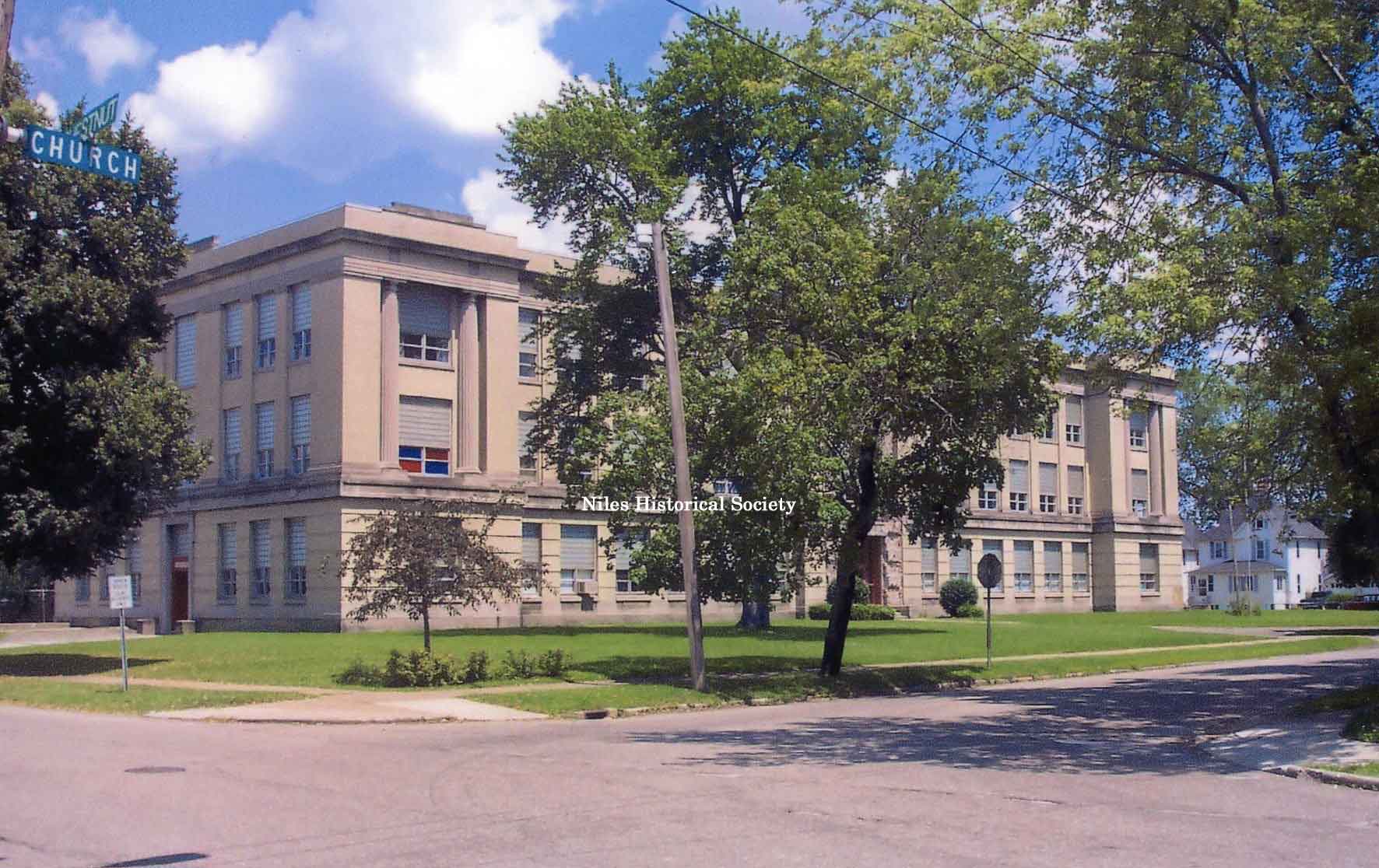
Built in 1914 The new Niles High School was built, on Church Street between Arlington and Chestnut Avenues, because the old Central School was not large enough to accommodate the growing student population. It was renamed Niles McKinley High School in 1920. The building became Edison Jr. High School in 1958 and was razed when the Niles Middle School on Brown Street opened in 2003. |
P03.8 |
Niles High school during constructuion -1914. Wayne Chambers is the bricklayer 6th man from the right with white overhalls on and holding a mason trowel. Note: the wooden scaffolding and wooden frame supporting material hoist. PO5.53 |
Picture of old Niles High School which later
became Edison Junior High School on Church Street. View from
west side of school 2003. |
Edison Junior High School,view from the East side of the building. PO7.50 |
| |
||
P01.1192D |
Built in 1919 Madison Avenue School, renamed Roosevelt School in 1920, became an annex to the high school when S.J. Bonham Elementary School was dedicated in 1957. The building was razed in the 90s. |
 |
P11.342 |
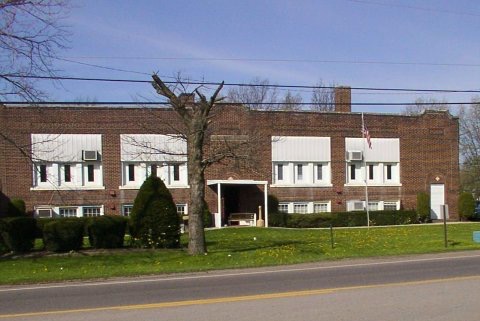
Built in 1920 Harrison School, built in McKinley Heights, Route 422 closed in 1956. The students were bussed to Washington Elementary School. New school student attendance areas were redrawn with students attending the new Lincoln Elementary School on Frederick Avenue. |
 |
|
|
Built in 1924 Washington School on Hartzell Avenue served both as a junior high and an elementary school. In 1958 all junior high students attended Edison Jr. High School. After the baby boom surge, Washington again served both as a junior high and an elementary school. It was razed in 2013 when the new Primary School and Intermediate schools were built. |
 |
PO1.1197 |
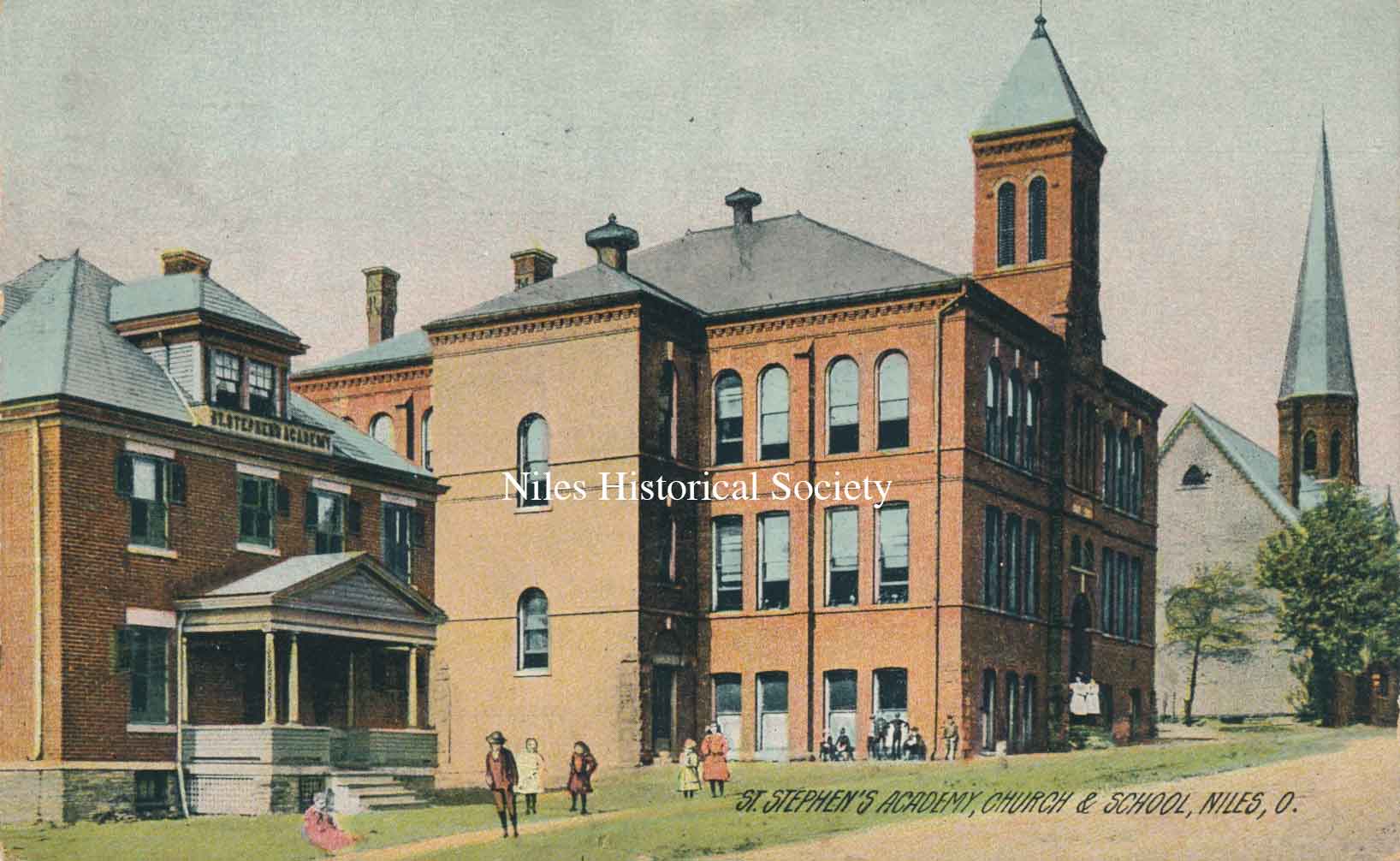
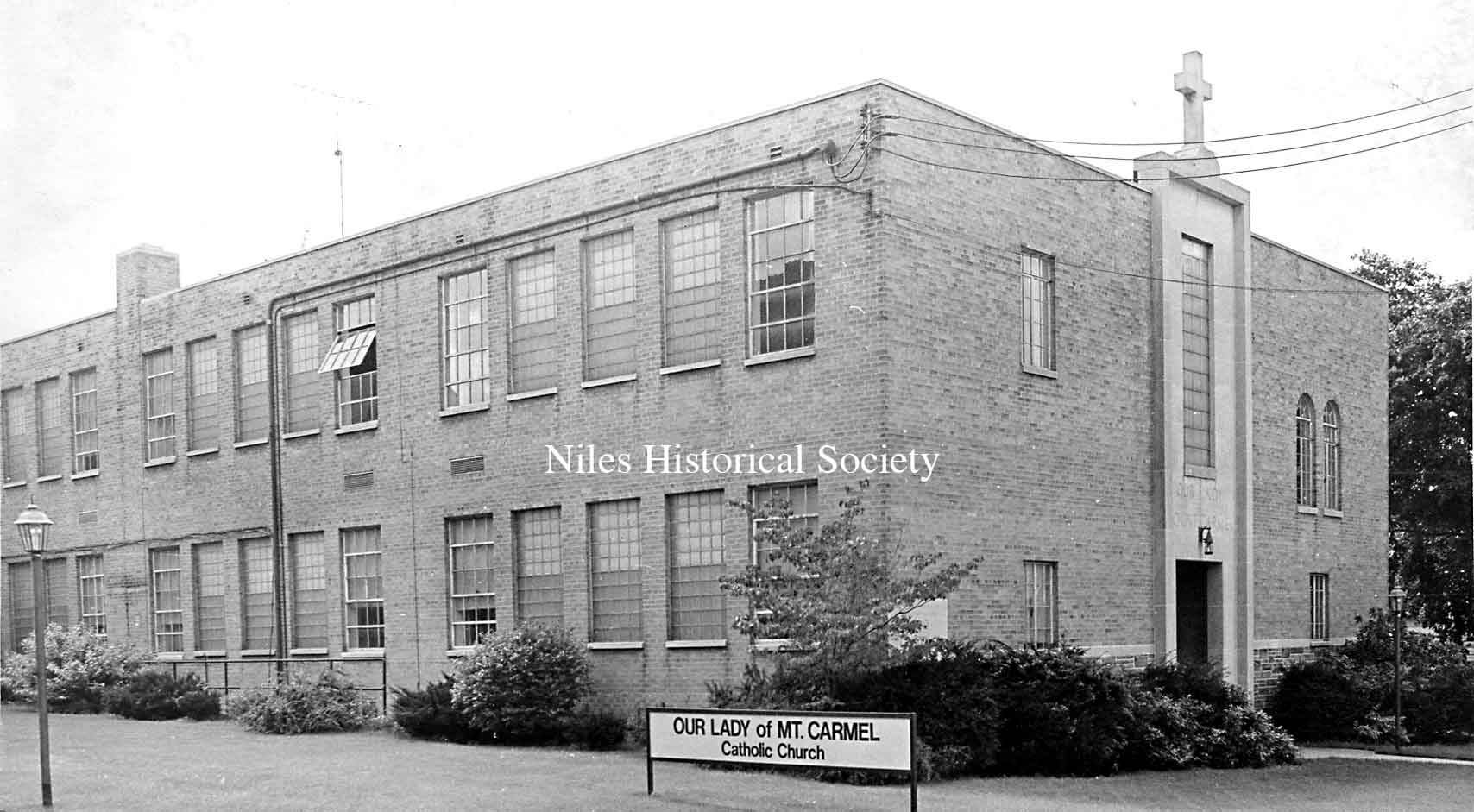
(L) St. Stephen’s Church, Academy and school in the year 1905. The building in the forefront was once the Music Academy and then became the Sister’s Convent. The school was razed in 1954 after a new school was built on the other side of these buildngs. (R) Our Lady of Mt. Carmel’s first school with grades K-4 opened in 1949. |
P01.1202 |
S11.123 |
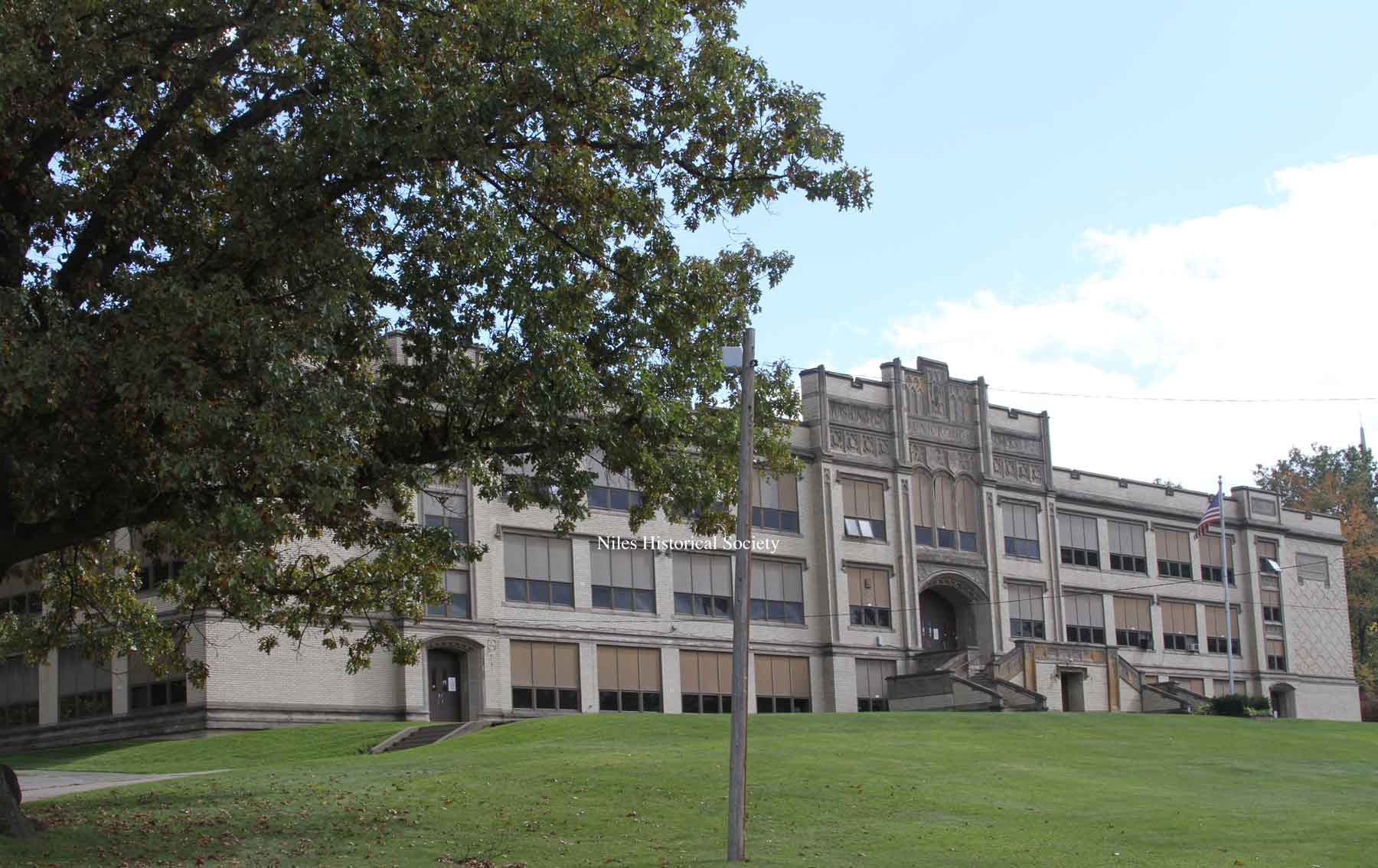
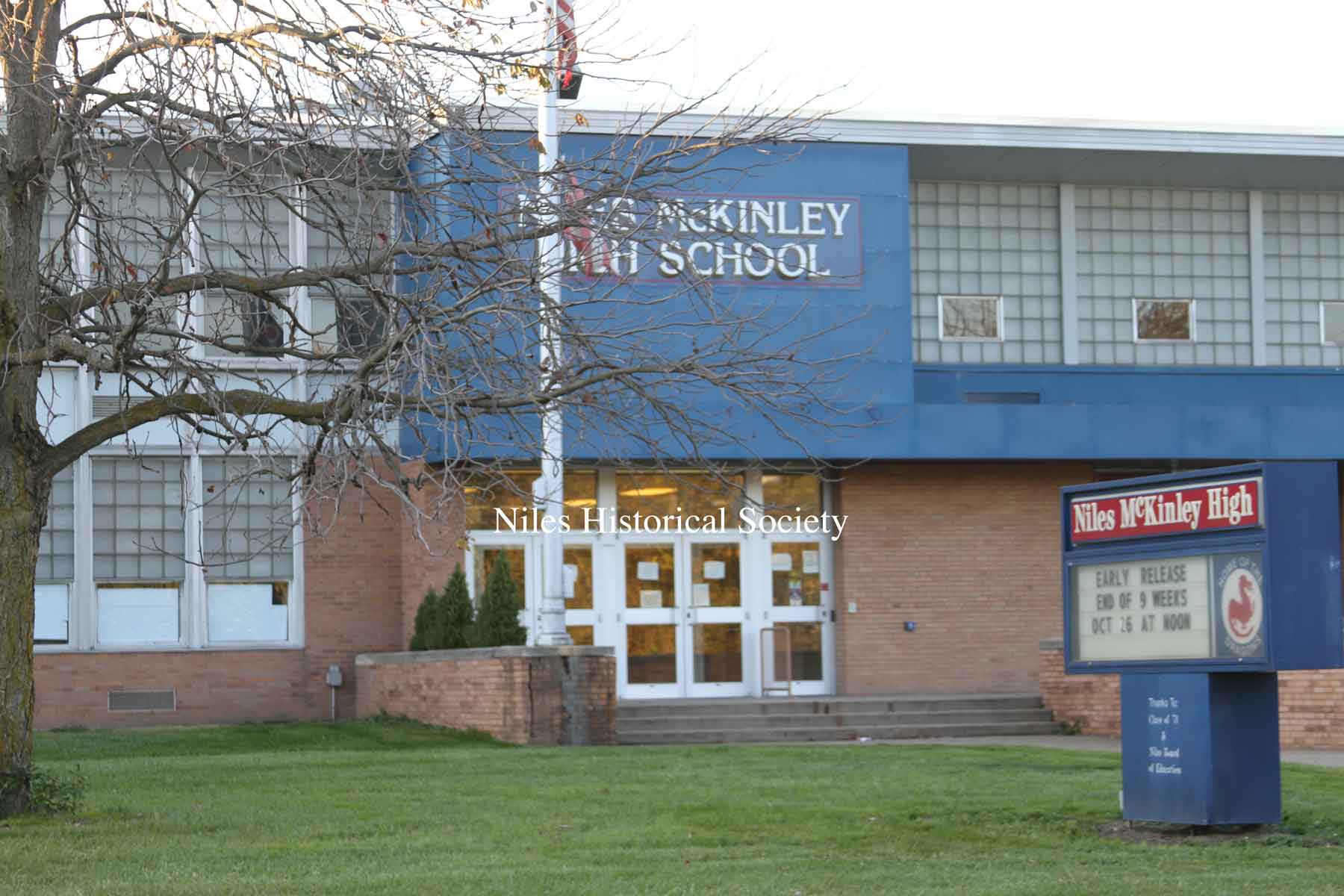
Built in 1957 The new Niles McKinley High School on Dragon Drive opened in 1957. The doors closed in April, 2003. The view of the high school along Mosquito Creek and War Memorial Gymnasium. |
 |
|
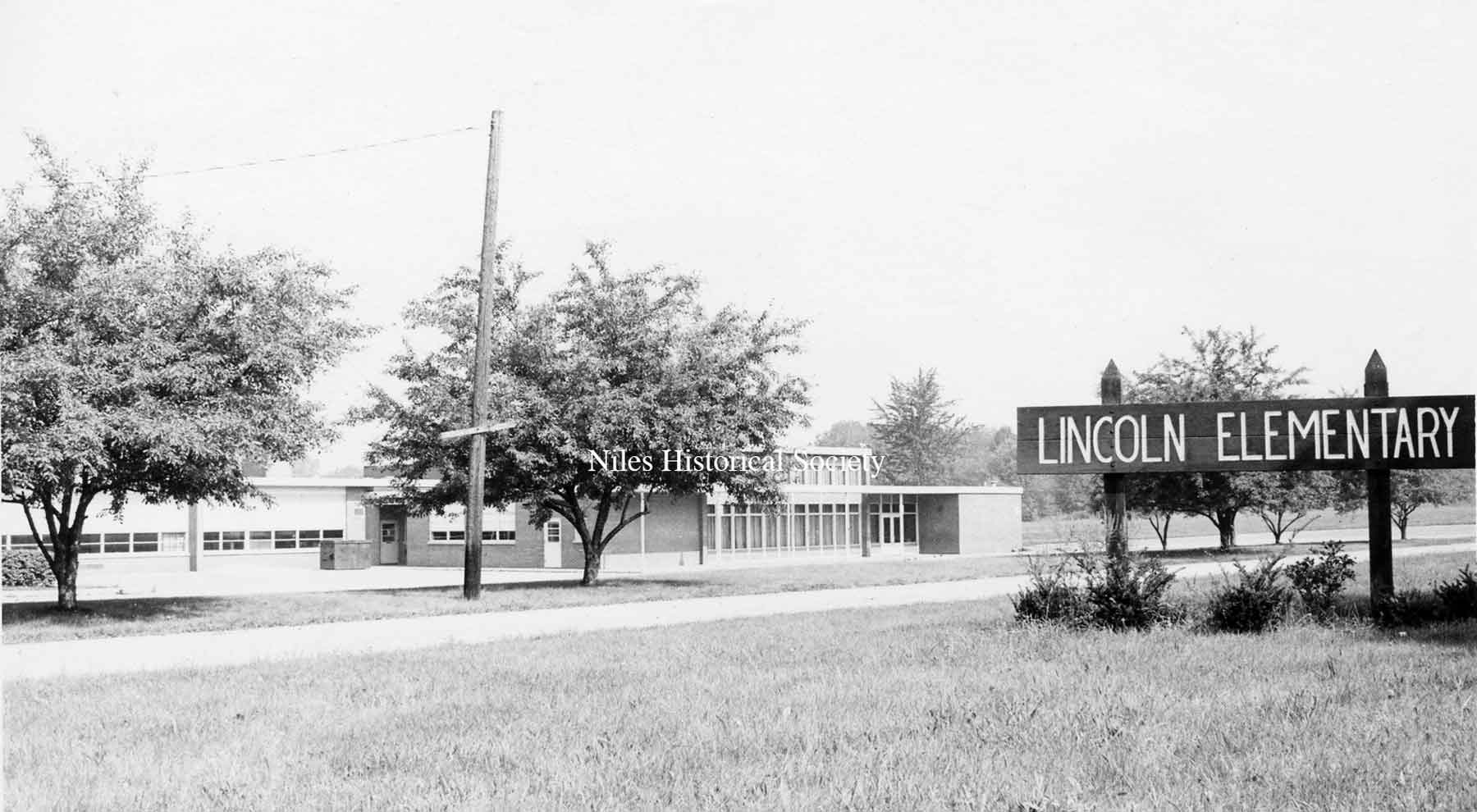
Built in 1956 Lincoln Elementary School was located on Frederick Street. The building was razed in 2012 and a new primary school was built on the site. PO1.1211 |
Built in 1957 S.J. Bonham Elementary School opened in 1957 on East Margaret Street. At that time it was the only school not named after a U.S. President. S.J. Bonham was the Niles City Schools superintendant during the late 1930s through the early 1950s. He became the assistant superintendant to primarily focus on the passage of a school bond issue to build new schools in anticipation of the influx of the baby-boomers. The bond issue passed with a new Niles McKinley High School and two elementary schools, Lincoln Elementary and S.J. Boham Elementary were built. It was razed and a new intermediate school for grades 3-5 opened in 2013 on the same site. |
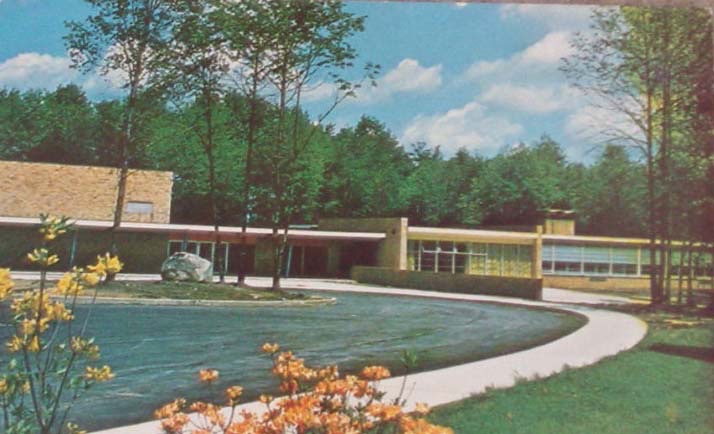
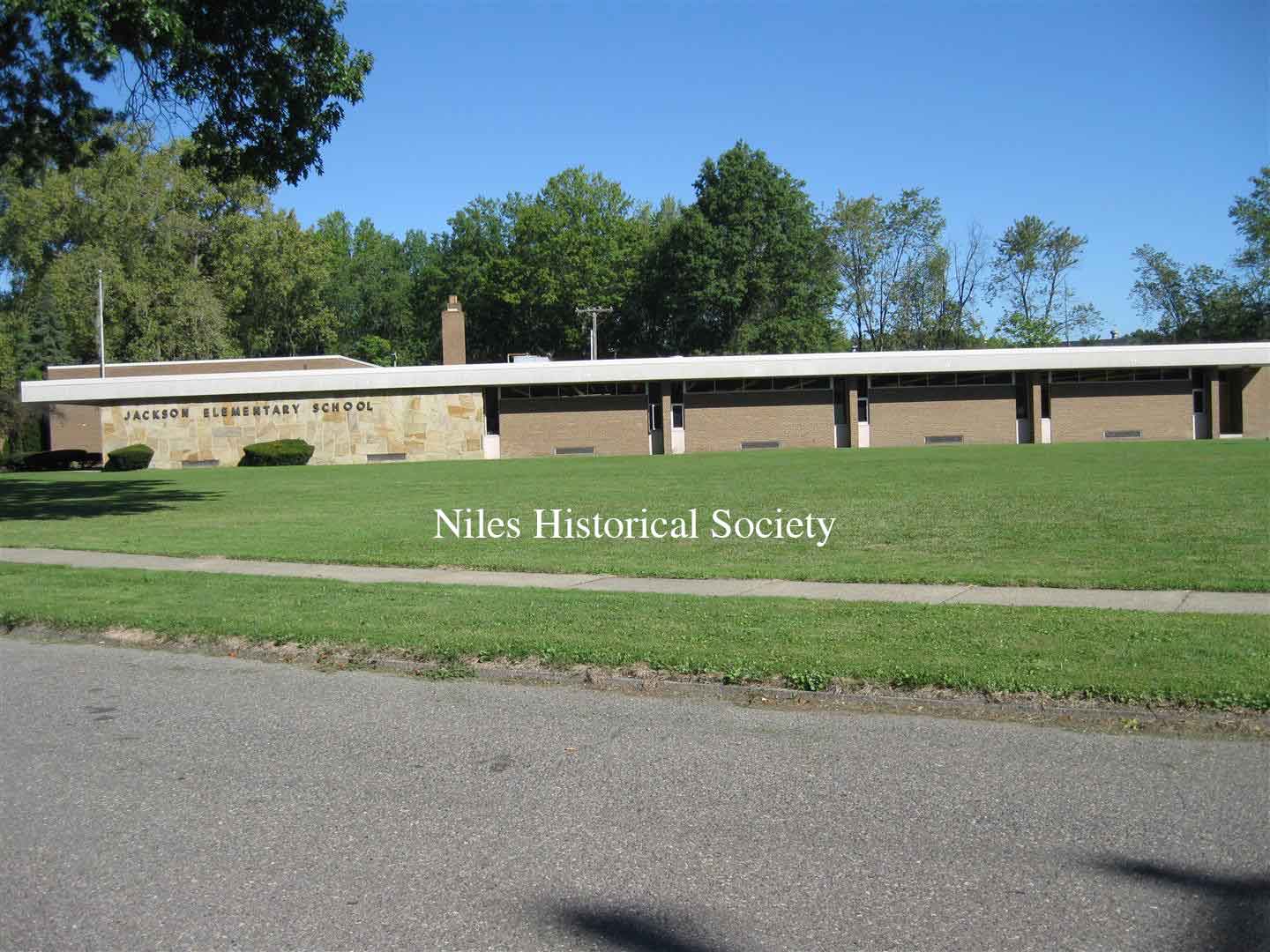
Built in1965 Jackson Elementary School was built in 1965, the first climate-controlled school in Niles on Smith Street. It was razed in 2013.
|
| |
||
|
|
||